

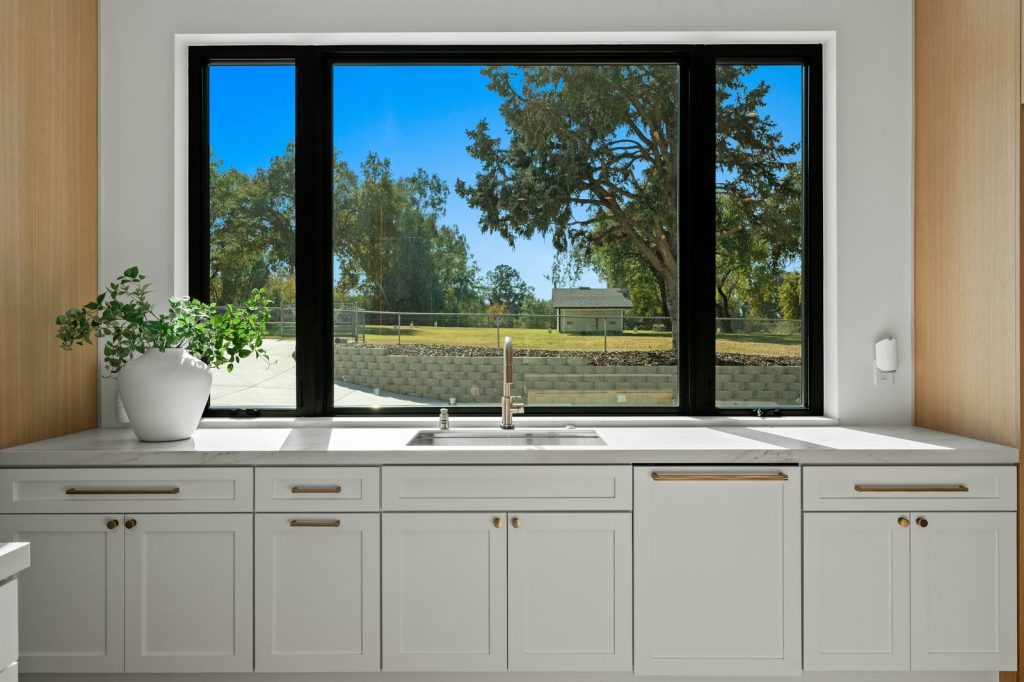
A question we get at almost every site visit goes something like: “Just give me a ballpark, what is a window going to cost me?” Fair question. The honest answer is more useful than a number you can copy off a Google search.
A sliding window install in Jamaica has at least eight different inputs that can move the price by a wide margin. Two windows that look identical from across the room can quote at noticeably different figures because the glass is rated for hurricanes, the frame is a heavier commercial profile, or the second floor needs scaffolding for safe access. The good news is that the inputs are knowable. Once you understand what drives the cost, a written quote stops feeling like a guess and starts looking like a spec sheet you can verify.
This is the breakdown we walk through with first-time customers, in roughly the order it affects the final price.
How size and quantity affect sliding window cost
Bigger windows use more glass and more aluminum. That is the obvious part. The less obvious part is that larger openings often need thicker glass for safety and stiffer frame profiles to carry the weight. A standard bedroom window is one set of numbers. A wall of glass facing the garden is a different conversation entirely.
Quantity matters too, but not always the way people expect. Eight identical windows installed in one trip cost less per unit than eight different sizes installed across two visits, because the team can batch the fabrication and the install. If you are replacing all the windows in a house at once, ask for the project price, not the per-unit price.
Glass type and thickness
This is where pricing spreads the most. Standard 3/16 inch clear glass is the entry-level option. A 1/4 inch clear is the most common upgrade. Beyond that you start picking up combinations of tempered, laminated, tinted, frosted, and low-iron variants, each at a different price.
A few examples of what shifts the bill:
- Tempered safety glass is required in some locations (close to floor level, in doors, in shower areas) and is a smart upgrade in others. It typically costs 25 to 60 percent more than the same thickness in standard glass.
- Laminated safety glass has a plastic interlayer between two sheets of glass. It holds together if it breaks. It is the right call for second-floor windows, family homes with small children, and anything rated for hurricane impact. It is the most expensive standard option.
- Tinted glass adds modest cost and helps with heat and glare. Useful on west-facing windows.
- Frosted glass costs about the same as clear but is processed differently (sandblasted, acid-etched, or interlayer film). Common for bathrooms and street-facing windows.
When you see a quote, the glass spec line item alone can be 40 to 60 percent of the total cost. That is normal.
Aluminum profile and finish
The frame is the second-biggest cost line. Aluminum profile systems come in a range of weights, from standard residential to heavier commercial-grade. Heavier profiles are stiffer, last longer, and look more substantial. They also cost more.
For finish, you have powder-coated black, white, or bronze (the most common, with solid lifespan), natural anodised (a little more expensive but better in coastal conditions), and custom RAL colour matching for a small premium and slightly longer lead time. Black is the most popular finish we install today. White is the safest classic. Bronze is having a moment in renovations. Natural anodised is the right call within sight of saltwater.
Hardware and add-ons
The pulls, locks, rollers, brushes, and seals all show up in the quote. They are not where most of the cost sits, but they are where the long-term performance lives. A cheap roller fails in eighteen months. A quality one lasts ten years.
Common add-ons that change the line items:
- Mosquito mesh. Almost always worth it in Jamaica.
- Burglar grills. Ground-floor windows often need them. The grills are usually a separate trade, but we coordinate the openings.
- Security locks. Upgraded multi-point locks add modest cost and a lot of peace of mind.
- Integrated trim and sills. If the existing window had wood trim that needs to come out and be replaced, that work is part of the quote, not a surprise after.
Site conditions
Where the windows are physically going changes the price. A ground-floor install in a single-storey home is the cheapest case. Anything that adds time, equipment, or risk adds cost.
The site conditions that matter most:
- Floor level. Second floor and above usually need scaffold or boom access for safe install. That is a real cost line.
- Wall material. Removing windows from a block-wall opening is different from removing them from a timber-frame wall. Both are normal; the labour hours differ.
- Removing the old windows. If you are replacing existing units, removal and disposal is part of the job. Aluminum frames come out cleanly. Steel-framed louvres take longer.
- Finishing around the opening. Sometimes the opening needs to be squared up, sealed, or re-trimmed before the new window goes in.
- Coastal location. Salt-air sites get specified differently from inland sites. Marine-grade hardware and corrosion-resistant fasteners cost a bit more upfront and save you years of replacement work later.
What a proper written quote should include
Any quote you accept should put all of the above on paper. If a contractor gives you a verbal price or a one-line “supply and install” total with no breakdown, you have no way to compare it to another bid and no way to hold them to a spec later.
A proper written quote from us spells out:
- Each window unit, with its size and quantity
- The glass spec (thickness, type, treatment) for each unit
- The aluminum profile and finish
- The hardware included (handles, locks, mesh, grills)
- The site work included (removal, disposal, trim, sealants)
- Access requirements (scaffolding, lifts)
- The expected timeline from quote acceptance to install completion
- Payment terms (deposit on signing, balance on completion)
- The warranty on workmanship
When the same scope of work is on every quote you are comparing, the price comparison stops being a guess.
How to compare quotes side by side
Three quotes for the same job will rarely come back identical. The differences usually come down to three things:
- Different glass or frame spec. The cheapest quote is often the one that quietly stepped down from 1/4 inch tempered to 3/16 inch clear, or from a commercial-grade profile to a residential one. Read the spec lines.
- Different scope inclusion. One contractor quotes for the install only and another quotes for install plus removal of the old units, plus disposal, plus new trim. Look at what is included, not just the bottom line.
- Different operator overhead and warranty. A team with a real shop and a one-year workmanship warranty has costs a one-person operator does not. The cheaper quote may not include come-backs if something fails six months in.
The lowest number on three quotes is usually the lowest because something got removed from the scope. Make sure the thing removed is not something you actually wanted.
Why we do not publish a per-square-foot rate
We get asked sometimes why our website does not just list a flat per-square-foot installed rate. The simple answer is that any rate we publish would either be too low (and create a problem for both of us when the real quote comes back higher) or too high (and lose us jobs we could have done well). The factors above are real and they actually matter to the final price.
What we can tell you up front: the site visit takes about an hour and is free, the written quote follows within a few business days, it includes everything you need to make a real decision, and nothing on it changes without your written approval.
Questions to ask any window installer before signing
Whether you go with us or with someone else, these five questions separate a real contractor from a chancer:
- What is the actual glass spec? Ask for thickness in mm and the treatment (clear, tempered, laminated). A vague “safety glass” answer is not enough.
- What is the aluminum profile? They should be able to name it. If they cannot, that is a flag.
- What is included in the price beyond the windows themselves? Removal, disposal, sealants, trim, scaffolding, cleanup. All of it.
- What is the workmanship warranty? A one-year warranty on installation is reasonable in Jamaica. Anything shorter than that, ask why.
- Who does the actual install? Some contractors quote the job and subcontract the install to a different crew you have never met. There is nothing inherently wrong with that, but you should know.
If a contractor cannot answer these clearly, you have a data point. The cheapest quote with bad answers is not actually the cheapest quote. It is the one most likely to cost you more by year three.
Related reading
- How to choose the right glass thickness for sliding windows
- Five things to check before signing a sliding window contract
Frequently asked questions
How much does it cost to install one sliding window in Jamaica?
There is no flat per-unit price because the cost depends on the glass spec, the aluminum profile, the hardware, the site conditions, and whether the unit is stock or custom. A single standard residential slider installed inland is the cheapest case. A coastal, hurricane-rated, custom-sized unit can be several times more. The site visit is where the real number comes from.
What is the biggest factor in sliding window cost?
Glass spec, by a wide margin. The glass line item is often 40 to 60 percent of the total cost for premium specs. Thickness, tempering, lamination, and tinting all add cost. Frame profile and finish come next, then hardware grade, then site work and access.
Do bigger windows cost more per square foot?
Not always linearly. Larger windows usually need thicker glass and heavier aluminum profile, which adds cost faster than just the extra square footage. They also need more careful handling and install labour. A 7 foot wide slider is meaningfully more than two 3.5 foot ones, even at the same total area.
Should I get more than one quote for sliding windows?
Yes. Two or three quotes from different installers on the same scope is the only way to know whether your price is reasonable. The cheapest quote is often cheapest because the glass spec or scope was quietly dropped. Compare the line items, not the bottom line.
Why do quotes vary so much for the same window?
Usually because the spec is not actually the same. Different installers default to different glass thicknesses, different frame profiles, and different scope inclusions. Two quotes that look like the same window can have meaningfully different lifespans and performance. Always confirm spec line by line.
The next step
If you have a window project you are thinking about, the quote request form is the fastest way to get the conversation started. It takes about three minutes. Rough measurements are fine; we confirm exact numbers on site.
For more context on what we install, the sliding windows service page covers the configurations, glass options, and finishes we typically work with. If you want to talk through your project before requesting a formal quote, the contact page has WhatsApp, phone, and email.
A window install is a project where the right answer up front saves you money for the next twenty years. That is worth taking the time to spec properly.