

Almost every homeowner who’s done a couple of weekend projects starts looking at their sliding windows and wondering what’s worth paying someone for and what’s worth doing themselves. The honest answer isn’t binary. Some sliding window work is well within a confident homeowner’s range. Some is a fast way to create thousands of dollars of damage and void a manufacturer’s warranty in the process.
Here is the practical breakdown of sliding windows DIY vs professional, for Jamaican homes specifically.
What a homeowner can fairly DIY
Several sliding window tasks are absolutely fair game for a homeowner with basic tools and a willingness to read instructions carefully:
Cleaning and routine maintenance. Glass, frame, tracks, weep holes, mosquito mesh. All of this is homeowner-level work. Our annual maintenance checklist for sliding windows walks through the full routine.
Roller replacement. Worn rollers are the most common cause of sliders that drag or stick. Replacement rollers are inexpensive, the swap is a 30 to 45 minute job, and the result is immediate. The biggest risk is buying the wrong rollers for your specific frame, which is usually solvable with a photo and a measurement.
Handle and lock replacement. Most handles are a screwdriver job. The handle has to match your existing mounting pattern, but standard residential hardware is widely available. Sourcing the right part is the bigger challenge than installing it.
Seal and weather stripping replacement. EPDM seals come in lengths that can be cut and seated with care. Worth doing if a specific seal has failed and you can identify the right replacement profile.
Touch-up cleaning of frames and glass after another contractor has worked on the home. Often easier than coordinating a separate cleaning visit.
What we strongly recommend handing to a pro
A few jobs are not where you want to learn on your own home:
Full new window installation. The drainage plane, flashing, sealants, and structural integration of a new window install are the things that cause water damage three years down the line when done wrong. A leak that ends up inside the wall, behind the trim, can cost more to remediate than the entire window cost in the first place.
Glass replacement on tempered or laminated panels. Glass at these specs is heavy, awkward, and dangerous to handle. The sealing of the new pane to the frame is also more involved than it looks. Glass replacement is also typically the moment when a manufacturer warranty kicks in or out depending on who did the install.
Anything on a second-floor opening or with scaffold access. Falling off a ladder while handling a 30 pound glass panel is exactly the kind of injury we don’t want for anyone. Professional installs include the access equipment as part of the job.
Frame repair or replacement of structurally compromised aluminum. If the frame is cracked, distorted, or pulling away from the wall, the diagnosis and repair (or replacement) involves understanding why it happened and addressing the cause, not just the symptom.
Anything that affects the warranty. Most manufacturer warranties on glass and aluminum require the install to have been done by a qualified installer. DIY install on a new window often voids the manufacturer warranty entirely, which is usually a much bigger deal than the install savings.

The grey zone: it depends on the homeowner
Several tasks fall in between. They can be DIY for a homeowner who genuinely knows what they’re doing, and a disaster for a homeowner who’s optimistic about their skill level:
- Replacing an entire sliding window unit in an existing opening (where the frame and structure are fine and only the window is being swapped). Doable with care but the consequence of getting the flashing wrong is real.
- Diagnosing what’s actually wrong with a misbehaving slider before deciding what to fix.
- Adjusting roller height to fix a sticking slider rather than replacing rollers wholesale.
- Replacing a failed double-glazed unit (the sealed glass package, not the whole window).
For the grey zone, the practical question is whether you have done this kind of work before and whether you’re prepared for things to be harder than expected. If yes, fair to try. If no, the savings probably aren’t worth the risk.
Tools you need for the DIY-friendly jobs
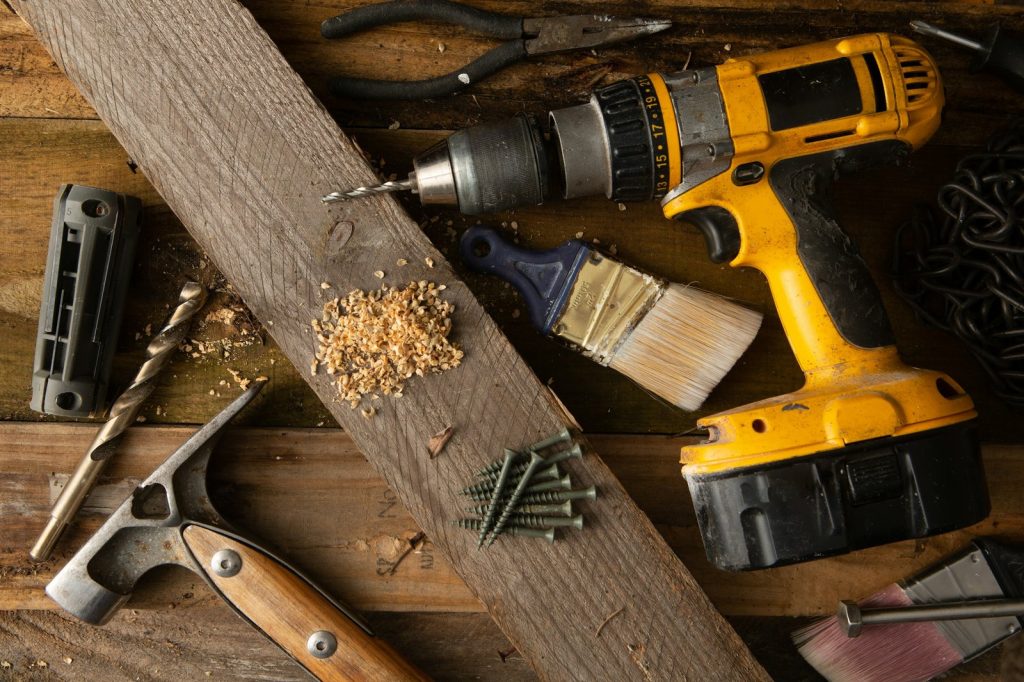
For the homeowner-level work above, the kit is short:
- Cordless drill or driver with a basic bit set
- A flathead and a Phillips screwdriver
- A small adjustable wrench
- A pliers set (regular and needle-nose)
- A tape measure
- A level
- A flashlight
- A small can of silicone spray and a tube of silicone sealant
Most homes already have all of this. The specialty tools (suction cups for glass handling, sash lifters, weather stripping channels) are only needed for the bigger jobs that we recommend handing to a pro anyway.
Why pro installation costs what it does
The premium for professional installation versus DIY isn’t just labour cost. It includes:
- Insurance against install errors that lead to leaks, water damage, or warranty voids
- Manufacturer warranty preservation
- Access equipment (scaffolding, lifts) for second-floor work
- Specialized tools and consumables (flashing tape, marine-grade sealants, sill pans) that homeowners don’t typically have
- Disposal of the old windows and packaging
- A crew that can do the job in a day rather than a homeowner’s evenings and weekends over a month
For a single window in a ground-floor opening on a home where the homeowner is genuinely handy, DIY can work and the savings are real. For more than one window, anything elevated, or any spec above standard residential, professional install is almost always the better total-cost answer.
Related reading
- Annual maintenance checklist for sliding windows
- Sliding windows hardware: when to repair, when to replace
Frequently asked questions
Can I install a sliding window by myself?
For a single ground-floor opening where the existing frame is in good shape and you’re replacing only the unit, a confident homeowner with the right tools can do it. The risk is in the flashing and drainage plane: get it wrong and water damage shows up three years later inside the wall. For more than one window, anything elevated, or any non-standard spec, professional install is the better answer.
What sliding window repairs can I do myself?
Roller replacement, handle and lock swaps, seal and weather stripping replacement, track cleaning, and routine maintenance are all fair game for a homeowner with basic tools. These are short jobs with low risk if you have the right replacement parts. Sourcing the correct part is usually the bigger challenge than the install itself.
Does DIY installation void the window warranty?
Often yes. Most manufacturer warranties on glass and aluminum require professional installation by a qualified installer. DIY install on a new window can void the manufacturer warranty entirely. The workmanship warranty from the installer is also gone, obviously, because there is no installer. Read the warranty terms before deciding.
How much can I save by installing sliding windows myself?
For the actual install labour, typically 20 to 40 percent of the total cost on a single window. But the savings shrink when you factor in tool purchases, time over evenings and weekends, and the risk of mistakes that need professional fixes later. For most homeowners installing one or two windows, the savings are real. For more than that, professional install often wins on total cost.
When should I always call a professional for sliding window work?
For full new installs, glass replacement on tempered or laminated panels, anything on a second-floor or elevated opening, frame repair where the aluminum is damaged or distorted, and anything that affects a manufacturer warranty. These are the jobs where the cost of a mistake is much higher than the cost of professional install.
The next step
If you’re weighing whether to DIY or hire out a sliding window job, the contact page is the easiest way to ask. We respond honestly: if it’s a small repair you can absolutely handle yourself, we’ll tell you. If it’s a full install with elevated access, we’ll quote it.
The quote request form is for projects you’ve decided to hand over, and the sliding windows service page has more on what we install.
The honest answer for most Jamaican homeowners is some of both. Do the routine maintenance yourself. Hire out anything that affects the building envelope or the warranty.