

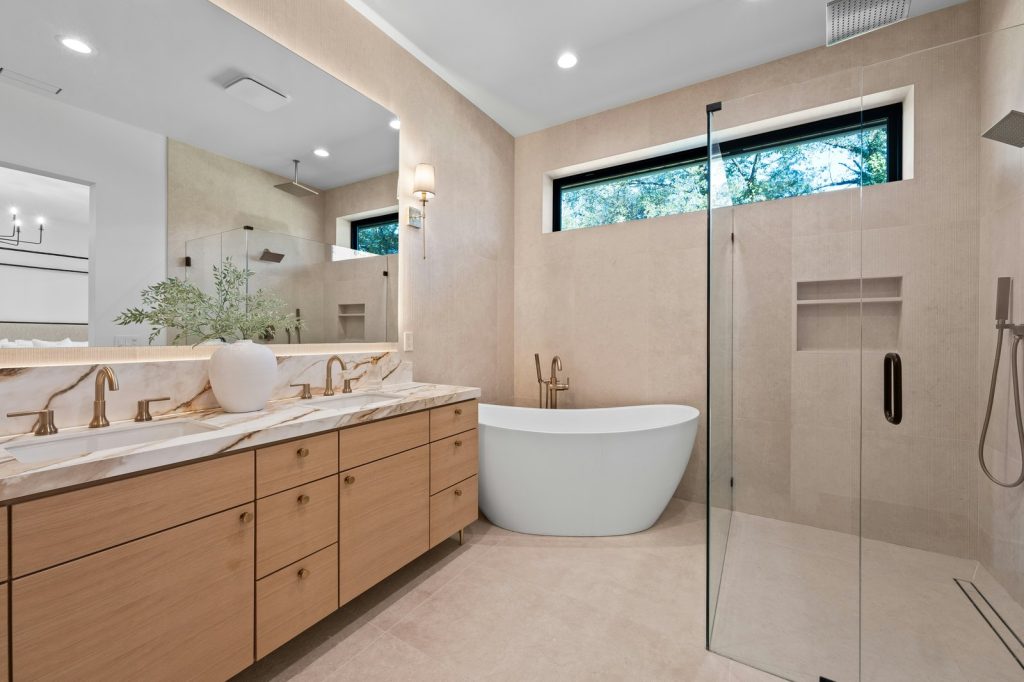
Glass thickness is one of the most important specs on a shower enclosure, and one of the ones homeowners think the least about. Get it right and the enclosure looks substantial, holds up structurally, and lasts the life of the install. Get it wrong on the thin side and you’re looking at safety issues, code violations, or early failure. Get it wrong on the thick side and you’re paying for weight and hardware stress you don’t need.
Here’s how to pick the right thickness for your project.
The four common thicknesses
Residential shower enclosures in Jamaica use one of four thicknesses, all tempered.
3/16 inch tempered. Lightweight, cheap. Acceptable only for small panels in framed enclosures. Not appropriate for anything structural.
1/4 inch tempered. The standard for framed enclosures. Light enough to be held by aluminum framing without stressing the hardware, strong enough for daily use when supported by a frame.
3/8 inch tempered. The standard for semi-frameless and most frameless enclosures. The minimum thickness building codes generally allow for frameless. Balances rigidity, weight, cost, and aesthetic.
1/2 inch tempered. Used for large frameless enclosures, premium spec projects, and oversized panels. More substantial look and feel. Adds weight and hardware stress, so the rest of the spec needs to match.
A handful of enclosures use 3/4 inch or thicker for unusual designs (full structural walls), but those are rare and bespoke.
What drives the choice
Five factors decide which thickness fits.
1. Framed versus frameless
The single biggest factor. Framed enclosures distribute the glass load through the aluminum frame, so the glass itself doesn’t need to be thick. 1/4 inch is plenty.
Frameless enclosures have no frame. The glass is structural. It needs to be thick enough to hold its own shape and resist deflection when the door swings. 3/8 inch is the minimum; 1/2 inch is the upgrade for larger configurations.
Trying to use 1/4 inch in a frameless enclosure is unsafe, against code in most jurisdictions, and will almost certainly result in cracking or breakage. Don’t.
2. Panel size
Larger panels need thicker glass to resist deflection under their own weight or when the door swings.
Door panel up to about 36 inches wide: 3/8 inch is plenty.
Door panel 36 to 48 inches wide: 3/8 inch works, but 1/2 inch reduces vibration and looks more substantial.
Door panel over 48 inches wide: 1/2 inch is preferred. The extra rigidity reduces door bounce when opening and closing.
Fixed panels follow similar rules but can sometimes use slightly thinner glass than the door, since they don’t move.

3. Hardware compatibility
Hardware (hinges, clamps, brackets) is rated for specific glass thicknesses. Standard residential frameless hardware is usually rated for 3/8 inch and sometimes 1/2 inch as well.
Using glass thicker than the hardware is rated for stresses the hardware and shortens its life. Using glass thinner than the hardware is rated for means the hardware doesn’t grip properly and the glass can shift.
Match the thickness to the hardware spec, or the hardware spec to the thickness. The supplier should handle this automatically, but it’s worth confirming on the quote.
4. Aesthetic preference
3/8 inch has a clean modern look that suits most contemporary residential bathrooms.
1/2 inch looks visibly more substantial. The thicker edge profile reads as more premium and the glass carries more visual weight in the room. For premium projects where the bathroom is high-end overall, 1/2 inch often fits the aesthetic better.
Frosted glass shows thickness less than clear glass. If you’re going with frosted, the aesthetic case for 1/2 inch over 3/8 inch is weaker.
5. Budget
3/8 inch is the cost-effective frameless standard.
1/2 inch is usually 25 to 40 percent more expensive on the glass line. For a $2,500 USD enclosure, that’s $200 to $400 USD additional.
3/16 inch and 1/4 inch are cheaper but only appropriate for framed enclosures.
Recommendations by use case
Standard framed enclosure for a value bathroom: 1/4 inch tempered. Lowest cost, fully appropriate.
Semi-frameless enclosure for a mid-range bathroom: 3/8 inch tempered for the door, sometimes 5/16 inch or 3/8 inch for fixed panels. Standard hardware.
Frameless enclosure for a master bathroom in a quality home: 3/8 inch tempered throughout. The aesthetic, weight, cost, and hardware all align well at this thickness for most residential configurations.
Frameless walk-in for a large master shower: 1/2 inch tempered. The extra rigidity matters for large panels. Premium hardware to match.
Premium frameless enclosure where look and feel are the priority over budget: 1/2 inch tempered. The visible substance reads as premium.
Coastal home, otherwise standard frameless: 3/8 inch with marine-grade hardware. Thickness is the same as inland; the upgrade goes into the hardware.
Common mistakes
Going thicker than needed “just to be safe.” 1/2 inch on a small simple enclosure is overkill, stresses the hardware unnecessarily, and adds cost without aesthetic benefit. Spec what’s actually appropriate, not the heaviest option.
Going thinner than needed to save money. Using 1/4 inch in a frameless application is unsafe and against code. The savings aren’t worth the risk.
Mixing thicknesses unnecessarily. Different thicknesses on different panels of the same enclosure can be done, but it rarely needs to be. Consistency reads better visually.
Not coordinating with hardware. Spec’ing 1/2 inch glass with hardware rated for 3/8 inch (or the other way around) is a real problem. The supplier should handle this, but ask.
Letting marketing language drive the choice. “Premium thickness” without specifying what’s actually in the spec is meaningless. Get the actual thickness number on the quote.
What about glass type?
Thickness is one spec. Glass type is another. Low-iron (extra clear, no green edge tint) costs 25 to 50 percent more than standard tempered. Frosted or textured costs 10 to 30 percent more. Coated glass costs more.
These choices are independent of thickness. You can have 3/8 inch standard tempered, 3/8 inch low-iron, 3/8 inch frosted, or 3/8 inch with a coating. Pick thickness based on structural and aesthetic factors above. Pick type based on visual preference and budget.
What a supplier should ask you
When quoting a shower enclosure, the supplier should ask about: framed versus frameless preference, opening dimensions, configuration (inline, L-shape, walk-in), bathroom aesthetic direction (modern, traditional, premium), budget range, and any specific preferences on glass clarity or texture.
From those answers, they should propose a thickness that fits. If they propose a thickness without asking the questions, ask why before accepting it.
Related reading
- What does a shower enclosure installation cost in Jamaica?
- How long do shower enclosures last in coastal Jamaican homes?
- How to choose the right glass thickness for glass doors
For background on tempered glass (specifically why it’s 4 to 5 times stronger than annealed glass and how the tempering process works), Wikipedia covers the metallurgy.
Frequently asked questions
What’s the standard glass thickness for shower enclosures?
For frameless: 3/8 inch tempered is the standard and minimum for safe structural use. 1/2 inch is the upgrade for larger configurations or premium aesthetic. For framed enclosures: 1/4 inch tempered is the standard, because the frame carries the structural load. Using 1/4 inch in a frameless enclosure is unsafe and against code in most jurisdictions.
What’s the difference between 3/8 and 1/2 inch shower glass?
1/2 inch is about 33 percent thicker and weighs proportionally more. It looks visibly more substantial, has more rigidity (less vibration when the door swings), and costs about 25 to 40 percent more on the glass line. 3/8 inch is fine for most standard residential. 1/2 inch is preferred for large panels (over 48 inch wide), walk-in configurations, or premium aesthetic priorities.
Can I use 1/4 inch glass in a frameless shower?
No. 1/4 inch glass in a frameless application is unsafe and against building code in most jurisdictions. The glass needs to be thick enough to support its own structural role without a frame. 3/8 inch is the safe minimum for frameless. Using 1/4 inch frameless will likely crack or break under daily use and may result in injury.
Does thicker glass mean safer glass?
Not necessarily. All tempered glass (3/16 inch through 1/2 inch) is roughly 4 to 5 times stronger than standard glass and breaks into small blunt pieces if shattered. The tempering process provides the safety benefit. Thickness affects structural rigidity (resistance to deflection and vibration), not the safety of the breakage pattern. Thicker glass is appropriate for larger panels, not for general ‘safer’ use.
How much extra does 1/2 inch glass cost vs 3/8 inch?
Typically 25 to 40 percent more on the glass line. For a $2,500 USD enclosure where glass is roughly half the materials cost, that’s about $200 to $400 USD additional. Whether the upgrade is worth it depends on panel size (justified for large panels), hardware spec (must match), aesthetic priorities (more substantial look), and budget.
What thickness do I need for a walk-in shower?
For walk-in shower enclosures with large panels (often 48+ inches wide), 1/2 inch tempered is the preferred spec. The extra rigidity reduces door bounce and visual deflection, and the hardware is typically rated to match. Smaller walk-in configurations can use 3/8 inch if hardware is rated for it. Confirm with the supplier based on the specific dimensions.
The next step
If you’re not sure which thickness fits your project, the contact page is the way to start a conversation. We walk through the configuration and recommend the thickness that fits, with hardware to match.
For projects ready to quote, the quote request form takes the basics.
The shower enclosures service page covers what we install.
Glass thickness isn’t a marketing line item. It’s a structural decision with safety implications. Spec it correctly at quote time, confirm the hardware matches, and the enclosure performs as designed for the life of the install. Get it wrong and you’re either paying for weight you don’t need or risking failure of an enclosure that wasn’t spec’d properly for the conditions.