

Energy efficient glass railings: what to look for
A regular open-air glass railing has almost no energy efficiency story to tell. The railing sits outdoors. The glass does not enclose anything thermally. Air moves freely past it. Most energy efficiency claims you will see in that context are marketing fluff dressed up to sound technical.
There is a real version of the question, though. Glass balcony enclosures, glazed sunrooms, and railings that end up doing double duty as part of a building’s thermal envelope actually do affect energy use. Even the plain open railing has a handful of edge cases where minor energy-related decisions matter. The trick is knowing where the real version starts and where the marketing version ends.
Here is the honest take on energy efficiency for glass railings on Jamaican projects.
What energy efficiency even means for a railing
Most glass railings are open at the top, the sides, or both. They do not seal a space. They do not block wind. They do not create a thermal boundary between inside and outside. In that configuration the only meaningful “energy” interaction is sun glare reflecting off the glass and the trivial heat-mass effect of the railing on its immediate surroundings (which in practice is nothing).
Calling that energy efficient is not really meaningful. The railing is a structural and aesthetic element. It is not a thermal one.
A glass railing only crosses into actual energy efficiency territory when it becomes part of an enclosed assembly. A glazed balcony enclosure that turns a balcony into an indoor space. A sunroom where glass walls double as railings. A wind wall on a coastal balcony that changes how the air conditioning of the adjacent indoor space performs.
When energy efficiency actually matters
A few specific Jamaican applications where the glass railing energy conversation is genuinely real.
Enclosed balconies. A balcony that has been glazed in with full-height glass walls (floor to ceiling) creates an additional thermal zone between the indoor space and the outside. If the adjacent interior is air conditioned, the enclosure changes how much cooling load actually reaches the AC. Spec matters here.
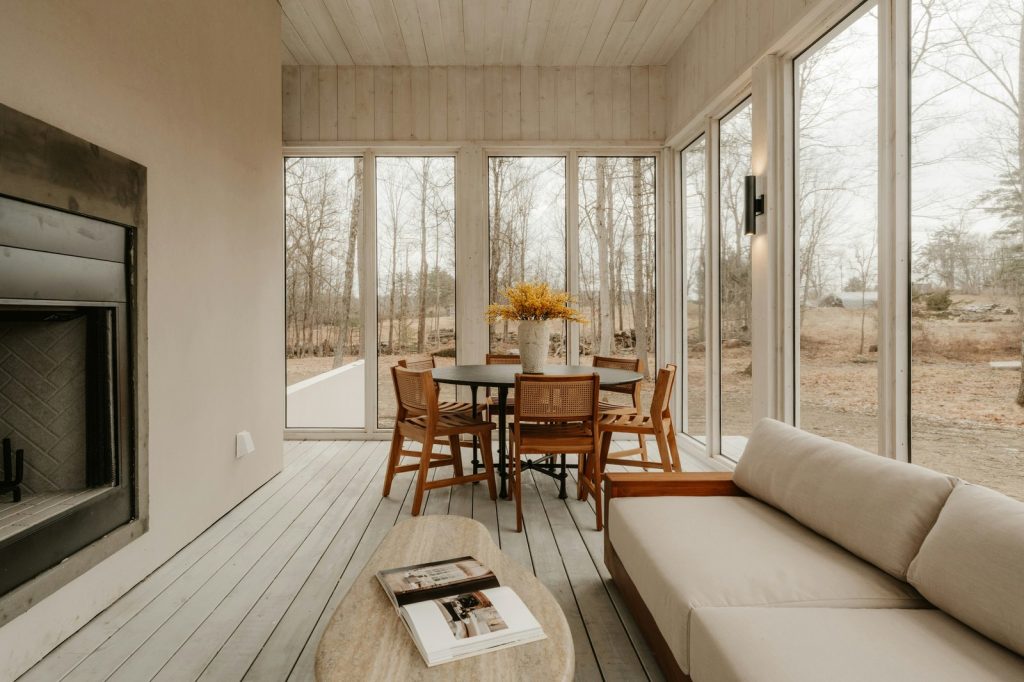
Sunrooms attached to the main house. A sunroom is essentially a glazed enclosure with glass walls and roof. The glass spec determines how much solar heat enters the space and how much AC load is needed to keep it comfortable.
Pool deck wind walls. Tall glass walls (60 to 72 inches) around a pool deck or covered terrace shift the local airflow and can change how the adjacent indoor space heats up.
Curtain wall sections with glass-railing detailing. On commercial buildings the glass railing at the edge of a balcony sometimes integrates with the curtain wall above. The combined assembly has real energy performance to engineer for.
Outside those cases, energy efficiency is mostly not a real concern on a glass railing.

What actually affects energy performance
When the railing is part of an enclosed or partially enclosed system, a handful of features actually move the needle.
Low-E coating on the glass. Reduces solar heat transmission while keeping visible light high, which drops the solar heat gain coefficient (SHGC) significantly. On a Jamaican enclosed balcony or sunroom, spectrally selective low-E coatings cut cooling load by 20 to 40 percent compared to uncoated glass. Real benefit, real cost (10 to 25 percent premium over standard clear).
Insulated glass units (IGUs). Double or triple glazed assemblies with sealed air or argon between panes. Reduces conductive heat transfer through the glass. Standard on commercial enclosed glazing, less common on residential balcony enclosures. Adds 50 to 100 percent to the glass cost.
Thermal break framing. Aluminum profiles with a plastic insulating layer sandwiched between the outside and inside aluminum components. Cuts conductive heat transfer through the frame. Important in cold climates, less so in Jamaican conditions but still worth considering on serious enclosed sunroom installs.
Sealed assembly. The whole point of an enclosure is the seal. A glazed enclosure with gaps or poor seals delivers almost none of the energy benefit it should. Marine-grade structural silicone on every joint is the right approach for coastal Jamaican projects.
Glass tinting. Bronze or grey tinted glass reduces solar heat transmission similar to low-E, with a more visible colour shift. Less elegant than low-E but cheaper.
What does not affect energy performance
A handful of claims that show up in marketing and rarely deliver anything real.
“Energy efficient hardware” is sloppy at best. Hardware grade (304 vs 316 stainless) affects durability, not energy. Marketing that conflates the two is conflating different conversations.
“Eco-friendly aluminum profiles” has nothing to do with the energy efficiency of the install. Recycled aluminum content is a sustainability claim worth making, just not an energy one.
“Smart glass for energy savings” rarely makes economic sense. The energy savings from electrochromic glass are small relative to the cost. The technology has its place (on-demand privacy) but justifying it on energy grounds does not usually survive the math.
“Self-cleaning coatings for water saving” is negligible at residential scale. Not really an energy claim either.
“Premium gaskets for thermal performance” is only meaningful inside a sealed enclosure. On an open railing the gaskets do no thermal work at all, but the claim shows up regardless because it sounds technical.
A practical recommendation framework
For Jamaican residential, the energy efficiency question on a glass railing splits into two cases.
Open railing on a balcony or terrace. Energy efficiency is not a real consideration. Spec the railing for durability, safety, and aesthetics, and ignore the energy claims.
Enclosed or partially enclosed assembly (sunroom, glazed balcony, wind wall that affects the adjacent indoor space). Energy efficiency matters genuinely. Spec spectrally selective low-E glass on any glazing that sees significant sun. Use marine-grade sealants so the seal that makes the energy benefit real actually stays sealed. Consider thermal-break framing on premium installs. Tinted glass is a budget alternative to low-E if cost is tight.
For commercial work, the energy efficiency conversation is usually driven by the architect and the building services engineer rather than by the railing installer. The right answer depends on the building’s overall energy strategy and how the railing fits into it.
A few honest numbers
On a typical enclosed Jamaican residential sunroom or glazed balcony with reasonable solar exposure, the realistic energy impact of glazing choices:
Uncoated clear glass is the baseline. High solar heat transmission, high cooling load.
Tinted glass (bronze or grey) drops cooling load by 15 to 25 percent. Visible colour shift on the view. Modest cost premium.
Spectrally selective low-E single-glazed cuts cooling load by 30 to 45 percent. Minimal visible change to the glass. Modest premium of 10 to 25 percent over uncoated clear.
Insulated glass units with low-E reduce cooling load by 50 to 65 percent. Significant premium of 60 to 100 percent over single-glazed.
Triple-glazed with low-E adds only marginal additional improvement over double-glazed low-E in Jamaican conditions. Usually not worth the extra premium here.
Payback periods in Jamaican cooling costs run as follows. Low-E single-glazed pays back in 2 to 3 years on most enclosed sunrooms and glazed balconies, which makes it an easy call. IGU with low-E pays back in 4 to 7 years, which is the right call on serious installs and a closer judgment on modest residential work.
The honest summary
For most Jamaican glass railing projects (open balcony railings, terrace barriers, pool fences), energy efficiency is not a real factor. Marketing claims around it on those products are mostly aspirational.
For enclosed assemblies where the railing actually becomes part of the building envelope (glazed balconies, sunrooms, wind walls), the energy efficiency spec choices are real and worth making. Spectrally selective low-E glass is the easiest call and delivers the biggest cooling-load reduction per dollar. Insulated glass units are worth it on serious installs.
The simple test is whether the railing creates a sealed thermal boundary between indoor and outdoor space. If yes, energy efficiency matters and the spec choices above will pay back. If no, the railing is structural and aesthetic, and any energy claims around it are mostly noise.
Related reading
- Glass type guide for glass railings: clear, frosted, tinted, tempered, laminated
- Eco-friendly storefronts: what is real and what is marketing
- Energy efficient storefronts: what to look for
For background on low-E glass coatings and how they affect solar heat gain, see the Wikipedia entry on low emissivity.
The next step
If you are planning a glazed balcony enclosure, sunroom, or any glass railing application where energy efficiency genuinely matters, our team can spec the right combination of glass coating, sealant grade, and framing to actually deliver the cooling-load reduction. Honest advice on where the spend produces real benefit and where it would be wasted.
Request an energy-conscious spec consultation, browse our work, or get a quote on a new install to start.