

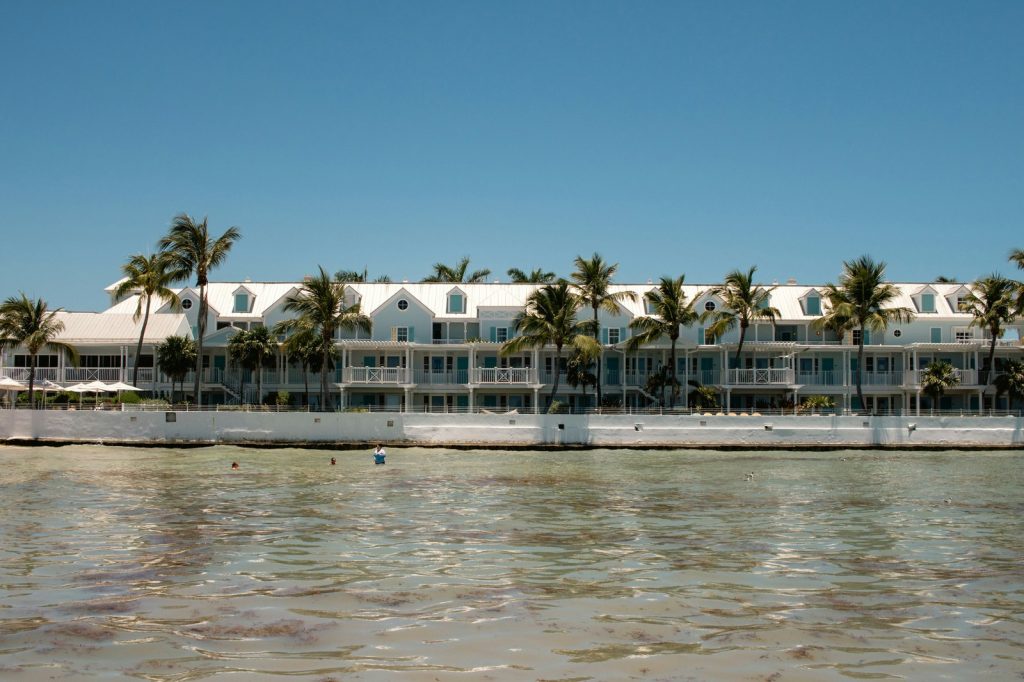
Glass railings in coastal Jamaican homes
Glass railings on a coastal Jamaican home are one of the best architectural moves you can make. The view is usually the whole reason the house exists in the first place, and nothing protects a view like glass. But coastal is also where the most things go wrong. The difference between a railing that runs 15 years and one that fails inside 3 comes down to specific spec calls that most clients never hear about until something has already started rusting. Here is what actually matters when you put glass railings on a Jamaican home within reach of salt air.
What “coastal” actually means here
For railing-spec purposes, coastal means within 1 mile of salt water. That is the marine aerosol zone where airborne chloride concentrations are high enough to pit 304 stainless inside 2 to 5 years. Inside that zone every hardware decision tightens up. Outside it you can run more standard specs without trouble.
A few common spots that count as coastal even when the house isn’t literally on the beach. Anywhere on Palisadoes road. Most of Montego Bay’s coastal-facing neighbourhoods. Negril’s full strip. Ocho Rios from the shoreline up into the hills for the first half-mile. Port Antonio’s waterfront. Treasure Beach. Most of Discovery Bay. The simplest test: if you can taste salt on your lips when you open the front door, the GPS does not really matter. You are coastal.
Hardware: 316 stainless, no exceptions
The single most important spec call for a coastal glass railing is the hardware grade. 316 stainless, not 304. The difference is roughly 2 to 3 percent molybdenum in the alloy, and that small change roughly triples the corrosion resistance against chloride attack.
In practice, here is what 316 hardware buys you on a coastal install. 12 to 18 months instead of 2 to 5 months before tea-staining starts to show on visible surfaces. 10 to 15 years instead of 2 to 5 years before pitting corrosion progresses to structural failure on fasteners and brackets. And continued warranty validity, because most reputable glass railing systems will void their structural warranty on coastal installs that use 304 hardware.
The cost premium for 316 over 304 hardware runs about 30 percent. On a JMD 1.5 million coastal install, that works out to roughly JMD 90,000 to 130,000 in extra hardware cost. It is the single best value-for-money upgrade on the entire project, and we will not quote 304 hardware for any coastal job, even when a client asks.

Fastener compatibility matters more than people think
A common installer mistake we still see at handover: 316 spigots and brackets, but 304 fasteners holding them down. The mismatch creates galvanic cells at every bolt interface, and those cells accelerate corrosion at exactly the points where structural integrity matters most.
The rule is simple. Every metal component touching another metal component in the railing assembly has to match grade. 316 spigots want 316 bolts, 316 washers, and 316 anchor hardware embedded in the concrete. If the embed plates in the slab are 304 (unfortunately common in older Jamaican construction), the right call is either to replace them or to specify isolation washers between the 304 embeds and the 316 spigot bases.
We have torn out and replaced more than a few coastal railings where the visible hardware looked perfect but the hidden anchor bolts had corroded through inside 24 months because of grade mismatch. The visible bits passed every inspection. The hidden bits decided not to.
Glass choice: laminated, low-iron, marine-grade silicone
Glass itself takes less abuse from salt than the metal does, but there are still spec calls that matter.
Tempered laminated, always. Not just tempered. Laminated panels (two glass sheets bonded by a PVB or SGP interlayer) hold together if cracked, which matters more on coastal installs where wind-borne debris during storms is a realistic concern.
Low-iron ultra-clear glass is worth the premium on coastal installs. Standard tempered glass has a faint green tint from the iron content, and on a coastal install where the railing is competing with sea blues and whites the green reads as murky. The 15 to 20 percent panel cost premium for low-iron is genuinely visible in the finished install.
Marine-grade structural silicone, not generic. Generic silicone sealants degrade under combined UV plus salt exposure within 2 to 4 years and start letting moisture into the glass-to-hardware interface. Marine-grade structural silicone (Dow Corning 995 or equivalent) holds for 10 to 12 years without degrading.
On-site passivation: the step nobody mentions
Brand-new 316 stainless hardware arrives at the site with a chromium oxide passive layer that protects it from corrosion. That layer gets damaged during installation (drilling, cutting, scratching), and the damaged spots become rust initiation sites within weeks if nothing is done about them.
Best practice on coastal installs is an on-site passivation treatment with citric acid solution (per ASTM A967) after all hardware is mounted. The treatment restores the passive layer across the entire hardware surface, including the scratched and cut areas from install. Without it, you can see tea-staining within 6 months on otherwise correctly-specced 316 hardware.
We include passivation as a line item in every coastal quote. If a competitor quote does not mention it at all, that is a question worth asking before you sign anything.
Wind and storm loading on coastal sites
Coastal Jamaican balconies face higher wind loading than inland sites for the obvious reason: less obstruction between the home and the open sea. The design wind speed on north coast oceanfront properties typically runs 25 to 35 percent higher than the inland regional average.
What this means for the spec. 17.5 mm tempered laminated panels rather than 12 mm. Spigot spacing at 600 mm centre-to-centre rather than 800 mm. Engineering calculation to a 1-in-50-year wind load, not 1-in-25-year. Specifically reinforced anchor patterns at corner panels where wind pressure differentials are highest.
The cost premium for full coastal wind spec versus a standard inland spec runs about 25 percent. On a JMD 1.5 million install, that is JMD 350,000 to 400,000 of additional spend. Worth every dollar. Hurricane-rated railings stay upright in a storm like Beryl. Underspecced ones do not.
Maintenance: the part nobody wants to hear about
Even with perfect hardware and a perfect install, coastal glass railings need active maintenance. They are not install-and-forget.
Weekly during the heavy salt-deposition months (November through March): fresh-water rinse on all hardware, paying particular attention to the undersides of brackets and the glass-to-spigot interface where salt collects.
Monthly year-round: mild dish-soap wash on all glass surfaces with a soft cloth or microfibre, followed by fresh-water rinse.
Quarterly: visual inspection of all hardware for tea-staining, pitting, or torque loss. Re-torque any fasteners that have backed off (vibration from wind plus thermal cycling does this slowly but steadily).
Annually: full professional service including passivation refresh on any tea-stained hardware, silicone joint inspection and replacement where degraded, and torque calibration of all hardware back to spec.
Skip the maintenance and a perfectly-specced coastal railing fails in 5 to 7 years. Keep up the maintenance and the same railing runs 15 to 20 years. Same railing. Wildly different outcomes.
Cost ranges for coastal Jamaican glass railings
For a 30 to 40 foot residential coastal install with full coastal spec (316 stainless throughout, laminated low-iron glass, marine silicone, on-site passivation, hurricane wind engineering):
Frameless spigot-mount: JMD 1.8 to 2.6 million installed.
Frameless with slim top rail: JMD 2.0 to 2.8 million installed.
Hybrid framed system in marine-grade aluminum (AAMA 2605): JMD 1.4 to 2.0 million installed.
Add roughly 20 percent to any of those numbers for north coast oceanfront work where the site is fully exposed to the prevailing wind. The premium reflects the harder install conditions plus additional hardware reinforcement.
A short summary
Coastal Jamaican glass railings absolutely work, and they look spectacular on the right home. But they require specific spec calls that most inland jobs do not. 316 stainless throughout, matched fastener grade, laminated low-iron glass, marine-grade silicone, on-site passivation, hurricane-rated wind engineering, and a disciplined annual maintenance schedule. Get all of that right and the railing runs 15 to 20 years on the worst stretch of Jamaican coast. Skip any of it and you are looking at hardware failure inside 3 to 5.
Related reading
- How long do glass railings last in coastal Jamaican homes?
- Why glass railings fail and how to prevent it
- Annual maintenance checklist for glass railings
For background on how marine-grade stainless steel performs in chloride environments, see the Wikipedia entry on marine grade stainless.
The next step
If you are planning a glass railing for a coastal Jamaican home and want input on the right spec for your specific exposure and site conditions, our team is happy to walk you through the options. Honest input on hardware grade, glass spec, install detail, and the maintenance schedule the railing will need to actually last.
Request a coastal consultation, browse our work, or get a quote on a new install to start.