

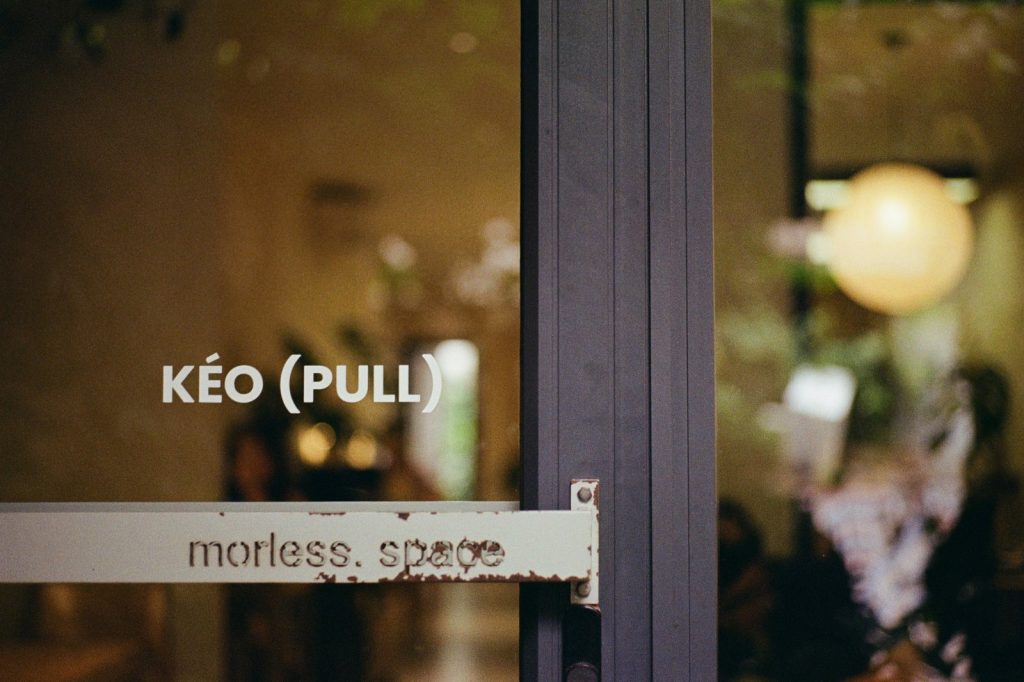
Hardware choices for storefronts: handles, hinges and locks
The hardware on a storefront is the part of the install your customers actually touch. They never run their hands over the aluminum framing or the glass. They use the door pull every visit. They look at the lock when they wonder whether your business is open. The hinges they only notice when something has gone wrong.
That makes hardware the highest-attention component in the whole install, and yet it is often the line item that gets the least conversation at quote stage. Most business owners default to whatever the installer suggests, which is often whatever is sitting in stock.
Here is the practical buyer’s guide to handles, hinges, and locks for Jamaican commercial storefronts, with the trade-offs that actually matter for cost, durability, and how the door feels under your hand.
Door pull handles
The single most-touched piece of hardware on the install. Worth getting right.
The four common pull styles for commercial storefront doors in Jamaica.
Offset C-pulls are the standard. A curved bar mounted on standoffs, parallel to the door. Available in lengths from 8 inches to 24 inches. Affordable, comfortable, and visually neutral. Suitable for almost any retail or commercial install.
Ladder pulls are vertical bars that run most of the height of the door, typically 24 to 60 inches long. The look is modern and architectural. They give a generous gripping area at multiple heights, which is good for accessibility. They cost more than C-pulls (typically 50 to 100 percent more) and they show fingerprints more obviously because of the larger surface area.
Round knob or D-pulls are the budget option. Functional, easy to install, but not the most ergonomic for hands carrying bags or coffee. Suitable for low-traffic back-of-house doors but not for primary entries.
Custom or decorative pulls (logos, sculptural shapes, branded designs) are the premium option. They cost considerably more and they tend to date faster, but they make the entry distinctive.
For the alloy spec, we recommend 316 stainless steel for any pull within two miles of the coast. 304 stainless is acceptable inland. Brass and chrome-plated brass are decorative options but require more maintenance to keep looking sharp.
For length, the rule of thumb on standard commercial doors (about 7 feet tall) is a pull of at least 12 inches for adult use. 24 inches gives a more generous grip and ages better visually. Pulls under 12 inches start to feel undersized on a commercial door.

Hinges and pivots
The structural hardware that supports the door’s weight and controls its swing.
The two main systems for commercial storefront doors are butt hinges and pivot hinges. Each has its place.
Butt hinges are the traditional system. Two leaves connected by a pin, mounted on the door edge and the frame. Common configuration is three or four ball-bearing hinges per door, sized about 4 inches by 4.5 inches. They are familiar, easy to service, and any competent installer can work on them. They transfer the door’s weight to the frame, which means the frame substrate needs to be solid where the hinges mount.
Pivot hinges are the modern system, particularly for heavy glass doors. The door pivots on a single pin at the top and bottom, anchored into the floor and the door head. The bottom pivot bears the weight, which removes load from the frame side. They handle heavier doors more cleanly than butt hinges and they last longer because the wear is in a single, replaceable pivot.
For most retail commercial doors in Jamaica, four-hinge butt configuration is the default and works well. For half-inch frameless glass doors or any door over 40 pounds, pivot hinges are usually the better answer.
A few quality markers regardless of system. Ball-bearing hinges rather than friction hinges (longer life, smoother action). Hospitality-rated cycle count (at least 500,000 cycles for a busy commercial door). Replaceable bushings on pivot hinges (so the wearing part can be swapped without replacing the whole pivot). 316 stainless on coastal installs, 304 inland.
Locks and security
The hardware that controls who enters and when. More variety here than in the other categories.
The three common lock systems for commercial storefronts.
Mortise deadlocks are the workhorse. A keyed cylinder on the outside, a thumbturn or second cylinder on the inside, and a deadbolt that throws into a strike plate on the frame. Reliable, repairable, well-understood, and inexpensive to rekey. Most Jamaican retail storefronts use this.
Hookbolt locks are a variant of the mortise system, specifically designed for aluminum and glass storefronts. The bolt is shaped like a hook rather than a square bar, which engages the strike plate more positively and resists forced entry better. Slightly more expensive than a standard deadlock but better for security-sensitive locations.
Electromagnetic locks (mag locks) are the keyless option, often paired with a keypad or card reader on the outside. The door is held closed by an electromagnet at the top of the frame. They are popular for shared-access spaces and gyms where multiple users need entry without physical keys. They require continuous electrical power, which means a battery backup is essential for a building with intermittent power. We do not recommend them as the only lock on a security-sensitive retail unit.
For most Jamaican retail commercial doors, a hookbolt mortise deadlock with a key cylinder rated as a commercial grade (Grade 1 or Grade 2) is the right answer. Add a separate panic exit device (push bar) on the inside for any door rated for occupancies that require it under the building code.
For the cylinder itself, the higher-security options worth considering are restricted keyways (cannot be duplicated without authorisation), pick-resistant pin systems, and reinforced housings that resist drilling and snapping. These add cost but are worthwhile for businesses with valuable inventory or unattended hours.
Closers and access control
The hardware that returns the door to closed without slamming, and that controls who can open it.
Door closers come in three main types. Surface-mount closers (mounted visibly on the door or frame, easy to service, mid-range cost). Concealed closers (mounted inside the door head, cleaner look, more expensive to service). Floor closers (mounted in the floor, used with pivot-hinge doors, premium spec).
For most Jamaican retail doors, a surface-mount commercial closer with adjustable closing speed and latch speed is the standard. Spec a Grade 1 closer rated for the door weight and the cycle count. Cheap closers fail in two to three years. Quality closers last seven to twelve years.
Access control adds an electronic layer over the mechanical lock. Card readers, keypads, smartphone-based access, and biometric readers are all options. For most Jamaican retail this is overkill, but for offices, gyms, and businesses with employee-only access, a basic keypad or card reader integrated with the mag lock is reasonable.
Code requirements that affect hardware choice
A few code rules that shape the hardware decision.
All commercial storefront doors must be operable with a closed fist (no pinch grip required to operate the latch). This rules out round door knobs as the primary latch mechanism on most commercial doors. Use lever handles or push pulls instead.
The opening force on an exterior commercial door should not exceed 8.5 pounds of effort (and 5 pounds on interior accessible doors). This affects the closer adjustment and the door weight calculations.
Doors rated for occupancy require panic exit hardware (push bar) on the inside if the door swings into an exit path. This applies to most retail spaces with more than a handful of customers at a time.
Accessibility code requires the lever handle (if used) to be a certain height range from the floor (typically 34 to 48 inches centerline), and the door to provide a clear opening of at least 32 inches when fully open.
A qualified glazier will know these rules. Verify they have been considered at quote stage.
What we recommend for typical Jamaican projects
For a small-to-medium retail storefront in an inland location: a 24 inch C-pull or short ladder pull in 304 stainless with a brushed finish, four-hinge butt configuration with ball-bearing 304 stainless hinges, a hookbolt mortise deadlock with a Grade 1 commercial cylinder keyed both sides, and a surface-mount Grade 1 closer with adjustable speed. Total hardware budget: roughly JMD 80,000 to JMD 200,000 depending on grade.
For a coastal retail or hospitality storefront, the same as above, except 316 stainless on all hardware, with isolation washers at every fastener between dissimilar metals. Cost uplift of roughly 25 to 40 percent on the hardware line, or about JMD 30,000 to JMD 80,000 extra.
For a high-end retail boutique or hospitality entry: a long ladder pull (48 to 60 inches) in 316 stainless with a satin finish, pivot hinges with a concealed top pivot, a hookbolt deadlock with restricted keyway, and a concealed closer. Total hardware budget: roughly JMD 200,000 to JMD 500,000.
For a gym, BPO, or shared-access space: a standard mortise deadlock plus a mag lock with keypad or card reader, a panic exit device on the inside, and a heavy-duty closer. Total hardware budget: roughly JMD 150,000 to JMD 350,000.
A simple closing thought
Hardware is the line item where shaving 20 percent at quote stage costs you 200 percent in repairs five years later. The cost difference between budget and quality hardware on a typical storefront is JMD 50,000 to JMD 150,000. The cost difference in lifetime maintenance is several times that.
If you are tightening a budget on a storefront project, do not tighten it on the hardware. Tighten it on the framing finish or the glass thickness instead.
Related reading
- Aluminum finish options for storefronts: black, white, bronze, natural
- How to choose the right glass thickness for storefronts
- Storefronts hardware: when to repair, when to replace
For background on commercial door hardware grading, see the Wikipedia entry on Builders Hardware Manufacturers Association.
The next step
If you are choosing hardware for a storefront install in Jamaica and you want a quote that names the alloy, the grade, and the cycle rating of every component in writing, our team is happy to provide it. Hardware is the line where serious installers stand out from the budget bidders.
Request a quote with hardware specs, browse our commercial work, or get in touch to talk through the hardware decisions for your project.