

Sliding versus hinged shower enclosures is one of those decisions where bathroom geometry usually decides for you. If you have space for a door to swing, hinged is the better pick. If you don’t, sliding is. The interesting calls happen in the middle ground where either could work.
Here’s the full comparison.
How each works
Hinged shower doors swing open and closed on hinges, like a regular door. Single direction or both directions depending on the spec. The door swings out (most common) or in.
Sliding shower doors travel horizontally on a track. The door panel slides past a fixed panel rather than swinging through space. Single-track (one panel moves, one fixed) or bypass (two panels each on their own track, both move).
Space requirements
This is the biggest practical difference.
A hinged door needs clearance for the swing. A 36-inch wide door swings out about 36 inches into the bathroom. That space needs to be clear of toilets, vanities, doorways, and anything else.
A sliding door needs zero clearance for the door itself. The track is fixed, and the door slides within the enclosure footprint.
For small Jamaican bathrooms (50 to 70 square feet), a hinged door often blocks the toilet or another fixture when open. Sliding eliminates that problem.
For larger bathrooms (80+ square feet), hinged doors usually have plenty of room and don’t conflict with anything.
Cost comparison
Both options span a wide cost range depending on spec, but rough comparisons:
Framed sliding: $600 to $1,500 USD installed for typical residential.
Framed hinged: $700 to $1,800 USD.
Semi-frameless sliding: $1,200 to $2,500 USD.
Semi-frameless hinged: $1,400 to $2,800 USD.
Frameless hinged: $1,800 to $5,000+ USD.
Frameless sliding: $2,500 to $6,000+ USD (sliding hardware is more expensive in frameless spec).
For framed and semi-frameless, sliding is usually slightly cheaper. For frameless, hinged is usually cheaper because the hardware is simpler.
Aesthetic considerations
Sliding usually means visible hardware (the track at top and bottom). Even in frameless sliding, the header that holds the track is a visible element. The look is more functional than minimalist.
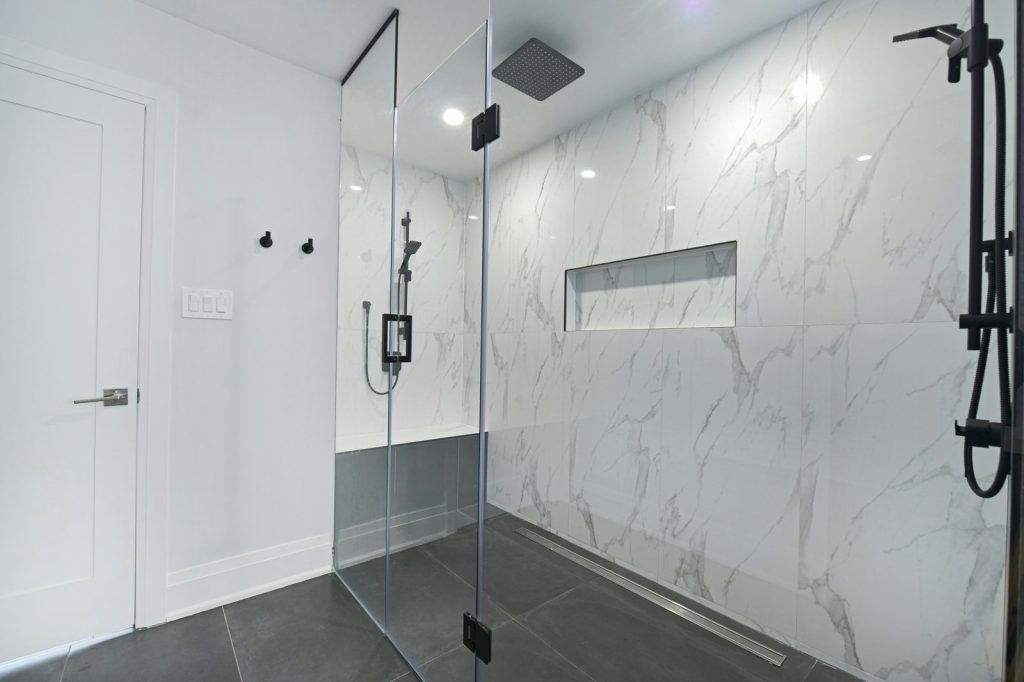
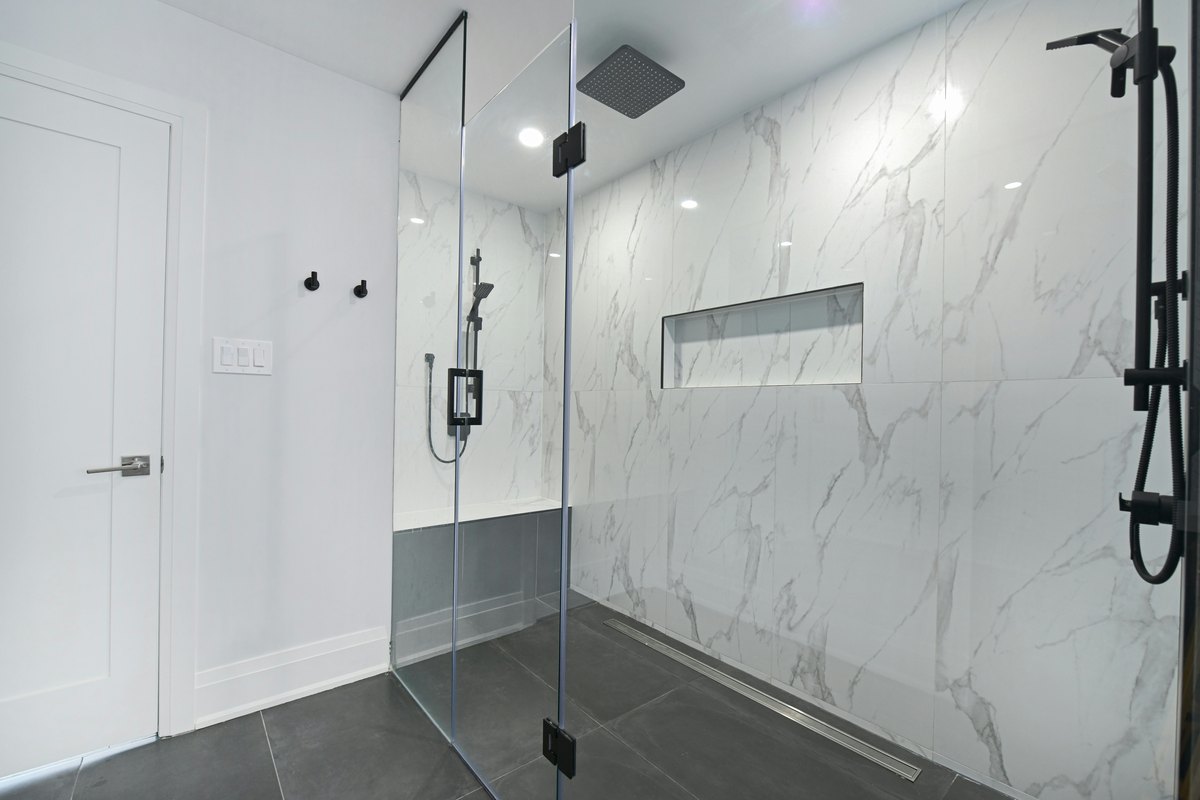
Hinged frameless is the cleanest minimalist look in shower design. Just glass and small hinges. Very contemporary, very high-end residential.
Framed sliding looks the most “kit” of the options. Acceptable for value bathrooms, less suited to premium ones.
For contemporary or premium master bathrooms, hinged frameless is usually the preferred aesthetic. For functional value bathrooms or alcoves with limited space, framed sliding is fine.
Opening size
Hinged doors open to the full width of the door panel. You step through the full opening.
Sliding doors open to roughly half the width (because one panel is fixed). A 60-inch sliding door gives you about 30 inches of opening to step through.
For accessibility, mobility issues, or just easier entry, hinged is meaningfully better. The full opening matters more than people realise until they have it or lose it.
Water containment
Both contain water well when installed correctly, with different vulnerabilities.
Hinged doors: water can drip from the door edge to the bathroom floor when the door is opened wet. Good bottom sweeps and proper drainage minimize this.
Sliding doors: tracks can collect water that doesn’t drain back into the shower. The drain holes in the track must be kept clear. Track blockage is the most common sliding-door failure mode.
For Jamaican humidity and daily shower use, both are fine if maintained. Sliding tracks need more frequent attention than hinged seals.
Maintenance
Hinged: wipe glass and silicone seals weekly, tighten hinges quarterly. That’s about it.
Sliding: same wipe routine, plus weekly track cleaning (hair, soap, mineral buildup blocks the drainage holes), plus periodic track lubrication for smooth sliding.
Sliding doors are slightly more maintenance-intensive. Not difficult, just more steps.
Hardware lifespan
Hinged hardware: 10 to 20 years for quality residential, 15 to 25 years for marine-grade in coastal homes.
Sliding hardware: tracks and rollers wear with use. 7 to 15 years for quality residential, 10 to 20 years for marine-grade. The moving parts wear faster than hinges.
Sliding doors need more frequent hardware replacement over the life of the enclosure.
When to pick which
Pick hinged when:
The bathroom has space for the door swing.
The aesthetic is contemporary or premium (frameless hinged is the cleanest look).
Accessibility or easy entry matters.
You prefer lower maintenance.
You’re going frameless and want lower cost.
Pick sliding when:
The bathroom is tight and door swing would block other fixtures.
Alcove configuration with two parallel walls (sliding is natural here).
Budget is constrained for a framed or semi-frameless option.
You’re OK with slightly higher maintenance for the space savings.
For most Jamaican residential bathrooms with 70+ square feet, hinged is the better pick. For smaller bathrooms or alcoves, sliding is often necessary.
Hybrid options
A few middle-ground options.
Bifold doors: fold along a hinge in the middle, opening like an accordion. Combines some advantages of both. Less common but useful for specific tight spaces.
Pivot doors: hinge at top and bottom rather than the side. Allows the door to swing both directions. Premium option for walk-in entries.
Curved sliding (quadrant): for curved corner enclosures, sliding works well because there’s no straight wall to hinge from. Costs more than rectangular configurations.
Common decision mistakes
Picking sliding to save space in a bathroom that has plenty of room. Pays maintenance cost without the space benefit.
Picking hinged frameless in a small bathroom because it looks better, then finding the door blocks the toilet when open. Test the swing during design.
Going premium frameless sliding when frameless hinged would have been cheaper and easier to maintain.
Picking framed sliding for a premium bathroom because it’s the “spec’d kit.” The frame profile clashes with high-end finishes.
Related reading
- Custom vs standard shower enclosures: which fits your home?
- What size shower enclosure fits your space?
- Sliding vs hinged glass doors: which works better for your home?
For background on sliding door mechanisms generally and how the various track designs differ, Wikipedia covers the engineering.
Frequently asked questions
Which is better, sliding or hinged shower doors?
Hinged for most bathrooms with enough space for the door swing. Cleaner aesthetic (especially frameless), wider opening, less maintenance, longer hardware lifespan. Sliding for tight bathrooms where door swing would block other fixtures, or for alcove configurations. Bathroom geometry usually decides; if you have flexibility, hinged is the better pick for most Jamaican residential.
How much clearance does a hinged shower door need?
Roughly the width of the door panel (typically 24 to 36 inches) swung outward into the bathroom. That space needs to be clear of toilets, vanities, and other fixtures when the door opens. Sliding doors need zero clearance because they slide within the enclosure footprint. For bathrooms under 70 square feet, the swing clearance is often the deciding factor.
Are sliding shower doors more expensive than hinged?
Depends on spec. Framed and semi-frameless sliding are usually slightly cheaper than equivalent hinged. Frameless hinged is cheaper than frameless sliding because sliding hardware is more complex in frameless spec. Compare: framed sliding $600 to $1,500, framed hinged $700 to $1,800, frameless hinged $1,800 to $5,000+, frameless sliding $2,500 to $6,000+ USD installed.
Do sliding shower doors need more maintenance?
Yes, slightly. Both need weekly glass wiping and seal inspection. Sliding adds weekly track cleaning (drainage holes block with hair, soap, mineral deposits) and periodic track lubrication. Hinged just needs quarterly hinge tightening. Sliding hardware (tracks, rollers) also wears faster than hinges, with 7 to 15 years lifespan versus 10 to 20 for hinged.
Which opens wider, sliding or hinged?
Hinged. A hinged door opens to the full width of the door panel. Sliding opens to roughly half the width (because one panel is fixed). A 60 inch sliding door gives about 30 inches of opening; a 36 inch hinged door gives full 36 inches. For accessibility, mobility, or just easier entry, hinged provides a meaningfully wider entry.
The next step
If you’re trying to decide between sliding and hinged for your project, the contact page is the way to start. We can walk through your bathroom geometry, fixture layout, and aesthetic priorities before recommending one direction.
For projects ready to quote, the quote request form takes the basics.
The shower enclosures service page covers what we install in both configurations.
Sliding versus hinged isn’t really a quality contest. It’s a fit contest. The right answer comes from the bathroom geometry first, the aesthetic priority second, and budget third. Get those right and the choice is usually obvious.