

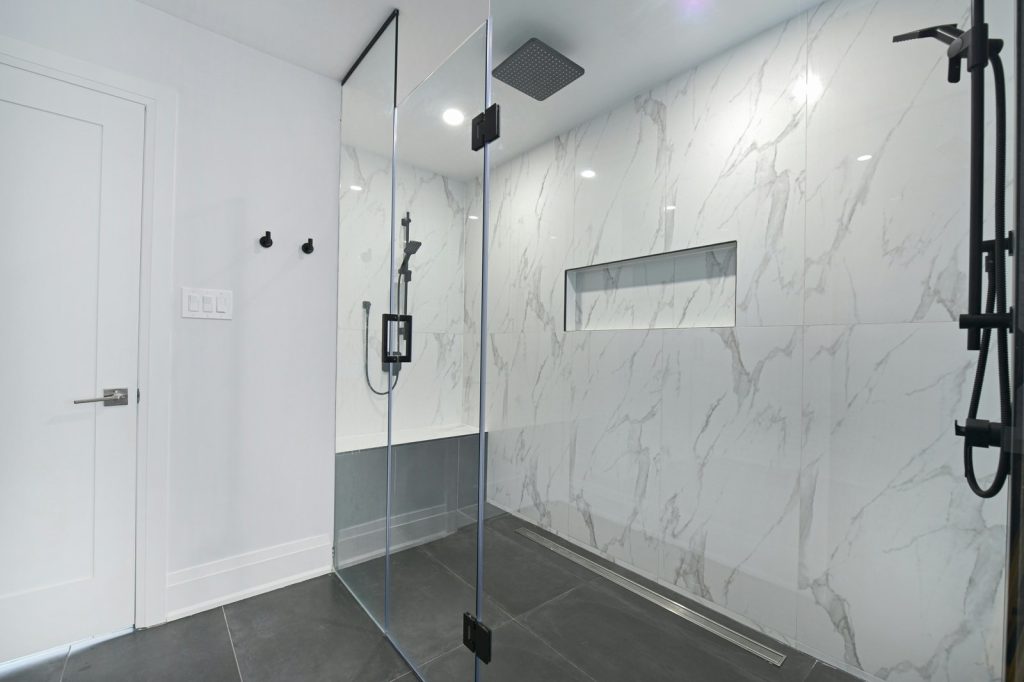
Most shower enclosure failures aren’t sudden. They’re slow. A leak that starts as a few drops at a corner. A door that develops a tiny drift you can barely see. Silicone that goes from white to yellow to brittle over a few years. By the time the homeowner notices a real problem, the underlying cause has been building for months or years.
The good news: 90 percent of shower enclosure failures come from five causes, and all of them are preventable with simple habits. Here’s the rundown.
1. Silicone degradation
The number one cause of failure in Jamaican homes is silicone seals breaking down. Tropical humidity, hot water, and daily steam exposure age silicone faster than in temperate climates. A seal that lasts 10 years in London might last 5 in Kingston, and less in a coastal home.
How it fails: silicone goes from elastic to brittle. Once brittle, it cracks. Once cracked, it pulls away from the glass or wall. Once it pulls away, water gets behind it and the leak begins.
Warning signs: silicone yellowing or browning (early), small cracks visible at corners (mid), silicone visibly pulling away from the surface (late).
How to prevent: wipe silicone seals weekly with a damp cloth to remove soap residue and mildew. Inspect monthly for early discolouration. Plan to re-seal proactively at the 3 to 5 year mark, not when leaks start.
The cost of prevention is about $30 USD in materials and an hour of work, or a service call from the installer. The cost of letting silicone fail completely is water damage to the bathroom subfloor, which can run $500 to $3,000 USD to repair. That’s not a close call.
2. Hinge loosening and door misalignment
The second-most common failure is doors that go out of alignment because the hinges have loosened. Even a tiny bit of sag opens a gap that water finds every time the shower runs.
How it fails: hinges have small screws that hold them to the glass or wall. Vibration from daily opening and closing, plus heat-cool cycles, slowly loosens those screws. The door sags slightly. The seal between door and frame (or against the magnetic strip) breaks.
Warning signs: door no longer closes flush against the magnetic strip, drift visible when closed (the top or bottom edge is off-centre), water pooling at the bottom corner the door swings toward.
How to prevent: tighten hinges hand-tight every 3 to 6 months. Use a screwdriver, not a power tool. Power tools strip the screws and crack the glass surface around the anchor. If a hinge can’t be tightened to hand-tight without the screw spinning, the anchor has stripped and the supplier needs to come fix it.

3. Track and drain blockage on sliding doors
For sliding enclosures, the third major failure mode is the bottom track getting blocked.
How it fails: sliding door tracks have small drainage holes that let water escape back into the shower rather than out into the bathroom. Over time, hair, soap residue, and mineral deposits block those holes. Water collects in the track and eventually overflows out the side.
Warning signs: visible water in the track that doesn’t drain after the shower stops, water on the bathroom floor outside the enclosure, gunky buildup visible in the track.
How to prevent: clear the track weekly. A toothbrush works for most buildup. Pour some white vinegar into the track once a month to dissolve mineral deposits and reach the drain holes. If buildup is severe, the track may need to come off for proper cleaning, which the supplier can do as a service call.
This is a sliding-vs-frameless thing. Frameless swing doors don’t have tracks. If you have any kind of sliding door, this applies; if you have a swinging frameless door, skip ahead.
4. Hardware corrosion (coastal homes especially)
The fourth major failure mode is hardware corrosion. Mostly a coastal problem, but humidity in any Jamaican bathroom contributes.
How it fails: cheap plated hardware (chrome plating over brass or steel) corrodes from inside as moisture works its way through tiny imperfections in the plating. The plating bubbles, then flakes, then exposes the corroded metal underneath. Hardware function declines, finish looks ugly, and eventually the part fails structurally.
Warning signs: small bubbles or rough spots on plating, visible discolouration, hardware that feels grittier than it used to when operated.
How to prevent: wipe hardware after every shower in coastal homes, weekly inland. Use a silicone-based protectant on chrome once a quarter. If the budget allows, spec marine-grade or solid stainless hardware up front in coastal homes. The premium pays back many times over the life of the enclosure.
What doesn’t work: trying to clean corrosion off plated hardware. By the time you can see it, the damage is done. The piece needs to be replaced.
5. Glass damage from impact or thermal shock
The least common but most expensive failure is the glass itself breaking. This is almost always preventable.
How it fails: tempered glass is strong, but it has one weakness. An impact on the edge can cause it to shatter explosively. Common causes are dropping a heavy bottle on the edge, slamming the door so hard the edge hits the frame, or thermal shock from suddenly hitting hot glass with cold water.
Warning signs: chips on the edge of any panel (especially the door edge), hairline cracks visible in the glass, unusual sounds during temperature changes.
How to prevent: handle glass gently. Don’t slam the door. Don’t put glass shelving or heavy items where they can fall and hit the glass edge. Don’t pour cold water directly onto hot glass.
If you see a chip or crack on a tempered glass edge, contact the supplier immediately. Edge chips can spontaneously cause the entire panel to shatter, sometimes weeks after the chip occurred. A small chip caught early can sometimes be repaired. Once the glass shatters, the whole panel needs replacement (typically $300 to $1,200 USD depending on size and type).
The simple prevention routine
Most of the prevention above takes 60 seconds a day plus an hour a quarter.
Daily (60 seconds): squeegee the glass, wipe the silicone seals if you can see them.
Weekly (10 minutes): proper glass clean, hardware wipe, track clean if you have one.
Monthly (15 minutes): visual inspection of silicone, hardware, and hinges. Look for any of the warning signs above.
Quarterly (1 hour): tighten hinges hand-tight, deep clean the track if applicable, apply silicone-based protectant to chrome hardware in coastal homes.
Every 3 to 5 years: proactive re-seal of silicone.
This routine catches almost every failure mode before it becomes a real problem. The homeowners we see calling about major leaks are usually the ones who skipped the routine for two or three years and are now paying the bigger bill.
When to call the supplier
Don’t wait if you see any of these.
Visible chip or crack on glass edge (panel could spontaneously fail).
Hinge that can’t be tightened without spinning (anchor is stripped).
Silicone with major separation from glass or wall.
Hardware that’s corroded past wiping off.
Water clearly making it past the door seal even after a squeegee and a tightening pass.
A service call at the early stage of a problem is usually $50 to $200 USD. The same problem caught a year later, after water has been getting into the wall, can be a four-figure repair.
Related reading
- How to clean shower enclosures without damaging the finish
- How a one-year workmanship warranty works on shower enclosures
- Why glass doors fail and how to prevent it
For background on silicone rubber as a sealant and why it ages, Wikipedia covers the chemistry of degradation.
Frequently asked questions
What’s the most common reason shower enclosures fail?
Silicone seal degradation is the number one cause in Jamaican homes. Tropical humidity, hot water, and daily steam exposure age silicone faster than in temperate climates, with seals typically failing at 3 to 7 years rather than the 10+ years they might last elsewhere. Catching silicone aging early (yellowing, small cracks) and re-sealing proactively at the 3 to 5 year mark prevents the bigger problem.
How do I know if my shower door is out of alignment?
Check that the door closes flush against the magnetic strip or stop. Look for visible drift when the door is closed (the top or bottom edge is off-centre from where it should be). Watch for water pooling at the bottom corner the door swings toward. If you see any of these, hinges have likely loosened and need tightening. Use a screwdriver, not a power tool.
Why does my shower door track keep filling with water?
The drainage holes in the track are blocked, usually by hair, soap residue, and mineral deposits. Clear the track weekly with a toothbrush, and pour white vinegar into it monthly to dissolve mineral buildup and reach the drain holes. If buildup is severe, the track may need to come off for proper cleaning, which the supplier can handle as a service call.
My shower glass has a chip on the edge. Is it dangerous?
Yes. Tempered glass is strong against face impact but vulnerable on the edge. An edge chip can cause the entire panel to spontaneously shatter, sometimes weeks after the chip occurred. Contact the supplier immediately. Small chips can sometimes be repaired; once the glass shatters, the whole panel needs replacement at typically $300 to $1,200 USD depending on size and type.
How often should I re-seal silicone on a shower enclosure?
Plan to re-seal proactively at the 3 to 5 year mark in Jamaican humidity, sooner in heavy-use bathrooms or coastal homes. Cost is about $30 USD in materials and an hour of work, or a service call from the installer. Waiting until leaks start can mean water damage to the bathroom subfloor that costs $500 to $3,000 to repair. Prevention is much cheaper than recovery.
What’s the cheapest way to extend the life of my shower enclosure?
A 60-second daily squeegee and 10-minute weekly clean prevents most failure modes. Add 15 minutes monthly for visual inspection, an hour quarterly to tighten hinges and clean tracks, and proactive re-seal every 3 to 5 years. Total time investment is under 30 hours a year, total cost is under $100 USD a year, and the enclosure can last 15 to 25 years instead of 5 to 10.
The next step
If your enclosure is showing any of the warning signs above, the contact page is the way to ask for an assessment. Catching problems early is much cheaper than letting them mature.
For new installs spec’d to last, the quote request form takes the basics for a quote that includes the maintenance conversation.
The shower enclosures service page covers what we install.
Shower enclosures fail for predictable reasons. They also last decades when the maintenance is done. The difference between an enclosure that needs major repair at year 5 and one that’s still working perfectly at year 15 isn’t the quality of the original install (assuming a competent one). It’s the routine the homeowner kept up with after the install.