

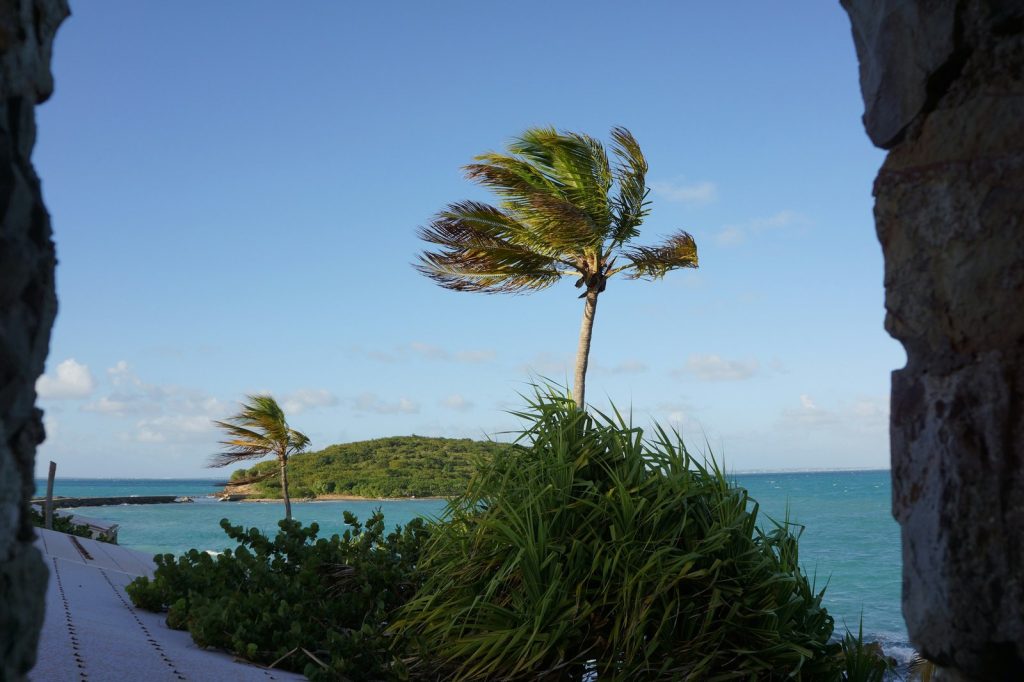
Hurricane season runs June through November every year in Jamaica. Most years the island sees several named tropical systems pass through the region. Some years there’s one or more direct hits, or near-misses that still bring serious wind and rain. Sliding windows are one of the most vulnerable parts of a residential structure when that happens, and they’re also one of the more economical places to put real storm protection.
This is the full guide to sliding windows during hurricane season in Jamaica: what the spec actually means, what your options are, what to do before the season starts, and what to do when a storm is approaching.
What “hurricane-rated” actually means
A hurricane-rated sliding window isn’t just a window with thick glass. It’s a complete assembly (frame, glass, fasteners, and install detail) that has been tested and certified to withstand specific wind pressures and impact loads.
The two test standards that matter for the Caribbean are ASTM E1886 (the missile impact and pressure test) and ASTM E1996 (the pass/fail specification). The most demanding version is Miami-Dade County’s HVHZ (High Velocity Hurricane Zone) standard, which requires the assembly to survive a 9-pound 2×4 lumber missile fired at 34 mph into the glass without penetration, followed by 9,000 cycles of positive and negative wind pressure that simulate a multi-hour storm.
A window can have impact-rated glass without the whole assembly being hurricane-rated. The frame, the fasteners, and the install detail all have to be part of the certified system, because storm damage often happens at the frame-to-wall connection or the panel-to-frame seal, not just from the glass breaking.
When you’re shopping for hurricane spec, ask for the product approval number and the test standard the assembly was certified against. “Hurricane-rated” on its own is not enough information.
The two assembly options: impact glass vs shutters
There are two practical ways to protect a sliding window from storm impact in Jamaica.
The first is a permanent impact-rated assembly. The window itself is hurricane-rated, the glass and frame handle the wind and debris, and no additional preparation is needed when a storm approaches.
The second is a standard (non-impact) sliding window protected by storm shutters that are deployed when a hurricane is forecast. The window is normal residential spec; the shutters carry the impact and pressure load when needed.
Both work. The choice depends on cost, convenience, and how often the home is occupied.
Impact assemblies cost meaningfully more up front (typically 50 to 100 percent over standard residential) but require no storm-day labour. Shutters cost less up front but need to be deployed manually before each storm and removed afterward, which is a real commitment of time and effort in storm season.
For a home that is occupied year-round, with an active homeowner who can deploy shutters reliably, shutters can be the more cost-effective approach. For a vacation home, a rental property, or any household where someone may not be available to deploy shutters before a fast-moving storm, impact assemblies are the safer call.
Glass options for hurricane spec
Hurricane-rated glass is almost always laminated: two layers of glass bonded with a clear plastic interlayer, usually PVB (polyvinyl butyral) or sometimes EVA. When the glass is struck, it may crack in a spider-web pattern, but the interlayer holds the fragments in the frame instead of letting them blow into the room.
The standard residential impact glass spec in our region is two layers of 1/8 inch tempered with a 0.090 inch PVB interlayer. Heavier specs (1/4 inch + 1/4 inch tempered with a thicker interlayer) handle higher wind loads and are required for larger openings or higher exposure ratings.
A few hurricane assemblies use tempered glass alone without lamination, paired with a heavy frame. This is less common in residential because the broken-glass-stays-in-frame behaviour of laminated is exactly the property you want during a storm.
The full glass spec conversation is in our how to choose the right glass thickness for sliding windows guide.
Frame requirements for hurricane spec
The frame on a hurricane-rated sliding window is heavier than standard residential profile. Aluminum extrusions are thicker (often 1/8 inch wall thickness or more, where standard residential is around 1/16 inch). Internal reinforcement bars are common on wider panels. The frame-to-wall fastening points are designed to transmit the storm loads into the building’s structure rather than relying on the wall finish.
The visible result is that hurricane-rated sliding windows look slightly heavier than standard windows once installed. The frame is thicker; the visible aluminum is more substantial. Homeowners who want both hurricane protection and a slim-profile aesthetic can specify premium European-spec assemblies that achieve both, but the cost premium for that is significant.
Shutters as alternative or complement
If your home doesn’t have hurricane-rated sliding windows, storm shutters are the second line of defence. The four common types in Jamaica:
Accordion shutters are permanently mounted in tracks alongside the window and unfold when a storm is forecast. Convenient to deploy. Higher cost than panels.
Roll-down shutters mount in a housing above the window and roll down on a track, sometimes motorised. The most convenient option, and the most expensive.
Storm panels are removable corrugated metal or polycarbonate panels that you store off the window and mount over it before a storm. Cheapest spec, but it costs storage space and manual labour before each event.
Bahama shutters hinge at the top, swing out as awnings normally, and drop down to lock during storms. The bonus is year-round shade as well as the storm protection.
Shutters can also complement hurricane-rated windows on the most exposed elevations of a coastal property, particularly in direct beachfront homes where two layers of protection make sense.
Pre-season inspection checklist
Whether your protection is impact windows or shutters, the start of hurricane season (May for safe margin, June at the latest) is the time for an annual inspection:
- Walk every window and confirm seals, frame, and hardware are intact. Address anything loose, cracked, or pulling away.
- On shuttered properties, deploy and re-stow each shutter once. Confirm the tracks, hardware, and (for storm panels) mounting hardware are all present and working.
- Check the weep holes on every sliding window. Clear any obstructions. Coastal homes accumulate debris in tracks faster than inland homes.
- For impact-rated assemblies, confirm the storm-rated locks still engage cleanly.
- Confirm storm panels are stored where you can actually get to them with a hurricane forecast in progress, not buried in the back of a shed.
- Take photos of the home exterior and the window installations. Useful for insurance documentation if damage occurs later.
Do this in May or early June, while there’s still time to fix anything before the first storm.
During an approaching storm
When a hurricane warning is issued and your home is in the affected area:
- Deploy shutters if applicable. Don’t leave this to the last hour. 24+ hours before expected landfall is the right window, while conditions are still safe to work outside.
- Lock all sliding windows in the closed position. Engage the storm-rated locks on impact-rated assemblies. Make sure standard locks are firmly closed on shuttered windows.
- Apply masking tape in an X pattern on glass on standard (non-impact) windows that are not shuttered. This isn’t impact protection, but it reduces the spread of glass fragments if a panel breaks.
- Move soft furnishings away from the windows. Even with impact glass, water can penetrate around seals during prolonged pressure.
- Have a clear path away from large glass openings if the storm intensifies. Interior rooms with no windows are the safest shelter during the worst of a major hurricane.
After the storm: damage assessment
Once the storm has passed and authorities have declared the area safe:
- Walk every window from the outside before opening anything. Look for cracks, debris embedded in glass or frames, frame distortion, or visible damage to the install.
- For impact windows that took hits, the glass may show spider-web cracks even though the assembly held. The interlayer is still intact and the unit is still functional, but the glass should be replaced as soon as practical.
- Check all weep holes for blockage. Storm-driven water tends to push leaves and debris into the drainage paths.
- Document any damage with photos before doing any repair work. Insurance claims require this.
- Schedule a professional inspection for any unit that took significant impact, even if it appears intact. Internal damage to the frame or fixings may not be visible from outside.
Sliding windows during hurricane season: the cost math
The cost premium for hurricane-rated sliding windows in Jamaica is real. A typical residential install in hurricane spec costs 50 to 100 percent more than the equivalent standard residential install.
The cost of replacing a standard window broken in a storm, plus the water damage to interior finishes, plus the loss of the room contents if water penetrates significantly, is usually substantially more than the hurricane-spec premium would have been. The break-even tends to arrive on the first major storm impact.
For homes in high-exposure zones (coastal, hillside, ridge-top) the hurricane premium is essentially mandatory. For homes in more sheltered locations the math can favour standard windows with shutters as the cheaper combined approach. Doing nothing is the most expensive option over a 20-year horizon in Jamaica.
Related reading
- How long do sliding windows last in coastal Jamaican homes?
- Sliding windows in coastal Jamaican homes
Frequently asked questions
What makes a sliding window hurricane-rated?
A complete assembly (frame, glass, fasteners, install detail) tested against standards like ASTM E1886 and E1996. The Miami-Dade HVHZ test requires the assembly to survive a 9-pound 2×4 lumber missile at 34 mph plus 9,000 cycles of wind pressure. The whole system carries the rating, not just the glass.
Should I get hurricane-rated windows or shutters?
Both work. Impact windows cost meaningfully more up front (50 to 100 percent over standard) but require no storm-day labour. Shutters cost less but need to be deployed manually before each storm. For vacation homes and rentals, impact windows are the safer call; for owner-occupied homes with reliable deployment, shutters can be more cost-effective.
What is laminated glass and why does it matter for hurricanes?
Two layers of glass bonded with a clear plastic interlayer. When struck, the glass may crack but the interlayer holds the fragments in the frame instead of letting them blow into the room. It is the basis of most hurricane-rated assemblies for that reason.
How do I prepare sliding windows for an approaching hurricane?
Deploy shutters 24 hours before expected landfall, lock all sliding windows in closed position with storm-rated locks engaged, apply masking tape in an X pattern on non-impact glass without shutters, move soft furnishings away from windows, and have a clear path to interior rooms with no windows for severe storm conditions.
When should hurricane window inspections happen?
May or early June, before hurricane season begins on June 1. Inspect every seal, frame, and hardware piece. Deploy and re-stow each shutter once to confirm tracks and mounting hardware work. Clear weep holes. Take photos for insurance documentation. While there’s still time to fix anything before the first storm.
The next step
If you are weighing hurricane protection for a Jamaican home, the quote request form takes the location and exposure detail. We come back with options that include the relevant impact-rated assemblies and shutter alternatives for your specific conditions, with the cost difference shown side by side.
The sliding windows service page has more on the systems we install. The contact page is for questions before the formal quote.
A lot of hurricane prep gets put off because the season feels far away in February. Most of it is much harder to do in September with a storm in the forecast. May and June are the months for these decisions, while you have time.