

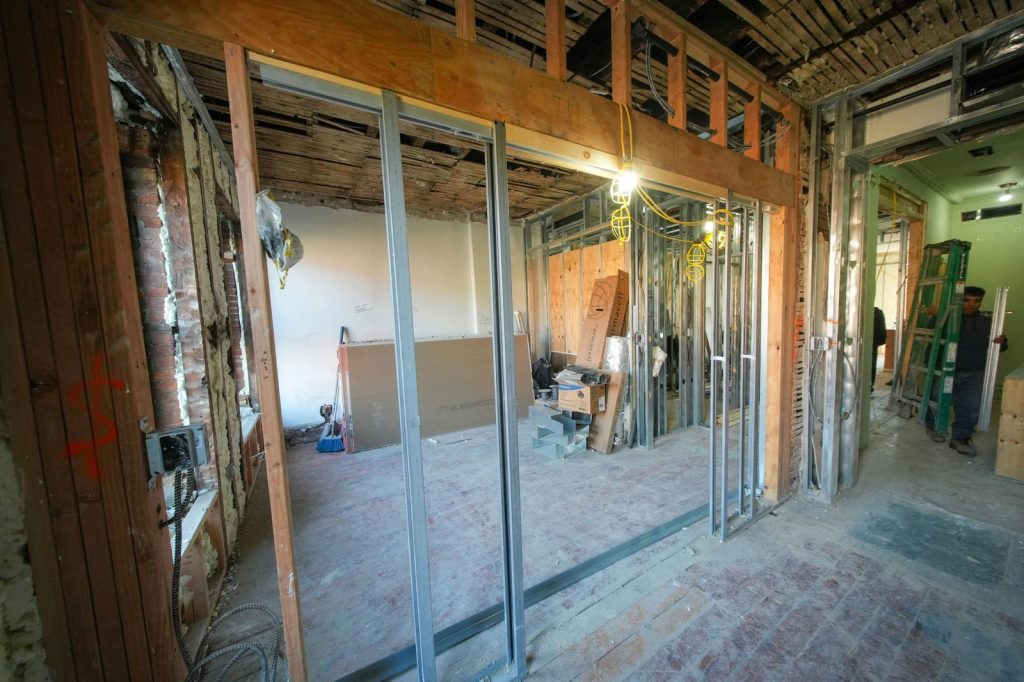
When the glass doors go in during a renovation matters almost as much as which glass doors you picked. Schedule them too early and they take damage from every other trade still working in the space. Schedule them too late and you’re tearing up freshly-painted walls and brand-new tile to fit the frames. Get the timing right and they land cleanly in a sequence that protects them and doesn’t redo any finishes.
This is how the sequencing usually works on Jamaican renovations.
The sequence the doors fit into
A typical renovation runs roughly in this order, simplified for this purpose. Demolition first: anything coming out, comes out. Walls, old doors, fixtures, finishes. Then structural and rough mechanical: framing changes, lintel adjustments, rough plumbing, rough electrical. The bones of the new space.
Next is the building envelope: windows, exterior glass doors, exterior cladding. Anything that closes the space against weather.
Then interior rough finishes (drywall, plaster, primer), followed by the wet finishes (paint, tile, kitchen and bathroom fixtures), then the detail finishes (trim, baseboards, interior doors, final hardware). Cleanup and handover last.
Glass doors fit in two places in that sequence depending on type. Exterior glass doors (sliding patio, balcony, entry) go in with the envelope. Interior glass doors (shower enclosures, partition doors, glass-panel interior doors) go in with the other detail finishes.
The split exists because exterior doors are doing the protecting during the rest of construction, while interior doors are themselves being protected by the closed envelope and the finished walls around them.
Why exterior glass doors go in early
Three reasons.
Weather is the first. Once demolition opens the wall, you want it closed again as soon as practical. In hurricane season especially, an open opening is a liability. Getting the door in early closes the envelope and protects the interior work that follows.
Sequencing logic is the second. Exterior wall finishes (paint, render, cladding) terminate at the door frame. Install the door first and the painters and finishers get a clean stopping line. Install the door after and they’re cutting back finishes to fit the frame.
Interior trade protection is the third. With the envelope closed, the interior trades (plumbers, electricians, drywall crews) work in a controlled environment. Dust stays in, weather stays out, security improves on a property that’s full of construction materials.
The pushback we sometimes hear is “but won’t the door get damaged during interior work?” Possibly, if it’s not protected. The fix is heavy protective film and corrugated cardboard over the glass and frame during the rest of construction. That’s standard practice and it’s what we provide on renovation installs.

Why interior glass doors go in late
Interior glass doors land near the end of the renovation for the inverse reason. They need the wall and floor finishes around the opening to be done first.
Shower enclosures, for example, install after the bathroom tile is fully laid and cured. The frame anchors into the tile, the glass sits against finished surfaces, and the silicone seals join glass to tile. Doing this before tile is finished means tearing apart and redoing the enclosure later.
Partition doors and interior glass french doors install after the floor and adjacent wall finishes are done. The door integrates with the surrounding finished surfaces, and finishing those surfaces around an already-installed door is more difficult and more expensive than the other way around.
The exception is when an interior glass door is part of a structural change, like a glass wall replacing a solid wall. That kind of project is closer to envelope work and gets sequenced earlier.
Common timing mistakes
A few patterns we see on Jamaican renovations that cause problems:
Installing exterior doors too late. The homeowner or GC tries to “save them for last” so they don’t get damaged. Interior work happens in an open envelope. Weather comes in. Hurricane season catches the project mid-stride. The door eventually gets installed but the interior work suffered for it.
Installing shower enclosures too early. Tile work isn’t finished or hasn’t cured. The enclosure goes in, then has to come back out for tile adjustments. Or the tile gets installed around the enclosure and the joins look terrible afterward.
Skipping the protection step. Exterior doors install at the right stage but no protective covering goes on. Interior trades scratch the glass, splash paint on the frame, dent the hardware. We end up doing touch-up or replacement work that wasn’t in the original scope.
Last-minute spec changes. The door type or dimensions change after the rough opening is built. The opening doesn’t match anymore. Either the opening gets rebuilt or the door gets re-ordered. Both are expensive.
Forgetting the door in the schedule. The GC sequences everything else and assumes “the glazier shows up when needed.” Custom glass doors have 3 to 5 week fabrication lead times; standard is 1 to 2 weeks. If they’re not ordered early enough, the whole project waits.
Working with a GC on glass door timing
If a general contractor is running the renovation, glass door timing usually goes in their hands. A few things worth confirming.
When are the rough openings being framed and finished? Fabrication can’t start until the supplier has firm opening dimensions, which means a site visit after rough framing is done.
When does the GC need the doors on site? Get the date in writing before fabrication starts so the supplier can match the schedule.
Who’s protecting the doors after install? The GC or the supplier should be explicit about who covers the doors and maintains protection until handover.
How are spec changes handled? If the homeowner wants a change after the rough opening is built, who pays for it, who decides if it’s feasible, who manages the schedule impact?
A GC who has done a few renovations with glass doors knows the answers to all of these. A GC who hasn’t may need prompting.
Working without a GC
For homeowners managing their own renovation, the timing falls in your hands. The practical sequence:
Hire the glass door supplier early, even before demolition. They can advise on rough opening sizes and any structural considerations the framing crew needs to know.
Order the doors immediately after rough framing is complete and the supplier has measured the actual openings. Don’t wait for finishes.
Coordinate the install date with the GC or your trade leads so the work happens at the right moment in the sequence (envelope stage for exterior, finish stage for interior).
Confirm protection responsibilities. If the supplier is leaving protective film on the doors, ask them to come back at handover to remove it cleanly.
A whole job’s worth of glass doors usually represents 4 to 8 percent of a residential renovation budget. Getting the timing right protects that investment.
Related reading
- How long does a glass door install actually take?
- Working with your architect on sliding window specifications
- Glass doors during hurricane season: what to know
For background on construction sequencing and how the trades coordinate, Wikipedia has the broader framework.
Frequently asked questions
When during a renovation should glass doors be installed?
Exterior glass doors (sliding patio, entry, balcony) go in at the envelope stage, after structural framing and before interior finishes. They close the building against weather and give the rest of the work a controlled environment. Interior glass doors (showers, partitions) go in near the end, after tile and floor finishes are complete, because they integrate with finished surfaces.
Won’t exterior glass doors get damaged if installed early in a renovation?
Only if they’re not protected. Standard practice is to install the door at the envelope stage, then cover the glass and frame with heavy protective film and corrugated cardboard for the rest of construction. The supplier removes the protection at handover. This is what professional installers provide as part of renovation installs.
When do shower enclosures get installed during a bathroom renovation?
After the bathroom tile is fully done and cured. The enclosure frame anchors into the tile, the glass sits against finished surfaces, and the silicone seals join glass to tile. Installing before tile is finished means tearing apart and redoing later, which is more expensive than waiting.
How early should I order glass doors during a renovation?
Custom glass doors have 3 to 5 week fabrication lead times. Standard product runs 1 to 2 weeks. Order immediately after rough framing is complete and the supplier has measured the actual opening. Ordering earlier risks dimension changes; ordering later puts the whole renovation schedule at risk of waiting on the doors.
Who manages glass door timing during a renovation, the GC or the supplier?
Usually the GC, working with the supplier. The GC schedules the install date in the broader sequence; the supplier manages fabrication lead time, delivers to site, installs, and protects the doors. For homeowner-managed renovations without a GC, the homeowner takes the coordination role and the supplier handles the install and protection.
The next step
If you have a renovation coming up and need to plan glass doors into the schedule, the contact page is the way to start. We can do an early planning call with the architect or GC before formal quoting, especially useful if the rough openings aren’t framed yet.
For projects ready to price, the quote request form takes the scope.
The glass doors service page covers what we install.
Glass doors aren’t usually the longest item on a renovation schedule. They are reliably the one that holds everything up if they get forgotten until the last minute.