

How long does a storefront install actually take?
The question we get more than any other from business owners planning a fit-out: “how long is the storefront going to take?”
The on-site install day itself is the shortest part. Two days, maybe three. The full project, from first phone call to working frontage, takes much longer than people expect. Four to twelve weeks for a typical Jamaican retail storefront, depending on the spec, the fabricator’s queue, and whether the parish council inspection lands when you need it to.
This walks through what each phase actually takes, where the schedule usually slips, and what business owners can do to keep the opening date on track.
The phases of a storefront install
A standard storefront project moves through these phases.
The site survey is first. The installer comes out, takes detailed measurements of the opening, photographs the existing condition, and confirms what is being replaced. One to two hours on site. We usually do these within a week of the initial enquiry, faster if there is a lease deadline.
Then the quote and spec. The installer produces a written quote with the material spec, the timeline, the payment terms, and the warranty. For us, that takes three to five business days. Some installers take longer.
Spec sign-off and deposit follows. The business owner reviews the quote, asks any clarifying questions, and signs. A deposit (usually 50 to 70 percent) goes in to release the fabrication order. This stage often takes longer than it should because business owners legitimately want to compare quotes and consider options. Plan a week for it.
Permit application runs around the same time. For a new storefront install in a commercial unit, a building permit from the parish council is usually required. The application can run in parallel with fabrication, but it has its own clock. Permits typically come back in one to four weeks depending on the parish and how busy the planning office is.
Fabrication is where the real waiting happens. The aluminum profiles are cut to size, the glass is cut and tempered, the doors are assembled. For stock items in standard sizes, two to three weeks. For custom finishes (powder coating in a brand colour, wood-grain finishes) or hurricane-impact glazing, six to ten weeks. Most of that time is queue time at the supplier, not actual cutting and tempering.
Pre-install coordination kicks in about a week before install. The crew confirms site access, the install date, any after-hours requirements, and any other trades that need to be off site during the install. This is also when the business owner makes sure the unit is ready (cleared of merchandise, signage covered, power available).
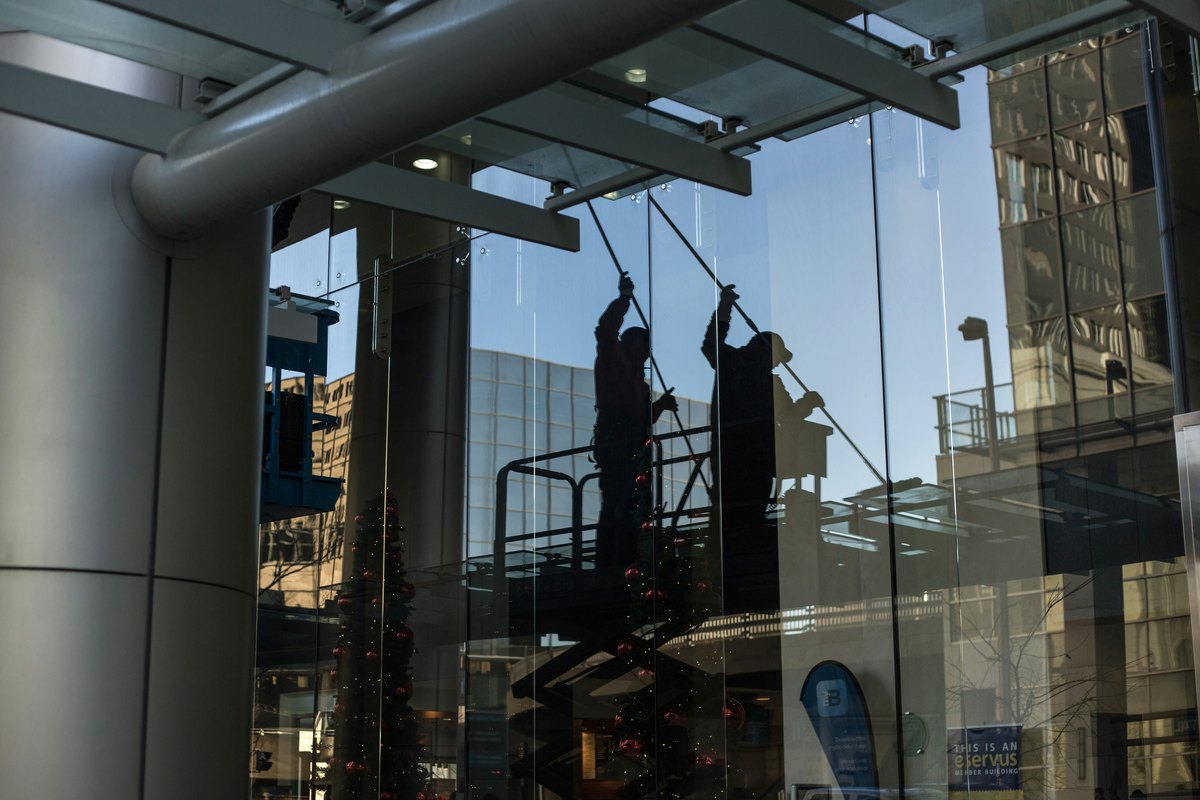
The install itself runs one to three days on site depending on storefront size and complexity. A typical retail unit with one door and three to five glass bays is a one-day install. A larger storefront with two doors, multiple bays, and decorative features is two to three days.
Inspection sign-off follows the install. The parish council inspector comes out to verify the work matches the permit, usually within a week of install completion. The business owner cannot fully operate the new storefront until the inspection passes, though in practice most owners are using the space during the inspection window.
Handover and warranty registration close out the project. The installer hands over the documentation, registers any manufacturer warranties, and walks the owner through the maintenance schedule. Usually same day as final clean-up.
Realistic total timelines
Putting those phases together, here are the timelines we see in practice for Jamaican commercial storefronts.
A small retail unit with stock-size glass, standard aluminum finish, and a single manual door. Survey to working storefront: four to six weeks. Fabrication is two to three weeks; the rest is permit, coordination, install, and inspection.
A mid-size retail unit with semi-custom sizes, a custom powder-coated finish, and two doors. Survey to working storefront: six to nine weeks. Fabrication is four to six weeks because of the custom coat. Permit may run concurrently or behind.
A coastal retail unit with hurricane-impact glazing. Survey to working storefront: eight to twelve weeks. Fabrication is six to ten weeks for impact-rated glass, which is the longest single stage. Permit requirements may also be stricter, adding a week.
A larger commercial fit-out with automatic doors, electronic access control, multiple bays, and integrated signage coordination. Survey to working storefront: ten to fourteen weeks. The complexity adds time to every stage.
These are realistic best-case numbers when nothing goes wrong. The actual averages are usually one or two weeks longer because something almost always slips somewhere.
Where the schedule usually slips
Four things slip storefront schedules more than anything else.
Delayed sign-off on the quote. The business owner is comparing options, the spec is being adjusted, the budget is being negotiated with a partner. This is reasonable but it adds weeks. The clock on fabrication does not start until the deposit lands. A two-week deliberation is two weeks added to your opening date.
Permit office delays. The parish council planning office can be quick or slow depending on the week, the parish, and the complexity of the application. Kingston and St. Andrew tend to move faster than the rural parishes. Pre-Easter and pre-Christmas weeks tend to be slower. Plan for the worst case and treat anything better as a bonus.
Impact-glass lead times. If you need hurricane-impact glazing, the glass is imported and the lead time can be six to ten weeks, sometimes longer if a major shipment is delayed. This is the single biggest schedule risk for coastal projects. Talk to your installer about impact-glass availability before signing the lease, not after.
Site readiness. The crew arrives to install and finds the unit is still being painted, the floor is wet, the electrical is not powered, or there are merchandise boxes blocking access. This delays the install by half a day to a week depending on severity. Get the unit ready before the install crew arrives.
What business owners can do to speed it up
A few things genuinely help.
Get the survey done early. Even before you sign the lease, if the landlord allows, get an installer out to look at the existing condition and give you a preliminary spec and lead time. You will be making better decisions about the lease itself with that information in hand.
Sign off the quote quickly. The faster you commit, the faster fabrication starts. If you are comparing multiple installers, set a deadline for yourself (a week is plenty) and stick to it.
Apply for the permit early. Application can usually go in based on the design intent, sometimes even before the final spec is locked. Talk to your installer about whether this is possible for your project.
Skip the custom finishes if you can. Standard mill or anodised aluminum cuts fabrication time by two to four weeks. If your branding is flexible, this is a real saving in time and money.
Avoid the holiday rush. November and December are the busiest install months in Jamaica because of the holiday retail push. If you can install in February or March, the queue is shorter and the install crew is less stretched.
Get the site ready. Have the unit cleared, the floor sealed, the power live, and the lighting working before the install crew arrives. Half a day of preparation saves half a day of install time.
What about emergency replacements
A separate timeline applies when an existing storefront is broken and needs to be replaced fast (a vehicle backed into it, a storm damaged it, vandalism). For these, we can usually do an emergency temporary board-up within 24 hours, a survey within 48 hours, and a permanent replacement within two to four weeks if the glass is standard. Hurricane-impact emergency replacements are longer because of the import lead time, and may require a longer temporary board-up.
If you have an emergency, call as early as you can. Glass installers in Jamaica are busy enough that emergency work depends on being able to slot you into a gap. Calling on Monday morning for a Friday install is more likely to work than calling Friday afternoon for the same Friday.
Our practical recommendation
If you are planning a storefront install in Jamaica, build six weeks into your project timeline for a standard install and ten weeks for a coastal or custom one. Add two weeks of buffer. That gives you an honest planning window.
If you have a hard opening date (a lease commencement, a planned launch event, a seasonal rush you are trying to catch), tell your installer the date on day one. We can usually meet a date if we know it from the start. We cannot meet a date we hear about three weeks before it.
Related reading
- What does a storefront installation cost in Jamaica?
- Commercial code requirements for shower enclosures in Jamaica
- Shower enclosures for retail spaces in Jamaica
For background on how aluminum extrusion lead times affect overall project schedules, see the Wikipedia entry on extrusion.
The next step
If you are planning a storefront install in Jamaica and want a realistic timeline you can plan around, our team handles the full process from initial survey through permit through install and sign-off. We give honest dates at quote stage and we tell you straight if a deadline you have given us is going to be tight.
Request a quote, browse our commercial work, or get in touch to start the conversation before your lease clock starts ticking.