

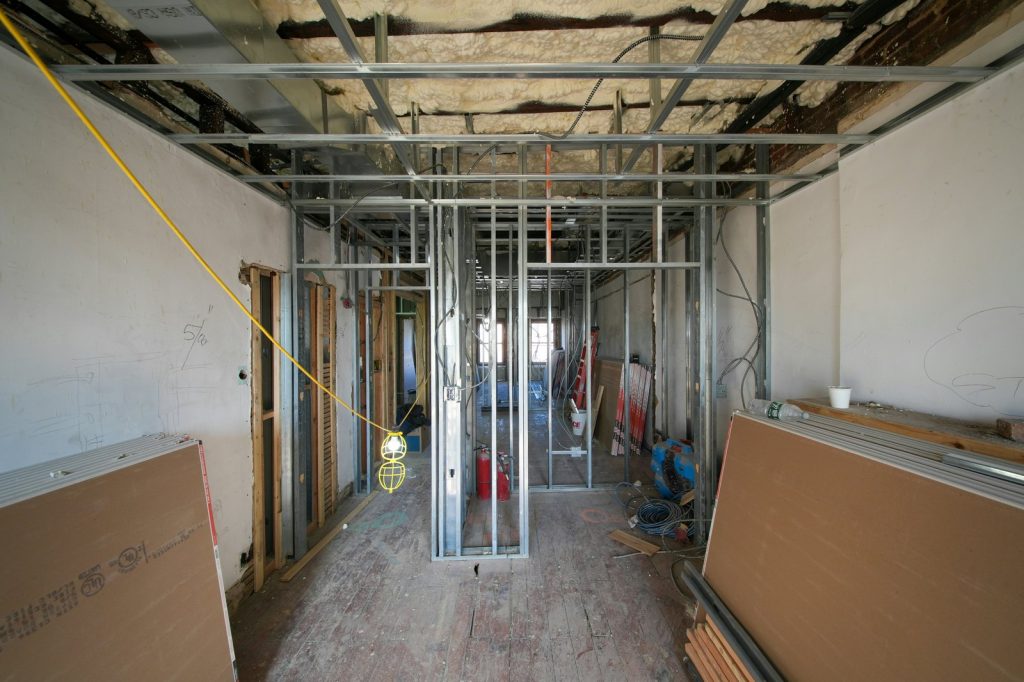
Storefronts in a renovation: timing the install right
For Jamaican renovations that involve a glass-and-aluminum storefront, the storefront timing is one of the few sequencing decisions that affects almost every other trade. Order matters. Get it right and the renovation moves cleanly. Get it wrong and you are rebuilding work to accommodate the storefront, paying installer call-back fees, or operating without a weather-sealed building envelope for weeks longer than necessary.
This is the practical guide for Jamaican homeowners and contractors approaching a renovation that includes a storefront.
The general principle: storefronts go in early
The default sequence for storefront installation in a renovation is straightforward. After framing is complete and the rough opening is finished. Before interior drywall, electrical rough-in, or finish work. Same reason windows go in before drywall in any quality build: the storefront seals the building envelope and protects everything that follows.
When the storefront is in early, the rest of the renovation can proceed inside a weather-tight building. Drywall does not get rained on. Electrical does not have to be temporarily abandoned every time the forecast looks bad. Tile and timber installs are not delayed by wet conditions.
When the storefront is in late, the entire renovation is exposed for as long as the install is delayed. We have seen Jamaican renovations where the homeowner pushed storefront install to the end “to protect the new glass from construction damage.” The renovation took an extra six weeks because every rain delayed interior work. The supposed protection was a net loss.
The exceptions: when storefronts go in late
A few legitimate reasons to push storefront install toward the end of the renovation.
Major structural changes to the opening. If the renovation involves resizing or relocating the storefront opening, the storefront cannot be installed until the new opening is structurally complete. This is a real constraint, not a sequencing preference.
Heavy demolition adjacent to the storefront location. If the renovation involves jackhammering, breaking out concrete, or other work that produces dust, debris, and impact loads near the storefront opening, installing afterward avoids damage during demolition. Common on renovations of older Jamaican concrete buildings.
Long lead time on the storefront materials. If the storefront has a 12-week lead time and the renovation is on a faster schedule, the storefront cannot physically be installed early. The fix is to start the storefront order at the same time as the renovation contract. If the lead time still puts it late, plan for temporary weather protection during the gap.
Tenant occupation requirements. For commercial fit-out renovations where the existing storefront has to stay in place until the new business opens, the new storefront install gets sequenced around the tenant handover date rather than around the build sequence.
In all of these, the late timing is a forced choice, not a preference. The default remains storefront-early-in-the-sequence.
What happens before the storefront install
For a typical Jamaican renovation, the work that needs to be complete before storefront install starts.
Demolition of any existing storefront, framing, or finishes in the opening area. The opening should be clear back to structural masonry or framing.
Structural work on the opening itself. If a new lintel is being installed, the lintel needs to be in and the concrete cured (typically 7 to 14 days for the load-bearing curing) before the storefront frame can be anchored.
Rough opening dimensions verified by both the contractor and the storefront installer. Both should physically measure the opening, agree on the actual dimensions, and document any deviations from the original drawings.
Substrate preparation. The opening edges should be clean, dry, and structurally sound. Any patching of masonry damage from demolition should be complete and cured.
Tools, scaffolding, and material storage. The storefront installer needs reasonable access to the opening and a place to stage materials. For a multi-day install, secure on-site material storage is usually required.
Most of these items are 1 to 3 days of work. Together they typically add 1 to 2 weeks to the renovation schedule before the storefront install can start.
What happens after the storefront install
Once the storefront is installed, the rest of the renovation proceeds in roughly normal order.
Electrical rough-in can include any conduit runs to the storefront for access control, lighting, or signage. Coordinate this before the install. Running conduit to a finished storefront is much harder than to a partially-completed one.
Drywall and interior framing. The storefront provides the clean reference edge that interior framing references off. Drywall finishes against the storefront jamb, with a sealant joint at the interface.
Tile, timber, and other finish work proceeds in the weather-tight envelope.
Final hardware adjustment on the storefront. Closers, locks, and pivots all benefit from a final adjustment a few weeks after install once any settlement or temperature acclimation has happened. Schedule the installer to come back for this rather than treating the first install as final.
Final cleaning and protection. The storefront glass typically gets protective film during construction; remove it just before handover.

Common timing mistakes on Jamaican renovations
A few recurring failure patterns we see on renovation projects.
Ordering the storefront too late. The homeowner picks the storefront design after the renovation has started, then the lead time is 8 to 14 weeks, then the renovation stalls waiting for materials. The fix is to spec the storefront at the same time as the rest of the renovation, ideally before contractor selection.
Treating the storefront as a finish item. Storefronts are usually delivered and installed by a separate contractor from the general renovation contractor. If the project schedule treats storefront install as part of “finishes” rather than as part of “envelope,” the timing gets pushed late and the renovation suffers.
Skipping the second-visit hardware adjustment. The installer leaves after the first install and the homeowner assumes the install is complete. Two months later the doors are sagging, the closer is slamming, and the lock is sticking. A scheduled second visit at week 4 to 6 catches all of these.
Removing protective film too early. The glass gets installed with protective film, the film stays on through the rest of the construction, and at handover the homeowner peels it off to discover the glass looks great. The mistake is removing the film mid-construction “to see the glass” and then having to clean construction dust off it daily.
Not coordinating storefront access for trades. The storefront is the main route in and out for the rest of the construction crew. If the storefront install includes a working entry door, plan for tools and materials to come through it. If not, plan a secondary entry that stays usable during the rest of the work.
A realistic schedule for a typical Jamaican residential renovation
For a 12-week residential renovation that includes a new storefront entry.
Weeks 1 to 2. Design finalisation, contractor selection, storefront ordering. Storefront lead time starts now (4 to 6 weeks for typical inland aluminum, 8 to 14 weeks for coastal impact-rated).
Weeks 1 to 4. Demolition, structural work, opening preparation. By week 4, the opening is ready for storefront install (assuming structural curing is complete).
Weeks 4 to 6. Storefront install. For a typical residential entry, 3 to 7 days of install time. The renovation has a weather-tight envelope from this point.
Weeks 5 to 10. Interior rough-in (electrical, plumbing, HVAC), drywall, primer, paint.
Weeks 10 to 12. Finish work, final fixtures, storefront installer second visit for hardware adjustment, final cleaning, handover.
The total renovation timeline assumes the storefront lead time fits within the construction schedule. If the storefront has a 14-week lead time and the renovation is 12 weeks, the timeline either extends or the storefront install slips to post-handover. Both compromise the project.
Coordination checklist for the contractor
A short list for the general contractor running a renovation with a storefront component.
Confirm storefront order is placed within the first week of the project. Lead time runs in parallel with construction. It does not start when you are ready for the install.
Schedule physical site measurement by the storefront installer once the opening is structurally complete. Do not rely on drawings. Openings in older Jamaican construction often differ from plans by an inch or more.
Block 1 to 2 weeks in the schedule for storefront delivery, install, and weather sealing. Treat this as a hard milestone, not a flexible window.
Plan electrical conduit runs to the storefront before install. Once the storefront is in, retrofitting conduit is painful.
Schedule the second-visit hardware adjustment 4 to 6 weeks after initial install. Block it on the calendar at the time of the original install.
Keep protective film on the glass until handover day. Remove it as the last task before the client walks through.
A simple summary for homeowners
If you are about to renovate a Jamaican property that involves a new or replacement storefront, the timing principles. Order the storefront first, not last (lead time is the binding constraint). Install the storefront early in the renovation, after structural work and before drywall (a sealed building envelope makes everything else faster). Plan for a second installer visit 4 to 6 weeks after initial install for hardware adjustment. Keep protective film on the glass through the construction phase, reveal at handover. Get the contractor and storefront installer talking directly from the start of the project; do not be the only communication channel between them.
Get those right and the storefront slots cleanly into the renovation. Get them wrong and the storefront becomes the bottleneck that pushes the whole project late.
Related reading
- First-time buyer guide to storefronts
- Custom vs standard storefronts: which fits your home?
- What size storefront fits your space?
For background on the standard sequencing of building construction trades, see the Wikipedia entry on construction.
The next step
If you are planning a renovation in Jamaica that includes a storefront and you want the timing properly coordinated with the rest of the build, our team is happy to participate in the project planning. The earlier we are on the schedule, the smoother the storefront slots into the renovation sequence.
Request a renovation consultation, browse our work, or get a quote to start.