

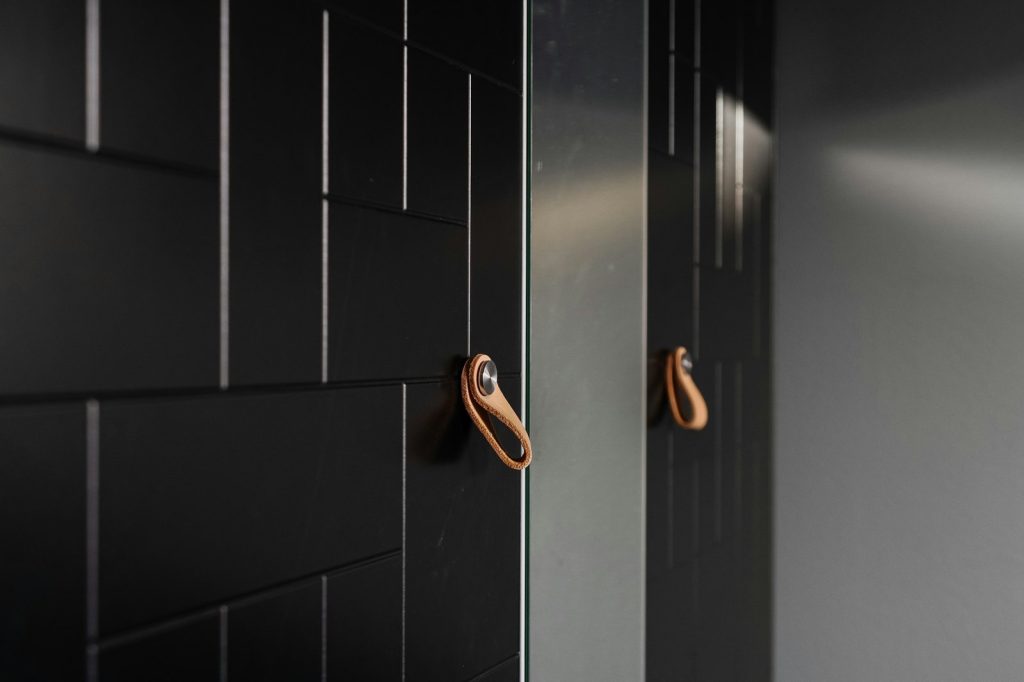
Hardware is where a budget glass door and a premium glass door diverge most visibly. The frame and glass can be nearly identical between two doors that look completely different in the room because the handles, hinges, and locks were chosen differently. Hardware is also where the operational feel of the door comes from; cheap hardware feels cheap every time you touch it for the next 20 years.
Here is the practical guide to choosing hardware for a Jamaican glass door project. What’s available, what matters, and what’s worth paying extra for.
Handles
The handle is the part of the door you actually touch, multiple times a day, for as long as the door is in service. Handle choice is part design statement and part daily ergonomics.
D-pull handles. Most common on sliding patio doors. Straightforward to operate, available in many lengths and finishes. The default for residential applications.
Bar pull handles. Long vertical bars often used on premium sliding doors and frameless pivots. Architectural look; substantial visual weight.
Lever handles. Standard on swing and pivot doors. The horizontal lever pivots down to operate the latch. Wide range of styles from simple to ornate.
Recessed or flush pull handles. Sits flush with the frame surface for a minimal look. Common on pocket doors and some sliding configurations where the handle should be invisible.
Finger pull handles. Small handles requiring only fingertip operation. Common on glass-panel internal doors where the handle should disappear visually.
Push plates. For one-way swing doors in commercial or shared-residential applications. Not common in residential glass-door work.
Handle finishes
The visible finish should coordinate with the door frame and the broader interior design:
- Stainless steel (brushed or polished)
- Chrome (bright or satin)
- Matte black
- Brushed nickel
- Satin brass
- Antique bronze
- Powder-coated colour to match the frame
Match the finish to other hardware in the room (cabinet pulls, faucets, lighting fixtures). Mismatched finishes read as accidental rather than designed.
What to pay for
Mid-range handles are usually the sweet spot. Cheapest handles tend to loosen, scratch easily, and feel hollow. Most expensive handles often pay for designer attribution rather than functional difference. The middle ground is solid construction, durable finish, and a feel that holds up over years of use.
Hinges (swing and pivot doors)
Hinges are the structural element on a swing or pivot glass door. They carry the entire weight of the panel through every operation cycle.
Standard butt hinges. Three or four hinges along the door edge, each carrying a portion of the load. Common on framed swing doors. Reliable, well-understood, and easy to service.
Pivot hinges. Single pivot point at the top and bottom of the door rather than multiple hinges along the edge. Allows for a cleaner look and supports very heavy doors (frameless pivot doors are common at 100+ pounds). More expensive than standard hinges and requires precise installation.
Concealed hinges. Mounted inside the door and frame so they’re not visible. Common on premium and contemporary installations. Visually clean; requires precise installation.
Soft-close hinges. Include a damper that slows the closing motion in the last few inches, preventing slamming. Quality-of-life upgrade; common on premium installations and where children’s safety is a concern.
Hinge specifications that matter
- Weight rating (must exceed the actual panel weight with safety margin)
- Material (stainless steel for coastal homes; standard steel acceptable inland)
- Number of hinges per door (more hinges spread the load better on heavy panels)
- Adjustment range (allows fine-tuning after install for alignment)
For coastal homes, marine-grade or stainless hinges are worth the cost premium. Standard plated steel hinges in coastal conditions corrode internally within years even when the surface looks fine.
Locks
Locks on glass doors split into several categories depending on door type and security expectations.
Single-point latch. Simple latch on a swing or pivot door, often with a key cylinder for exterior use. Lowest security; appropriate for interior doors or low-risk applications.
Multi-point lock. Multiple locking points (typically 3 to 5) engaging simultaneously when the key turns or the lever lifts. Standard on premium sliding patio doors and external swing doors. Substantially more secure than single-point.
Mortise lock. Lock body fits into a pocket (mortise) cut into the door edge. Heavy-duty, common on commercial doors and premium residential entries. Higher cost; more secure than surface-mounted alternatives.
Sliding patio door lock. Specific lock type designed for the geometry of sliding panels. Engages between the panel and the frame at one or more points.
Smart lock. Multi-point or mortise lock with electronic actuation and app connectivity. Modern security and monitoring capability; modest cost premium over equivalent non-smart hardware.
Security considerations
For exterior glass doors in Jamaica, security expectations vary by neighbourhood and homeowner risk tolerance. Practical considerations:
- Multi-point locks substantially raise the difficulty of forced entry
- Anti-lift devices on sliding doors prevent the panel from being lifted off its track
- Laminated glass adds physical resistance to glass breakage as an entry method
- Integration with home alarm systems provides notification on tampering or forced entry
- Grilles or shutters add a layer of security for high-risk locations or extended absences
The combination of hardware and glass spec should match the security need. A premium multi-point lock on single-pane non-laminated glass is half the story.
Lock finishes
Same finish families as handles. Coordinate with the handle and other room hardware. Most multi-point locks have visible escutcheon plates around the cylinder; these are the visible element to coordinate.
What we typically spec
For a typical Jamaican residential glass door project, our defaults:
- Sliding patio doors: multi-point lock, D-pull handle in coordinated finish
- Frameless shower enclosures: chrome or matte black hardware (mostly hinges and handles, no lock typically needed)
- Interior glass doors: lever handle with simple latch (no key) or push-pull
- Frameless pivot doors: pivot hinges with soft-close, mortise lock for exterior applications
- Coastal homes: marine-grade or stainless upgrades to all hardware
Coordination across the project
If your project includes multiple glass doors, the hardware should coordinate. Same finish family, same brand if practical, similar style language. Random mixing of hardware styles reads as inconsistent.
For projects also including other hardware (cabinet pulls, faucets, light fixtures), the glass door hardware should coordinate with those choices too. A modern matte black faucet and a polished brass door handle in the same room rarely look intentional.
Related reading
- Aluminum finish options for glass doors
- Hardware choices for sliding windows: locks, handles, rollers
- How to choose the right glass thickness for glass doors
For more on door hardware categories, Wikipedia covers the underlying mechanisms.
Frequently asked questions
What is the best lock for a sliding glass door?
A multi-point lock (3 to 5 engagement points operated by a single key or lever) is the security standard for exterior sliding glass doors. Single-point latches are appropriate for interior or low-risk applications only. For premium projects, smart multi-point locks add app monitoring and integration with home alarm systems at modest additional cost.
What hardware finish should I choose for glass doors?
Match the finish to other hardware in the same room (cabinet pulls, faucets, light fixtures). Common finishes include stainless steel, chrome, matte black, brushed nickel, satin brass, and antique bronze. The specific choice depends on the design intent of the room; the consistency across hardware matters more than the specific finish family.
Are pivot hinges better than standard butt hinges on glass doors?
For very heavy panels (frameless pivot doors at 100+ pounds), pivot hinges are usually the right choice; they handle the load and give a cleaner look. For standard-weight residential swing doors, butt hinges work fine and are easier to service. The choice depends on door weight, design intent, and budget.
Should I upgrade to marine-grade hardware for a coastal home?
Yes, almost always. Standard plated steel hardware corrodes internally in coastal conditions within years even when the surface finish looks fine. Marine-grade or stainless hardware substantially extends service life and reduces the rate of replacement. The cost premium is meaningful but the lifespan extension is much larger.
How much does smart lock hardware add to a glass door cost?
Typically 30 to 50 percent over equivalent non-smart multi-point hardware. The cost covers the electronics, the app integration, and usually a higher-grade base mechanism. For new builds where electrical wiring is being planned anyway, smart locks are a worthwhile spec line. For retrofits, the wiring requirement is often the deciding factor.
The next step
Hardware choice is part of every glass door quote we issue. The quote request form takes your project brief and the hardware preferences (style, finish, security level); we come back with options matched to the rest of the spec.
The glass doors service page covers what we install. The contact page is for questions or for booking a hardware-sample meeting.
Hardware is the part of the door you interact with every day for decades. Worth choosing it carefully rather than picking the default option without thinking.