

Sliding vs hinged glass railing: which works better for your space?
Let us clear something up first. The glass railing itself does not slide or hinge. The wall sections of any railing are fixed in place. The sliding vs hinged question is really about the gate or access point in the railing, the spot where someone actually opens and closes to get into the protected area. Pool fences with access gates. Balcony railings with maintenance entries. Glass partitions with passage openings.
Both gate styles work. Each suits different spaces, applications, and budgets. Here is the comparison for Jamaican projects.
Where the question actually applies
The sliding vs hinged choice on a glass railing only shows up in a handful of specific places.
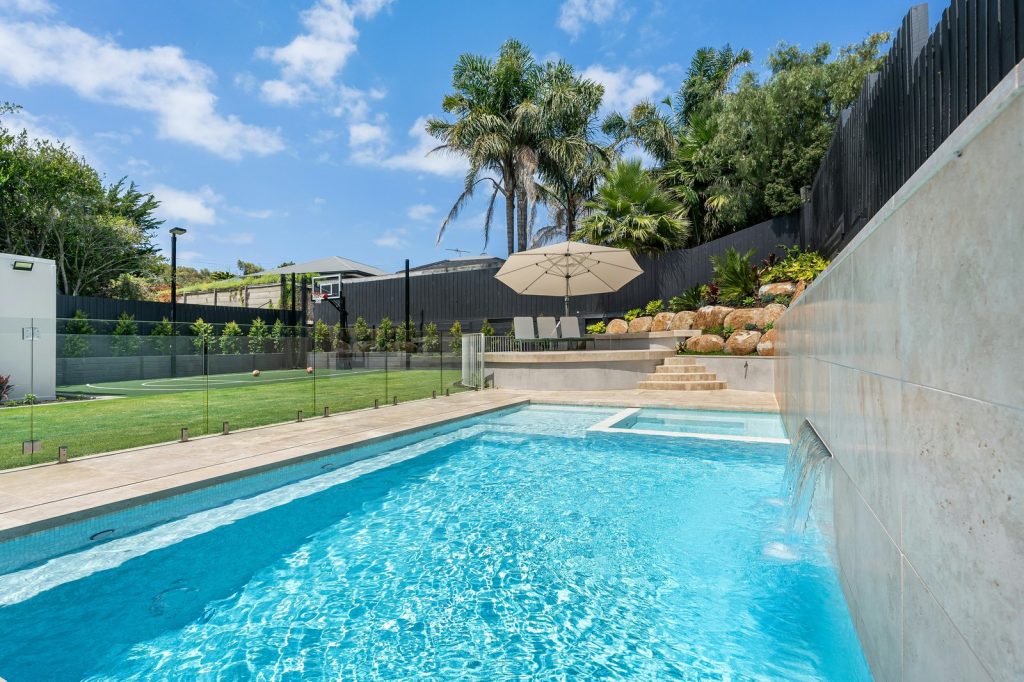
Pool fence gates. Jamaican code requires pool fences to have self-closing self-latching gates with the latch at minimum 54 inches above the deck. The gate can be hinged or sliding, but the safety hardware requirements apply equally to either.
Balcony access gates. On larger balconies where the railing continues across an opening to another section, an access gate (hinged or sliding) provides the passage point.
Garden or yard glass fences with passage gates.
Pool deck cabana entries or outdoor shower screen access where the gate is glass.
Glass partitions on stairs or mezzanines with an access opening through them.
For most residential balconies and standard glass railings without a gate, this question does not apply at all. The railing is continuous and unopenable, and the decision never comes up.
What hinged gates get you
Hinged glass gates are the most common option, especially for pool fences and standard residential gates.
The mechanics are straightforward. The glass gate panel mounts on stainless hinges that allow it to rotate around a vertical axis, swinging open in one direction. Visually, it reads as a section of glass that obviously opens, with hinges, latch, and handle visible at the gate panel.
Hinged works wherever there is room for the gate to swing open. Pool fences. Garden gates. Most balcony entries with sufficient deck space on the swing side.
The advantages: simple mechanism with fewer moving parts, easier to make self-closing and self-latching (which Jamaican pool code requires), more economical at the budget end, and the better-established hardware in the local market. The trade-offs: requires swing room (typically 3 to 4 feet of clear floor on the swing side), can get heavy on larger panels, and hinge hardware needs regular inspection on coastal installs.
Cost: a typical residential hinged glass gate adds JMD 80,000 to 250,000 to a railing install depending on gate size, hardware grade, and code requirements.
What sliding gates get you
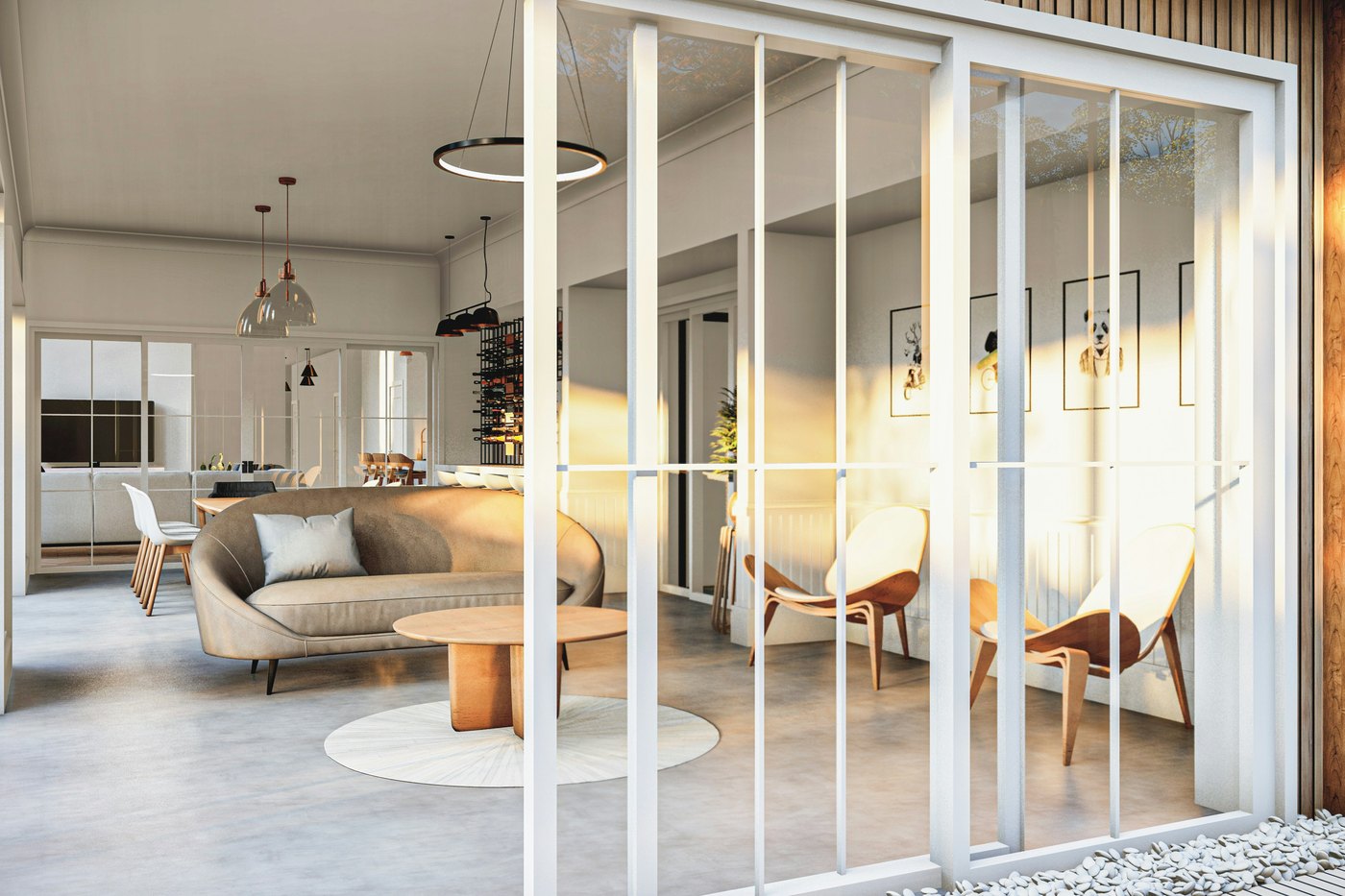
Sliding glass gates run on a track at the top, bottom, or both. Less common than hinged on Jamaican residential work but worth considering for specific applications.
The mechanics. The glass gate panel rolls horizontally on a track, sliding out of the way rather than swinging open. Visually it reads as a section of glass railing that slides aside. Hardware (track, rollers, latch) is visible at the top, bottom, or both depending on the system.
Sliding works in tight spaces where a hinged gate would not have room to swing. Sometimes also on pool decks where the gate area is constrained.
The advantages: zero swing space required (the gate slides parallel to the railing), handles very wide openings well (sliding gates of 8 to 10 feet are common where a hinged gate would be unwieldy), and the closed gate maintains visual continuity because the panel reads as part of the railing. The trade-offs: more complex mechanism with more moving parts, harder to make self-closing and self-latching to pool code, more expensive than equivalent hinged, and requires the wall or fixed panel beside the gate to be long enough for the gate to slide into (which essentially doubles the wall length required at that section).
Cost: a typical residential sliding glass gate adds JMD 150,000 to 400,000 to a railing install. 50 to 100 percent premium over hinged.
Comparison on common factors
The factors that actually matter when choosing between them on a Jamaican project.
Space efficiency. Sliding wins clearly. A hinged gate needs swing space; a sliding gate does not. On tight decks or pool surrounds where every foot matters, sliding is the answer.
Code compliance. Hinged wins clearly for Jamaican pool gates. The self-closing self-latching hardware that pool code requires is much easier to implement on hinged than on sliding. Sliding gates can meet code with specialised hardware but the install is more complex.
Security. Roughly equal when properly specified. Both can be locked, both can be made resistant to forced entry with the right hardware. Sliding gates have one specific vulnerability (the gate can sometimes be lifted off the track if not properly secured at the top), but anti-lift hardware addresses it.
Aesthetics. Sliding wins slightly when closed because the gate panel reads as continuous with the railing. Hinged is more obviously a gate when closed (you can see the hinge and the panel that swings). When open, both look like a glass panel that has moved out of the way.
Wind exposure. Hinged handles wind loads better because the closed gate is held securely by the latch on one side and the hinge on the other. Sliding gates can rattle in strong winds if the track tolerance is loose. Worth specifying anti-rattle hardware on coastal sliding gates.
Hardware lifespan. Hinged is simpler and lasts longer with less maintenance. Sliding has more moving parts (rollers, tracks) that wear over 10 to 20 years and need inspection or replacement.
Cost. Hinged is 30 to 50 percent cheaper than sliding for equivalent functionality. A significant difference on a tight budget.
Lead time. Hinged hardware is more widely stocked and lead times are typically shorter (2 to 4 weeks). Sliding hardware sometimes requires special order (4 to 8 weeks).
When hinged is the right call
For most Jamaican residential applications, hinged is the default and the right answer.
Pool fences, because the code requirement for self-closing self-latching is much easier on hinged. Spec hinged unless there is a compelling reason not to.
Standard balcony access gates with adequate swing space. Hinged is simpler, cheaper, and lasts longer.
Garden or yard gates where the path naturally accommodates the swing.
Budget-conscious projects where the 30 to 50 percent saving on the gate hardware actually matters.
When sliding is the right call
Specific situations where sliding genuinely wins out.
Tight pool decks or balconies where a hinged gate would not have room to swing fully without hitting something.
Wide gate openings (8 feet and up) where a hinged gate would be unwieldy and hard to operate safely. Sliding handles wide openings better.
Premium architectural installs where the closed-gate aesthetic of a continuous sliding panel reads better than a visibly hinged gate.
Applications where the gate is on the boundary between two outdoor spaces and pool code requirements do not apply at all.
A few common questions
Things clients ask us when weighing the two options.
Can a sliding gate meet pool code? Yes, with specialised self-closing self-latching hardware. The hardware exists, it just costs more and requires careful install. For most pool applications, hinged is the simpler answer.
What if I want sliding but the budget is tight? Specify a smaller gate opening (4 feet rather than 6 to 8). Sliding cost scales with gate size; a smaller sliding gate is much cheaper than a wide one.
Does the sliding gate need to disappear into a wall pocket? No. The gate slides along the inside or outside of the fixed railing panels. No pocket required. Just enough straight fixed wall beside the gate to receive the slid-open panel.
What about bi-fold (folding) glass gates? A third option that combines elements of both. Bi-fold takes up less swing space than hinged and less track length than sliding, but costs more than either and has more moving parts. Used occasionally for premium architectural applications.
Are sliding gates safe with children around? Both styles can be made child-safe with appropriate latches at 54 inches and self-closing mechanisms. The hardware choice matters more than the mechanism. Brand-name self-closing latches (CRL, FHC) on either style work for pool applications.
A simple framework
For most Jamaican residential glass railing gate choices, the answer falls out of the application.
Pool fence: hinged. Easier code compliance, cheaper, simpler hardware.
Balcony access with sufficient swing space: hinged. The default residential choice.
Tight balcony or pool deck with no swing space: sliding. The space constraint is what tips it.
Wide gate opening (8+ feet): sliding. Hinged gates that size are unwieldy.
Premium architectural where the closed-gate aesthetic matters: sliding. The continuous look is worth the premium.
Budget-conscious project: hinged. The cost saving is meaningful.
If you are not sure, hinged is the right answer for most Jamaican residential. The cases where sliding wins are real but specific, and usually obvious once the actual space constraint shows up in the site visit.
Related reading
- Hardware choices for glass railings: handles, hinges and locks
- What does a glass railing installation cost in Jamaica?
- First-time buyer guide to glass railings
For background on the safety code requirements that apply to pool barrier gates, see the Wikipedia entry on pool fence.
The next step
If you are planning a glass railing project in Jamaica that includes a gate (pool fence, balcony access, garden entry), our team is happy to walk through the hinged vs sliding options for your specific space and code requirements. Honest input on what fits and what does not.
Request a gate consultation, browse our work, or get a quote on a new install to start.