

If you’ve ever wondered why a perfectly good aluminum window on a Kingston home looks fine at year fifteen, but the same window in Negril is pitted, dulled, and visibly tired by year seven, the answer is salt air. More specifically, it’s chloride ions: the charged particles in seawater that corrode almost any metal they touch.
The shortcut answer to coastal window failure is “spec it marine-grade.” The longer answer is the actual chemistry of why marine-grade matters. This article on sliding windows salt-air corrosion is that chemistry, in plain language.
Why aluminum normally resists corrosion
Aluminum doesn’t rust the way iron does. The instant raw aluminum is exposed to air, it forms a thin, hard layer of aluminum oxide on its surface, a few atoms thick. This oxide layer is what gives aluminum its dull silvery sheen, and it’s what stops further corrosion from happening underneath.
For most environments, this self-healing oxide layer is permanent and stable. Scratch it and a new layer forms in seconds. That’s why an aluminum window installed inland in Jamaica can still look almost new at year twenty.
The oxide layer has one weakness: certain chemicals can penetrate it and stop it from re-forming. Chloride ions, found in salt water and salt-laden air, are the main culprit at the coast.
How chloride ions break the protective layer
Salt is sodium chloride. When salt dissolves in water (including the moisture in coastal air), it splits into sodium ions and chloride ions. The chloride ions carry a negative electrical charge and they are extremely good at sticking to metal surfaces.
When a chloride ion lands on aluminum’s protective oxide layer, it doesn’t just sit there. It works its way into tiny imperfections in the oxide and slowly breaks the chemical bonds holding the protective layer together. Once that happens at a specific point, the underlying aluminum is exposed to moisture and oxygen, and the layer can no longer re-form properly at that spot.
This is why salt air is so much worse than just humid air. Plain water doesn’t break the oxide layer; it just sits on top of it. Salt water (or salty mist) introduces the chemistry that actively dissolves the protection.
The closer the property is to the source of chloride (breaking surf, salt spray, marine air), the higher the concentration, and the faster the breakdown.
Pitting: why corrosion concentrates instead of spreading
Once the oxide layer is breached at a specific spot, the next stage is something called pitting corrosion. Instead of the corrosion spreading out evenly across the aluminum surface, it digs down into the metal at that single point, forming a tiny pit.
The reason it concentrates is chemistry self-reinforcing inside the pit. The microenvironment at the bottom of a pit becomes more acidic and more chloride-rich than the surface around it, which accelerates the attack at that exact spot while the rest of the metal nearby stays protected by its oxide layer.
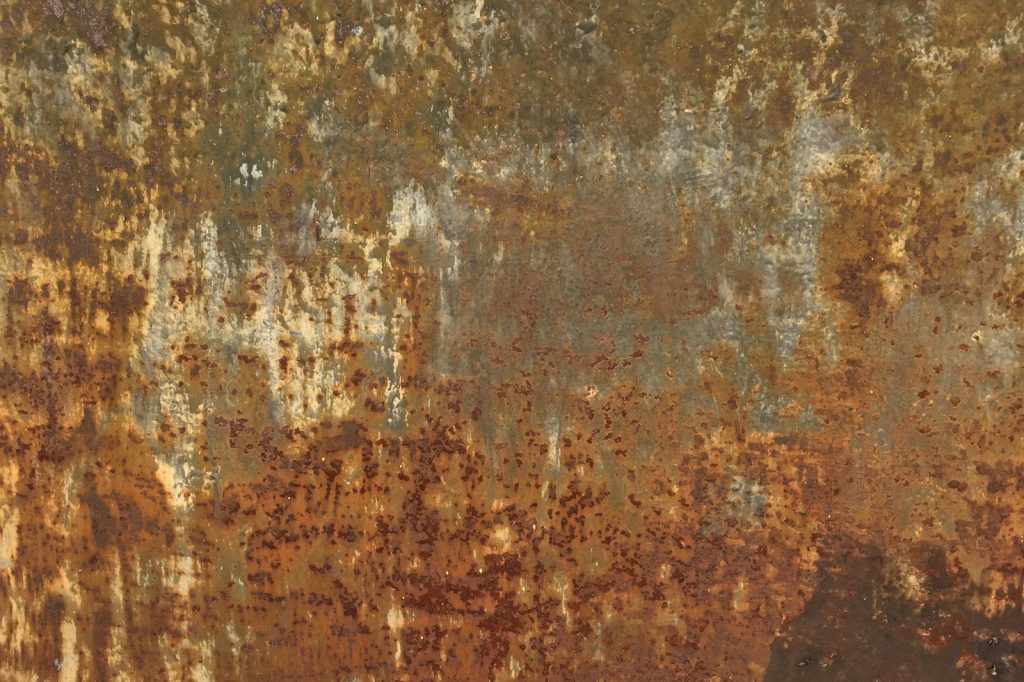
Visually, this is why neglected coastal aluminum doesn’t get a uniformly dull surface; it gets a peppered, pock-marked appearance with small dark spots and rough patches. Each one of those is a pit, often deeper than it looks from the surface.
Pitting also means that aluminum thickness matters for coastal lifespan. A thin powder coat over a thin aluminum profile gets pierced by pits faster than a marine-grade coating over heavier-section aluminum.
Galvanic corrosion: the steel-on-aluminum problem
The second corrosion mechanism that wrecks coastal sliding windows is galvanic corrosion. It happens when aluminum is in direct contact with a different metal in the presence of moisture, especially salty moisture.
The simple version: when two different metals touch in a salty wet environment, they form a small battery. Electrons flow from the more reactive metal (the anode) to the less reactive metal (the cathode). The anode metal is what corrodes; the cathode is protected.
Aluminum sits high on the reactivity scale. Steel sits lower. So when a standard zinc-plated steel screw is fastening an aluminum frame at the coast, the aluminum is the anode and the steel is the cathode. The aluminum corrodes faster precisely because the steel is there.
The same mechanism applies to:
- Steel fasteners attaching aluminum to the wall
- Steel reinforcement bars inside the aluminum extrusion
- Brass or copper hardware components touching aluminum
- Plain (non-stainless) steel hinges, locks, or roller hardware
The fix is either using stainless steel hardware throughout (stainless is much closer to aluminum on the reactivity scale, so the galvanic couple is weak) or isolating dissimilar metals with non-conductive washers, sleeves, or coatings.
Why coastal Jamaica is uniquely demanding
A few things stack to make coastal Jamaica one of the more aggressive environments aluminum windows can be installed in.
Humidity is high year-round, so there’s always moisture for the chemistry to work in. UV is intense, which stresses the protective coatings between salt exposures. Trade winds push salt-laden air well past the shoreline; properties a quarter mile inland still get measurable chloride deposition. Air temperatures stay above 80°F most of the year in coastal parishes, and heat accelerates every chemical reaction involved. On top of all that, tropical storms drive salt deep inland in short bursts, sometimes contaminating properties that would normally count as low-exposure.
The same standard aluminum spec that lasts 25 years in continental Europe or the inland US can fail in 8 to 10 years on a Jamaican beachfront. Same chemistry; very different conditions.
What sliding windows salt-air corrosion means for spec and maintenance
The corrosion mechanism above is why coastal spec exists as a separate category from standard residential. Marine-grade powder coat is thicker and more chemically resistant. Anodised finishes are integrated into the metal rather than coated on top, so chloride attack on the surface cannot lift them off. Stainless steel hardware breaks the galvanic cycle.
For homes already installed with standard spec, the maintenance that buys back lifespan is the monthly fresh-water rinse. Rinsing removes salt before chloride concentration on the surface gets high enough to start breaking down the oxide layer. The fuller maintenance side is in our how long do sliding windows last in coastal Jamaican homes guide, and the spec primer is in sliding windows in coastal Jamaican homes.
Related reading
- How long do sliding windows last in coastal Jamaican homes?
- Sliding windows in coastal Jamaican homes
Frequently asked questions
Why does aluminum corrode in salt air when it’s supposed to be corrosion-resistant?
Aluminum’s corrosion resistance comes from a thin oxide layer that forms on its surface and self-heals when scratched. Chloride ions from salt air can penetrate that oxide layer and stop it from reforming at specific points. Once that happens, the bare aluminum underneath is exposed to moisture and oxygen, and corrosion begins. Inland aluminum stays protected because the chloride exposure is too low to break the oxide layer.
What is pitting on an aluminum window?
Pitting is corrosion that concentrates at small specific points instead of spreading evenly across the surface. Once a chloride ion breaches the oxide layer at one spot, the chemistry inside that tiny pit becomes more aggressive than the surface around it, which deepens the pit while the surrounding metal stays protected. Visually, pitted aluminum looks pock-marked with small dark spots rather than uniformly dull.
What is galvanic corrosion on a sliding window?
Galvanic corrosion happens when two different metals touch in a salty wet environment. The metals form a small battery: electrons flow from the more reactive metal (aluminum) to the less reactive one (steel), and the aluminum corrodes faster as a result. This is why coastal sliding windows need stainless steel hardware throughout. Standard steel screws turn the install into a corrosion accelerator.
Does the powder coat finish protect aluminum from salt air?
It helps, but standard residential powder coat (around 1 to 1.6 mils thick) is not enough at the coast. Marine-grade powder coat (2 to 2.4 mils) plus proper substrate prep handles salt exposure for 15 to 20 years. Anodised finishes do even better because the protection is integrated into the metal itself rather than coated on top. Salt cannot peel or chip an anodised finish the way it can a powder coat.
Can I prevent salt-air corrosion on existing aluminum windows?
You can slow it significantly. A monthly fresh-water rinse removes salt before chloride concentration on the surface gets high enough to break down the oxide layer. Avoid harsh cleaners that strip protective coatings. Use a soft microfiber cloth and mild dish soap for routine cleaning. For windows already showing pitting or chalking, the damage cannot be reversed, but progression can be slowed with consistent rinsing and inspection of seals and hardware.
The next step
If you have a coastal Jamaican home project and want a quote that specifies the corrosion-resistant materials your location actually needs, the quote request form takes the location detail. We come back with a spec priced for the conditions, not a generic inland default.
The sliding windows service page covers what we install. The contact page is for questions before the formal quote.
Salt-air corrosion is chemistry. Spec choices and maintenance habits decide how slowly or quickly that chemistry breaks down your windows. Both are knowable, and both are worth getting right.