

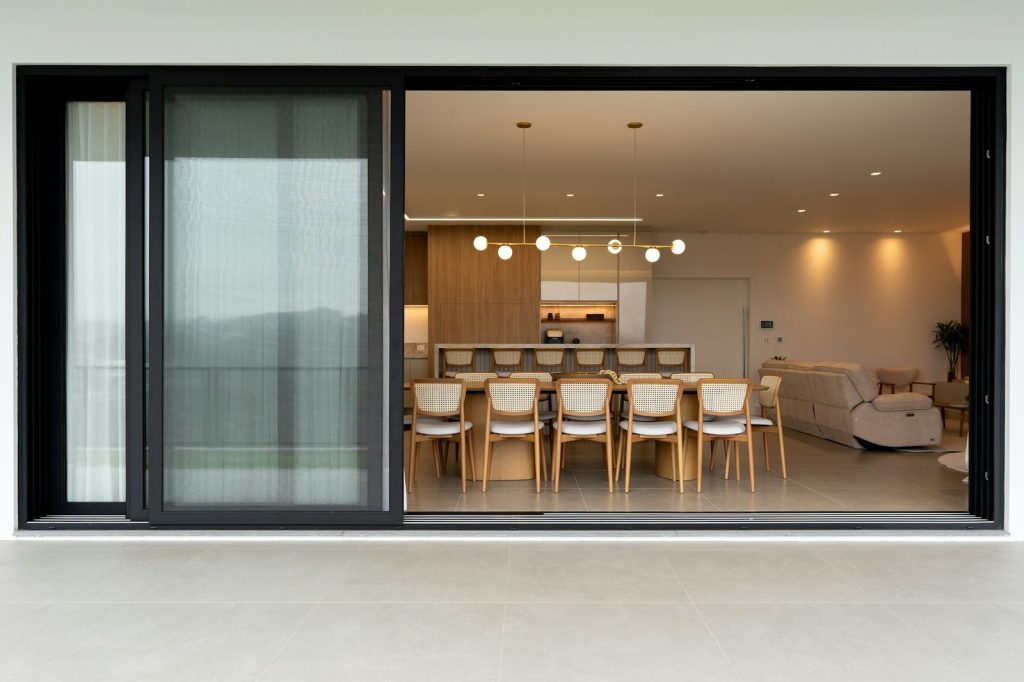
Glass door installation cost in Jamaica is one of those numbers that depends on so many factors that any single quoted figure is misleading. A small interior bathroom glass door is a fundamentally different job from a large sliding patio door system or a frameless shower enclosure, and the price gap between the cheapest and most expensive ends of the spectrum runs into the orders of magnitude.
What this article does instead of quoting fake prices: walks through every factor that drives the cost up or down, so you can understand what’s actually in the number when you do get a real quote. With that context, you’ll know whether the quote is reasonable, where you can trim, and where you’d be cutting corners that hurt you later.
The big buckets: what type of glass door
The first and biggest cost variable is which type of glass door we’re talking about. The category covers:
Sliding patio doors. Two, three, or four panel systems opening to a patio, balcony, or garden. The standard residential exterior glass door type in most modern Jamaican homes. Cost scales with panel count and panel size.
Frameless or framed shower enclosures. Interior glass doors enclosing a shower stall. Sized to fit the stall, with hardware and seals specific to wet-room use. Different cost structure from external doors because the spans are smaller but the precision required is higher.
Interior glass doors. Office partitions, bathroom doors with glass panels, glass-panel internal doors. Generally lower cost than exterior doors of similar size because they don’t need weather sealing or hurricane rating.
Pivot or french doors. Exterior entry doors with significant glass area, or internal french doors. Cost sits between standard sliding patio doors and frameless shower enclosures depending on size and hardware.
Each of these is a different job. A 6-foot sliding patio door and a 6-foot frameless shower enclosure share almost nothing in terms of cost drivers; comparing prices across these categories doesn’t tell you much.
The glass doors service page covers what we install across these categories.
Cost driver 1: door size
For any door type, size is the single largest cost variable. A 6-foot sliding patio door costs substantially less than a 12-foot or 16-foot equivalent because the glass area, frame length, hardware load, and install complexity all scale roughly with size.
The non-linear part: very large doors (over 12 feet wide, or with very tall panels) need heavier-duty hardware, often custom-fabricated tracks, and more careful structural support. Cost per linear foot tends to rise with size rather than stay flat.
For a typical Jamaican residential project, the cost sweet spot is the 7 to 10 foot wide two-panel sliding system. Smaller is cheaper but not dramatically so; larger climbs quickly.
Cost driver 2: glass specification
The glass element of a glass door can represent 30 to 60 percent of the total cost depending on what’s specified. The choices that move this:
Single pane vs insulated unit. A double-glazed insulated unit costs roughly 40 to 80 percent more than equivalent-size single pane. For exterior doors in Jamaica, the case for insulated units is real (energy efficiency, noise reduction) but not universal; many existing installations use single pane successfully.
Tempered vs annealed. Tempered glass is mandatory for most door applications under building code; the cost premium over annealed is around 15 to 30 percent and isn’t optional.
Laminated tempered. Adds an interlayer for safety, acoustic performance, or hurricane rating. Adds 30 to 50 percent over standard tempered.
Low-E coating. Cuts solar heat gain meaningfully. Adds 10 to 25 percent depending on coating grade.
Tinted or specialty glass. Body-tinted or reflective glass for glare control adds modest cost (10 to 20 percent). Specialty patterned or frosted glass varies more widely.
The full glass-spec conversation is in the glass type guide. For most Jamaican residential glass doors, tempered Low-E single pane is a reasonable baseline; insulated and laminated upgrades are worth specifying on premium projects or coastal/hurricane exposure.
Cost driver 3: frame material and finish
The frame is a significant cost component for framed doors and zero for frameless. For framed doors:
Aluminum. The standard for exterior glass doors in Jamaica. Cost varies with profile weight (slim residential profiles vs heavy commercial), finish (mill, anodised, powder coat), and whether it includes a thermal break.
Thermally-broken aluminum. Adds roughly 20 to 35 percent over standard aluminum but reduces heat conduction meaningfully. Worth it for air-conditioned spaces.
uPVC. Lower cost than aluminum but less suited to large door spans and tropical UV. Rarely the right choice for Jamaican exterior glass doors.
Timber. Premium aesthetic, premium cost, and significant maintenance load in Jamaican humidity. Sometimes used for high-end french doors or feature pieces; rarely the practical choice for everyday glass door applications.
Frameless doors skip this cost line entirely but transfer some of the budget to heavier glass (typically 3/8 inch or 1/2 inch tempered) and specialty hinges or hardware.
Cost driver 4: hardware
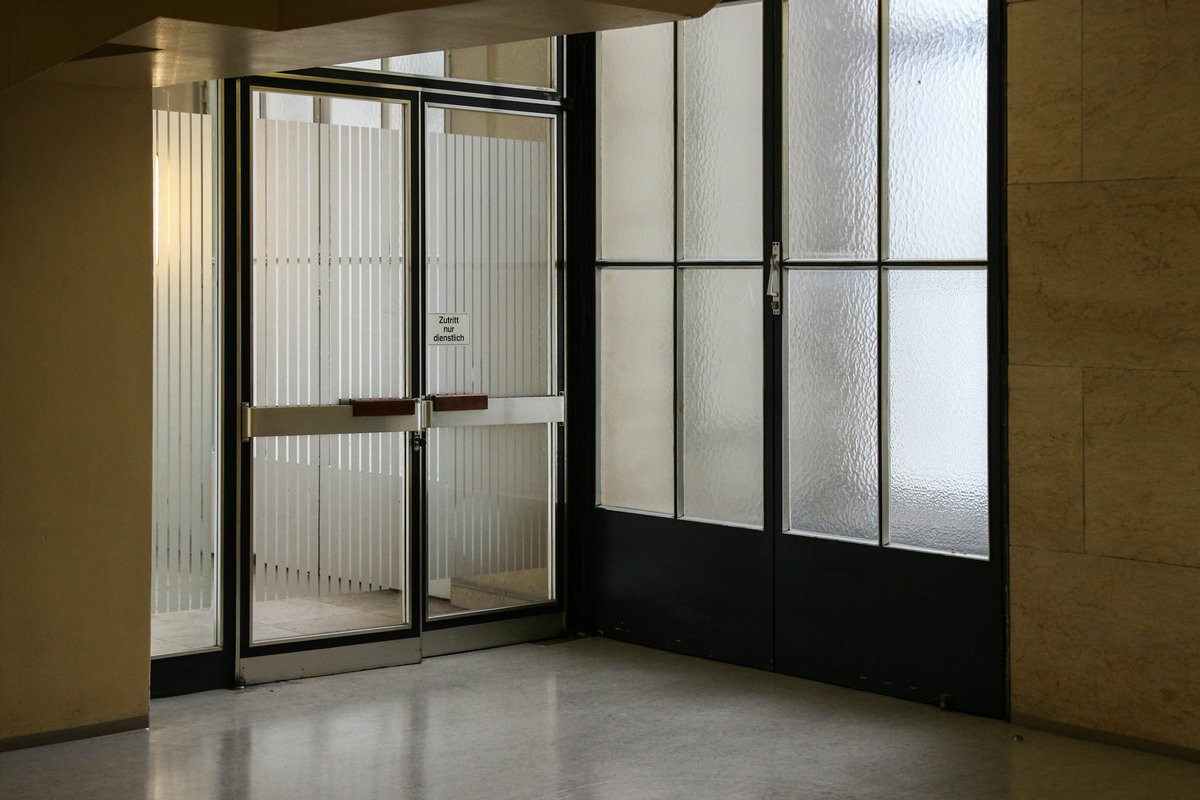
The visible hardware (handles, locks, hinges, track systems) is where a budget door and a premium door diverge most visibly.
Standard residential hardware. Functional, durable, but visually basic. Lowest-cost option.
Architectural hardware. Premium handles, designer pulls, designer track systems. Often doubles or triples the hardware budget line.
Heavy-duty hardware for large panels. Required when panels exceed certain weight thresholds; not optional on big systems.
Smart locks. Modern multi-point locks with electronic actuation. Add 30 to 50 percent over standard multi-point.
For a typical Jamaican residential glass door, mid-range hardware from a recognized brand sits in the practical sweet spot. Cheapest hardware tends to wear out; most expensive is often paying for design rather than function.
Cost driver 5: opening preparation
The condition of the opening that’s receiving the new door affects the install cost directly. The cleanest case (new build, opening built to the right size for a standard door) carries the lowest install cost. The most complex cases add real money:
- Existing opening that needs widening, narrowing, or squaring
- Block work to create a new opening in a previously solid wall
- Lintel installation or modification
- Plaster/render repair around the new frame
- Floor leveling for sliding tracks
- Electrical or plumbing relocation to clear the opening
For a renovation glass door install in a Jamaican block-construction home, opening prep often runs to 15 to 30 percent of the total project cost. Worth discussing upfront so it doesn’t appear as a “surprise” line on the invoice.
Cost driver 6: location and site access
Where the job is and how easy it is to reach affects cost in ways that aren’t always obvious:
Distance from Kingston. Most of our base of operations and supply is in or near Kingston. Jobs in Negril, Port Antonio, or remote rural locations carry higher transport cost and may need an overnight crew.
Site access. Ground-floor walk-in is easy; second-floor with stair-only access, narrow gates, or coordinated building access takes longer.
Scaffold or special equipment. Required for high openings, large panel handling, or tall buildings. Often a separate cost line.
Coordination with other trades. Jobs that require working around active construction or coordinating with other crews take longer.
Cost driver 7: design complexity
A door that’s a standard size with standard hardware in a standard opening is the lowest-cost case. Any departure from standard adds cost:
- Custom panel proportions
- Unusual glass shapes (arched tops, angled cuts, large radii)
- Multi-track systems with stacking panels
- Pocket-door systems where panels disappear into the wall
- Integration with surrounding features (matching adjacent windows, custom finishes to coordinate with cabinetry)
For a project with significant design intent, the architect’s drawings often specify these. The cost premium is real but predictable.
What you can do to manage cost
The realistic levers for keeping a glass door project’s cost in line:
Stick to standard sizes where possible. Custom-size fabrication adds cost without proportional benefit on most projects. If the opening can be sized for a standard door early in the design, that’s money saved.
Choose the glass spec deliberately. Don’t default to top-spec for every door; the bedroom and the kitchen don’t necessarily need the same glass spec as the main living-room slider. Vary the spec to match the use case.
Pick mid-range hardware. The visual difference between mid-range and premium hardware is often smaller than the cost difference. Save the premium spec for the high-visibility doors.
Plan opening prep early. Surprises during install are more expensive than planning ahead. Have the opening dimensions confirmed and any prep work scheduled before fabrication starts.
Get quotes from suppliers who actually visit the site. Phone quotes for glass doors are usually wrong. A site visit before quoting catches issues that change the price; better to know upfront than after install begins.
What to be wary of in cheap quotes
A quote that’s significantly lower than competing quotes is rarely a bargain; it’s usually a sign of one of these:
- Cheaper glass (untempered, no Low-E, single pane where insulated was specified)
- Cheaper frame material (lighter profile, no thermal break)
- Lower-grade hardware that wears out faster
- Missing line items that will appear as extras during install
- A crew that’s less experienced and slower
The honest quote shows the line items so you can compare like-for-like. If a quote is a single lump-sum figure with no breakdown, ask for the detail before signing.
Related reading
- How long does a sliding window install actually take?
- Five things to check before signing a sliding window contract
- Custom vs standard sliding windows: which fits your home?
For context on building practices in Jamaica more broadly, including the climate and construction style that affect door choices, the Wikipedia entry is a useful starting point.
Frequently asked questions
How much does a sliding glass door cost in Jamaica?
Cost depends on door size, glass spec, frame material, hardware, and opening prep. A small two-panel residential slider with standard spec costs a fraction of a large four-panel system with insulated Low-E glass and premium hardware. Rather than quote a single number, the practical approach is a site-visit quote that breaks down the line items. That way you can compare quotes accurately and understand what’s driving the price.
What is the most expensive part of a glass door install?
Usually the glass itself (30 to 60 percent of total cost depending on spec) followed by the frame and hardware (collectively 25 to 40 percent). Install labour and opening prep typically together account for the remaining 15 to 30 percent. Big premium glass specs (insulated Low-E laminated) can push the glass share higher; basic spec puts more weight on labour and prep.
Is a frameless shower door more expensive than a framed one?
Yes, typically 30 to 60 percent more. The reason is the heavier glass (3/8 inch or 1/2 inch tempered rather than standard 1/4 inch), specialty hinges and hardware, and the precision required for proper alignment without a frame to hide imperfections. The trade-off is the cleaner look and easier maintenance.
Why are quotes from different installers so different?
Because the underlying specs are often different even when the door category looks the same. One quote might use tempered Low-E insulated glass with thermal-break aluminum frame; another might use single-pane tempered with standard aluminum. The doors look similar on the price line but cost meaningfully different to build. Always ask for the line-item breakdown so you can compare like-for-like.
How much should I budget for opening prep on a renovation glass door?
For a typical Jamaican block-construction renovation, opening prep (widening, squaring, lintel work, plaster repair) often runs 15 to 30 percent of the total project cost. A new-build install starts from a clean opening and skips most of this. Ask for opening prep as a separate line item on the quote so you can see what’s included and plan accordingly.
Can I save money by buying the door myself and hiring an installer separately?
Sometimes, but rarely as much as you’d expect, and the warranty story gets messy. When the supplier and the installer are the same company, any post-install issue (leak, misalignment, glass defect) has a single point of accountability. Split that and any issue becomes a finger-pointing exercise between two parties. For most Jamaican residential projects, the integrated quote is the lower-risk choice.
The next step
The honest way to get a real cost figure for your specific glass door project is to send us the opening details and your spec priorities. The quote request form takes that brief; we come back with an itemized quote that breaks down glass, frame, hardware, install, and opening prep so you can see exactly what’s in the number.
The glass doors service page covers what we install. The contact page is for questions before the formal quote.
Cost ranges for glass doors are wide because the category is wide. The right approach is to specify what you need first, then ask what it costs, rather than starting from a target price and working backwards. The latter usually ends in a door that doesn’t quite do what it needs to.