

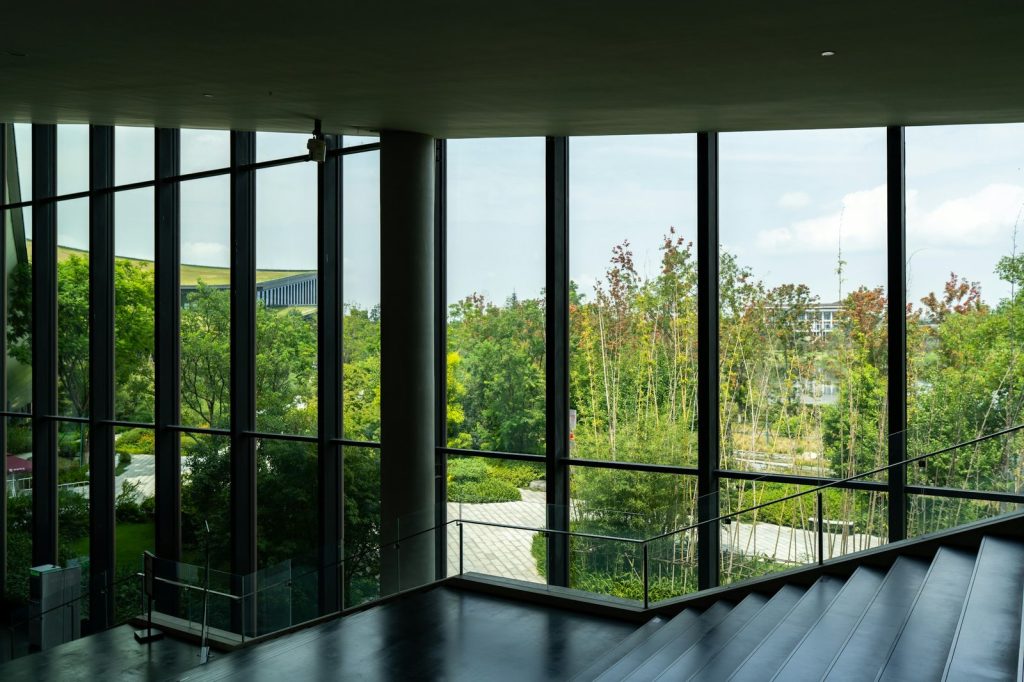
When customers ask us about “frameless sliding windows,” what they almost always mean is slim-profile sliding windows: systems where the visible aluminum frame is much narrower than a standard residential slider. A true frameless sliding window does not exist in residential aluminum. The slider has to ride on something, and that something is the frame.
So the honest version of the sliding windows frameless vs framed conversation is standard frame vs. slim frame. Both real, both installed in Jamaican homes every week, both look completely different across the room. Here is how to tell which one fits your project.
The honest spectrum: heavy, standard, slim
Aluminum sliding window frames sit on a spectrum:
- Heavy commercial profile: 3 to 4 inch visible face. Storefronts, hurricane-rated systems, very large openings.
- Standard residential profile: 2 to 3 inch visible face. The default on most Jamaican residential sliders today.
- Slim-profile residential: 1 to 1.5 inch visible face. The “frameless-looking” option.
- Minimal-frame premium systems: under 1 inch visible face. Specialty European systems imported on request.
Most residential conversations narrow to two real options: standard or slim. The premium minimal systems exist but are rare in residential Jamaica because the import cost is steep and the install tolerance is unforgiving.
What you actually see in the room
The visual difference is bigger than the spec sheet suggests. A 2 to 3 inch frame reads as a deliberate aluminum border around the glass. The frame is part of the design language and pairs well with traditional or transitional architecture. A 1 inch frame nearly disappears, and the room reads as a wall of glass with a thin metal edge instead of a window with a frame.
Slim profile also lets you build larger panes without the visual weight of a thick frame breaking up the glass. A 7 foot wide slim slider feels like one continuous expanse. The same opening in a standard frame feels like two glass panels with a chunky aluminum border between them. Whether that matters depends entirely on the design intent for the room.
Cost difference
Slim-profile costs roughly 40 to 80 percent more than standard for the same opening, depending on the system and glass spec.
The cost comes from three places. The aluminum extrusion is more engineered (carrying the same structural load with less material). The glass has to be thicker (1/4 inch minimum, often 3/8 inch on larger panes) because the slim frame provides less structural support. And the hardware is more specialized because the sliding mechanism has to fit tighter tolerances.
For a small bedroom window the difference is modest. For a large living room slider it adds up fast. Which is why most mixed projects end up with slim on the feature openings and standard everywhere else.
Glass thickness implications for sliding windows frameless vs framed
A standard slider with a 2 to 3 inch frame carries 1/4 inch glass comfortably because the frame is doing most of the structural work. A slim slider with a 1 inch frame is asking the glass to do more, which usually means 3/8 inch or 1/2 inch glass, especially on larger panes. Tempered is mandatory at those thicknesses.
The thickness guide is in our how to choose the right glass thickness for sliding windows article. The short version for slim installs: spec one step thicker than you would for the same opening in a standard frame.
Hardware and the sliding mechanism
A slim slider hides its hardware. The track is shallower, the rollers smaller, the locks recessed. This looks cleaner and operates fine when new, but two things follow from it.
First, the install has to be more precise. A slim slider that is even slightly out of plumb will drag visibly, because there is less tolerance for misalignment than on a standard frame.
Second, replacement parts in year ten can be harder to source. Slim systems tend to use proprietary hardware rather than the standard catalogue. We stock the common ones, but lead times on the less common parts can stretch.
The broader hardware conversation is in hardware choices for sliding windows.
When each is the right call
Standard residential profile is usually right when:
- The architecture is traditional or transitional
- Budget is a meaningful constraint on the project
- The openings are standard sizes and the slight visual weight of the frame does not matter
- The home is being sold within 10 years and matching the neighbourhood style helps resale
Slim profile is usually right when:
- The architecture is contemporary or modernist
- The openings are large and the view matters more than the budget
- The design intent is for the glass to be the visible element, not the frame
- The home is a long-term hold where the design premium pays back over decades of use
The mixed approach (slim on the feature openings, standard everywhere else) is what about half our slim-curious projects end up doing once we’ve costed both options side by side.
Maintenance differences
Slim sliders need the same cleaning routine as standard sliders, but the smaller track has less margin for dirt before the slider stiffens. Standard sliders can go six months between deep track cleans. Slim sliders start to feel it at three.
Cleaning method is identical: vacuum, soap and brush, silicone spray on the rollers. Cadence is what changes. Our annual maintenance checklist for sliding windows covers the routine in detail.
Hardware life is also typically slightly shorter on slim because the tolerances are tighter. Budget for a hardware refresh at year 8 to 10 on slim where a standard slider would go 12 to 15 on the original parts.
Related reading
- Aluminum finish options for sliding windows: black, white, bronze, natural
- Hardware choices for sliding windows: handles, hinges, and locks
Frequently asked questions
Are there really frameless sliding windows?
No. A sliding window has to ride on something, and that something is the frame. What people usually mean by “frameless” is slim-profile: aluminum systems with a 1 inch visible face instead of the standard 2 to 3 inch. The frame is still there, just much narrower.
How much more do slim-profile sliding windows cost?
Roughly 40 to 80 percent more than standard for the same opening size. The cost comes from a more engineered aluminum extrusion, thicker glass to compensate for less structural frame support, and more specialized hardware to fit the tighter tolerances.
Are slim sliding windows good for hurricane-prone areas?
Slim profile can be hurricane-rated, but the assembly typically needs heavier glass (3/8 inch or 1/2 inch tempered laminated) to compensate for the lighter frame. Standard residential profile is often the safer call in high-exposure coastal locations because the heavier frame absorbs more wind load.
Do slim-profile windows need more maintenance?
The cleaning routine is the same, but the cadence has to be tighter. A standard slider can go six months between deep track cleans without noticeable stiffening; a slim-profile slider starts to feel the dirt at three months. Hardware life is also typically slightly shorter on slim systems.
When is slim profile the right choice?
Contemporary or minimalist architecture, large openings where the view is the design feature, long-term hold properties where the design premium pays back over decades, and projects with the budget to support the cost premium. For standard residential builds with budget constraints, standard profile is usually right.
The next step
If you are deciding between standard and slim, the quote request form takes the design intent and the openings, and we come back with both options priced side by side. Seeing the cost difference for your specific scope usually settles the question quickly.
The sliding windows service page covers what we install. The contact page is for questions before the formal quote.
“Frameless” is the marketing word for slim. The actual choice is what aluminum thickness fits your house, your design intent, and your budget. Most homes settle in the middle.