

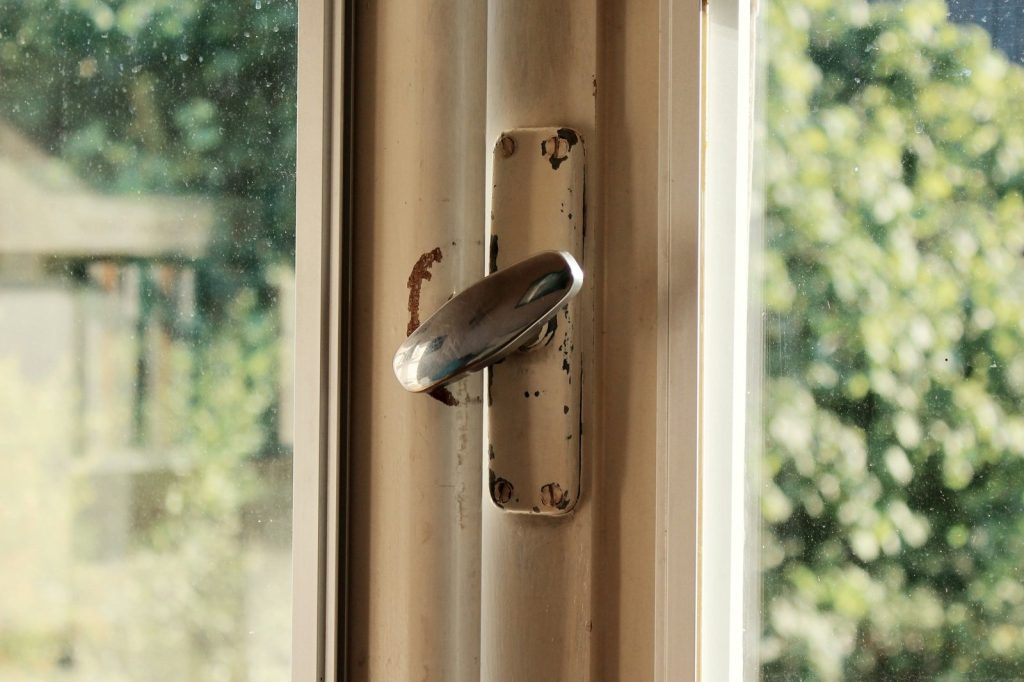
Sliding window hardware is the part of the install that determines how the window feels for the next ten to twenty years. The frame holds the shape. The glass does the work. The hardware is what your hand touches every day and what fails first if the spec was wrong.
Here is what actually goes on a sliding window, what to ask about on the spec line, and the quality tiers that matter.
Handles
The handle is the most visible piece of sliding window hardware. It is also a useful proxy for how seriously the manufacturer takes the rest of the build. Cheap handles flex and wobble out of the box. Quality handles feel solid from day one.
Lever handles are standard on horizontal sliders. They mount to the moving panel and either pull double duty as a lock (lever-and-latch combinations) or pair with a separate lock cylinder for keyed security.
Common handle materials, in roughly increasing order of cost and lifespan:
- Plastic with metal-finish coating (entry-level, fine for low-traffic openings, looks aged within five years)
- Die-cast zinc alloy with chrome or coloured finish (standard residential, good 10 to 15 year life)
- Solid aluminum or stainless steel (premium residential and commercial, indefinite life if maintained)
Finish options match the frame (chrome, brushed nickel, matte black, bronze, brass). The handle should be specified by material and finish on your quote, not just listed as “handle included.”
Locks
Locks are where the difference between a cheap install and a quality install shows up fastest. A worn or undersized lock means the window does not pull tight against the frame, which means seals fail prematurely, drafts come in, and security is compromised.
The main lock types on sliding windows in Jamaica:
- Crescent locks (also called sash locks). A crescent-shaped latch that rotates to engage a strike plate on the fixed panel. Common on traditional aluminum sliders. Inexpensive, reliable when made well, mediocre when made cheaply.
- Cam locks. A rotating cam that catches behind a striker. More mechanical advantage than a crescent, pulls the panel tighter against the seal.
- Key cylinder locks. A keyed cylinder added to either a crescent or cam lock for ground-floor and accessible window security. Often paired with a thumb-turn on the inside for quick exit.
- Multi-point locks. The premium option. A single handle action engages locking points at the top, middle, and bottom of the moving panel. The panel pulls tight at every point, which improves seal performance and security significantly.
Lock grades follow standard industry tiers. Grade 1 is heavy commercial security. Grade 2 is the residential mid-range, suitable for most homes. Grade 3 is the budget option, suitable only for low-priority openings. Most quality residential sliding windows use Grade 2 with optional Grade 1 for ground floor or street-facing openings.
The lock spec should appear on your quote by name. “Lock included” without a brand, type, or grade tells you nothing useful.
Rollers
Rollers are not optional hardware. They are the structural component that makes the sliding panel move. Cheap rollers wear flat in eighteen months. Quality rollers are still smooth at year ten.
The two main roller types:
- Nylon rollers. Lighter, quieter, lower cost. Suitable for smaller panels (under about about 5 feet wide) in normal use.
- Ball-bearing steel rollers. Heavier-duty, smoother under load, longer life. The right call for larger panels, heavier glass spec, and high-use openings.
For coastal homes, stainless steel ball bearings are the spec to ask about. Standard steel rollers will rust eventually in salt air. Stainless does not.
Adjustable rollers are the third option worth knowing about. They allow the installer (or you, later) to fine-tune the height of the panel, which matters when a frame settles slightly over years or when the building moves. Most quality residential sliders include adjustable rollers as standard.
What about hinges?
A standard horizontal sliding window does not use hinges in the way a casement window does. The moving panel rides on rollers along a track. There is nothing to hinge.
People sometimes call the small fastening brackets at the corners “hinges” in everyday speech, but those are not hinges. They are corner brackets that hold the frame assembly square. They do not move.
The exception is a tilt-and-slide system, which does use a pivot mechanism at the top of the panel to let the window tilt inward for cleaning before sliding open. That pivot is functionally a hinge. Tilt-and-slide is a premium option in residential and is uncommon in standard Jamaican residential installs. If you have a tilt-and-slide system in mind, the hinge spec becomes a real conversation. If you have a standard slider, hinges are not part of the hardware list.
Seals and weather stripping
The flexible rubber seals around the moving panel and along the frame are technically not hardware in the moving-parts sense, but they show up on the same spec lines and they fail in the same ten-to-fifteen year window.
The two seal materials to know:
- EPDM rubber: the standard for quality residential installs. Holds elasticity for 10 to 15 years.
- TPE (thermoplastic elastomer): cheaper, used in budget installs. Hardens and cracks faster, especially under direct UV.
For Jamaica, where direct sun on windows is the norm, EPDM is the spec we recommend. The cost difference is small. The lifespan difference is substantial.
Mesh tracks and screen hardware
Most Jamaican sliding window installs include mosquito mesh, which has its own small hardware system. Mesh tracks, mesh corner brackets, and the mesh-retainer hardware that holds the screen in place.
This is usually included as standard. The thing to ask about: is the mesh frame aluminum or plastic? Aluminum mesh frames last as long as the window itself. Plastic mesh frames need replacing every five to seven years. The cost difference is small, the lifespan difference is large.
Sliding window hardware grades: standard, commercial, marine
Most of the hardware components above come in three grade tiers:
- Standard residential. The default for most quotes. Suitable for inland, normal-use installations.
- Commercial. Heavier-duty versions of the same parts, with higher cycle ratings and better materials. The right call for high-traffic openings or premium residential.
- Marine grade. Stainless steel fasteners, marine-rated handles and locks, and corrosion-resistant rollers. The right call within half a mile of the coast, and the wrong corner to cut on any coastal Jamaican install.
The cost difference from standard to marine grade across all the hardware on a window is typically 15 to 30 percent. The lifespan difference in coastal conditions is often double. The math almost always favours marine grade for coastal installs.
If a quote does not specify the grade, ask. Assume standard residential unless told otherwise.
Related reading
- Sliding windows hardware: when to repair, when to replace
- Glass type guide for sliding windows: clear, frosted, tinted, tempered, laminated
Frequently asked questions
What hardware is on a sliding window?
Handles (one or two per moving panel), locks (typically crescent, cam, or multi-point), rollers (small wheels at each end of the sliding panel), seals and weather stripping around the perimeter, and the mosquito mesh frame and retainer hardware if mesh is fitted.
What is the best lock for a sliding window?
For residential security, multi-point locks are the premium option because they pull the panel tight against the seal at multiple points. Cam locks are the mid-range. Standard crescent locks are entry-level. For ground-floor or street-facing windows, a key cylinder added to the standard lock improves security.
How long should sliding window rollers last?
Quality rollers in normal use should last 10 to 15 years before needing replacement. Cheaper rollers can wear out in 3 to 5 years. Marine-grade stainless steel rollers in coastal conditions last 12 to 18 years where standard steel rollers would have rusted out by year 5.
Do sliding windows have hinges?
No, not in the casement-window sense. The moving panel rides on rollers along a track; nothing hinges. The small corner brackets that hold the frame square are sometimes informally called hinges in everyday speech, but they are not hinged components and do not move.
What is marine-grade window hardware?
Stainless steel fasteners (Grade 304 minimum, Grade 316 for direct beachfront) throughout, stainless hinge components, marine-rated handles and locks with stainless internal mechanisms, and stainless or sealed-bearing rollers. The full hardware spec swap typically adds 20 to 40 percent to the hardware line item over standard residential.
The next step
If you have a project and want to see hardware options before specifying, the contact page is the easiest way to arrange. We can show you handle samples, lock types, and roller assemblies on actual installed examples, which photographs do badly.
The sliding windows service page has more on what we install. The quote request form starts a project where the hardware spec is one of the lines you approve before fabrication.
The right hardware is the spec that matches how the window will be used and how long you want it to last. Most quotes do not include enough hardware detail by default. Ask, and ask in writing.