

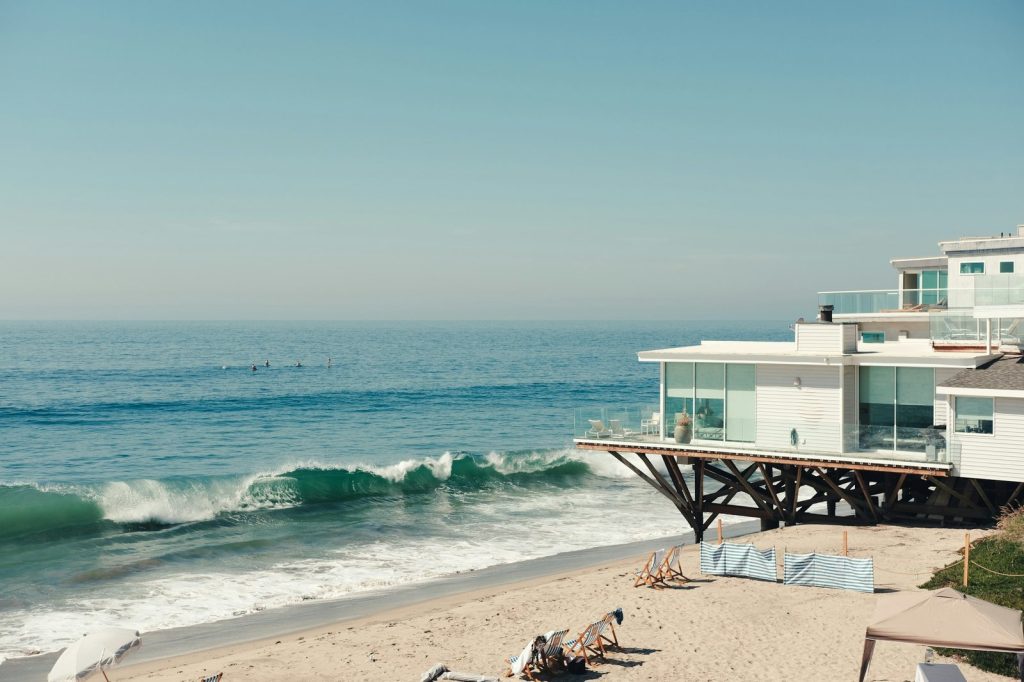
Coastal Jamaican homes deal with conditions that quietly wreck standard residential glass door spec. Salt eats hardware. UV breaks down coatings. Hurricane wind tests every seal and every anchor. Humidity does its slow work in every joint. Getting glass doors right in this environment is partly about not under-spec’ing and partly about thinking through what’s going to fail first.
Here’s what actually holds up long-term on a Jamaican coastal site.
The frame finish
Mill-finish aluminum pits visibly within a few years on the coast. Standard residential powder coat lasts longer but eventually breaks down too. Marine-grade is the spec that holds up.
Powder coat thickness should be at least 60 microns (versus 40 to 50 for inland residential). Polyester powder rated to AAMA 2604 buys you about five years of South Florida-equivalent weathering without significant fade. AAMA 2605 doubles that and adds salt-spray cyclic testing on top.
For premium projects: pre-anodise the aluminum first, then put the marine-grade powder coat on top. That two-layer defense is much harder for salt to get through. Costs more, but it adds years.
The aluminum alloy matters less than the finish for most residential work. For direct beachfront, upgrading to a structural grade with higher corrosion resistance is worth the small additional cost.
The hardware
This is the single biggest reason coastal glass doors fail before they should, and it’s almost never visible exterior damage. It’s the inside of the lock, the inside of the hinge, the bearings inside the rollers. Salt-laden air gets in, condenses, and corrodes the moving parts even when the surface finish still looks fine.
Spec stainless steel or marine-grade across the board. The cost premium is real (typically 30 to 60 percent on the hardware line) but the lifespan difference is bigger by a factor of two or three. Standard hardware in coastal Jamaica might give you 8 to 12 years; marine-grade often runs 20 to 30.
This applies to everything mechanical, all the way down to the screws holding hardware to the frame.
The glass
Two glass priorities on coastal residential.
Hurricane-rated laminated tempered for any opening that has to maintain the building envelope through a storm. The PVB interlayer holds shattered glass in place even when the pane breaks, which is what keeps the home weathertight when wind-driven debris hits.
Low-E coating for thermal performance on sun-exposed elevations. Coastal sun isn’t filtered by terrain; AC load is genuinely brutal without solar-control glazing. Current spectrally selective Low-E cuts solar heat gain over 50 percent without sacrificing visible light.
Premium spec combines both in an insulated unit. Storm protection plus thermal performance. The cost is higher; so is what you get for the next 25 years.
Anchoring
Standard residential frame anchors are zinc-plated steel that corrodes in coastal conditions. The frame might still look fine; the anchoring behind it might not be.
Use stainless steel anchors throughout, sized for the actual wind load at the site rather than the residential default. Anchoring is one of those things you can’t easily fix once the door is installed and the wall is finished. The time to get it right is at install.
Sealing
Coastal sites burn through silicone faster than inland. UV plus salt accelerates the breakdown. Standard silicone that lasts 15 to 20 years inland might only give you 8 to 12 on the coast.
What you want: marine-grade silicone with UV stabilizers. Compression gaskets rated for high-cycle weather exposure. Drainage detailing that doesn’t trap salt residue in low spots where it can sit and concentrate.
Treat re-sealing as routine maintenance every 8 to 10 years, not as a one-off install task. Catching seal degradation early prevents the water damage that a failed seal causes.
Maintenance isn’t optional
Coastal glass doors need about twice the attention of inland.
A fresh-water rinse weekly flushes salt off the frame and hardware before it can dry and concentrate. Five minutes with a garden hose, real impact over the years.
Twice-yearly full inspection covering seals, hardware operation, finish condition, drainage clearance.
Annual hardware lubrication on locks, hinges, and rollers using marine-grade lubricants designed for salt exposure.
Document the maintenance. Both manufacturer and workmanship warranties typically require it; documentation is what protects you on claims.
What the cost premium looks like
The combined upgrades (marine-grade frame finish, stainless or marine-grade hardware, hurricane-rated laminated glass, stainless anchoring, high-performance seals) typically run 30 to 50 percent more than standard residential on the same opening.
The alternative isn’t saving money. It’s paying the same money later, through earlier replacement. A standard-spec residential glass door on a coastal Jamaican site might need substantial component replacement in 10 to 15 years. A properly specified coastal install routinely passes 25 to 35 years before any major work is needed.
How to tell if a supplier actually knows coastal spec
A few specific questions worth asking, that separate coastal-experienced suppliers from inland-experienced ones quoting a coastal job:
- What powder coat AAMA rating do you spec for coastal work?
- Are hinges, locks, and rollers stainless or marine-grade?
- What hurricane rating and design wind pressure does this spec meet?
- What anchoring system attaches the frame to the wall?
- What’s the recommended maintenance schedule for this install?
A coastal-experienced supplier answers each of those directly with specific numbers. An inland-experienced supplier hedges or generalizes. The questions cost nothing to ask and the answers tell you a lot about what you’re actually buying.
Related reading
- How long do glass doors last in coastal Jamaican homes?
- Glass doors for hillside Jamaican homes
- Coastal sliding window care: salt air and trade winds
For background on marine corrosion of structural materials, Wikipedia covers the materials science.
Frequently asked questions
What’s the most important spec for glass doors in coastal Jamaica?
Marine-grade powder coat on the frame (at least 60 microns thick, AAMA 2604 or 2605 rated) and stainless or marine-grade hardware throughout. Hardware corrosion is the single biggest cause of coastal glass door failures; standard plated steel hinges and locks corrode internally even when exterior finishes still look fine. Frame finish protects appearance and prevents pitting.
Do coastal glass doors really need marine-grade hardware?
Yes, almost always. Standard plated hardware in coastal Jamaica runs 8 to 12 years before internal corrosion causes failure. Marine-grade or stainless hardware typically runs 20 to 30 years. The cost premium is meaningful (30 to 60 percent on the hardware line) but much smaller than the cost of premature replacement.
How often should I clean and maintain coastal glass doors?
Roughly twice the inland frequency. Fresh-water rinse weekly to remove salt before it dries. Twice-yearly full inspection covering seals, hardware, finish, and drainage. Annual hardware lubrication with marine-grade lubricants. Document the maintenance; both manufacturer and workmanship warranties typically have maintenance requirements that documentation protects.
How much more does a coastal-spec glass door cost than residential standard?
Typically 30 to 50 percent more for the combined upgrades (marine-grade powder coat, stainless or marine-grade hardware, hurricane-rated laminated glass, stainless anchoring, high-performance seals). The alternative isn’t saving money; it’s paying through earlier replacement. Properly-spec’d coastal installs run 25 to 35 years; standard-spec installs in coastal conditions often need major work in 10 to 15.
How can I tell if a supplier knows coastal glass door spec?
Ask specific questions and see how they answer. What AAMA powder coat rating do they spec? Are hardware components stainless or marine-grade? What’s the hurricane rating on the proposed assembly? What anchoring system attaches the frame to the wall? Coastal-experienced suppliers answer directly with specific numbers. Inland-experienced suppliers tend to hedge or generalize.
The next step
If you have a coastal project where the spec needs to account for salt air, hurricane exposure, and long-term service, the quote request form takes the brief. We come back with a spec sheet that names the AAMA rating, hardware grade, glass spec, and anchoring approach explicitly so you can compare it to other quotes.
The glass doors service page covers what we install. The contact page is for questions before the formal quote.
Coastal glass doors aren’t fragile when they’re specified right. They’re durable for decades. The trick is matching the spec to the conditions rather than installing inland spec on a coastal site and hoping.