


Hurricane season in Jamaica runs June 1 through November 30. Six months a year, every year, the possibility of a major storm is part of how Jamaican homeowners think about their property. Shower enclosures don’t usually rank high on the hurricane-prep checklist, but they should make the list. Here’s what to know about your shower enclosure during hurricane season.
The short answer: indoor enclosures usually do fine
Good news first. A properly installed shower enclosure inside a Jamaican bathroom is mostly protected from hurricane damage. The glass is tempered, the enclosure is inside the structure, and the bathroom usually has a window that’s already been hurricane-prepped (shutters, impact glass, or storm panels) as part of the broader home protection.
The shower enclosure itself is rarely what fails during a hurricane. What does fail: the bathroom window, the bathroom door, the roof above the bathroom, the broader structural protection. If any of those fail, the shower enclosure becomes a secondary problem rather than the main one.
So the first hurricane-prep priority for the bathroom is the bathroom envelope (window, door, roof), not the shower enclosure inside it.
What can go wrong specifically with the enclosure
A few hurricane-related risks that are specific to the enclosure itself.
Wind-driven debris entering the bathroom. If a bathroom window fails or a wall opens up, flying debris (branches, roof tile, hardware from elsewhere) can hit the enclosure. Tempered glass handles face impact well. Edge impact can shatter it.
Structural shifting in the bathroom walls. Hurricanes can shift wall framing slightly, especially in older Jamaican construction. A shower enclosure that was perfectly aligned before can develop fit issues after a major shift. Usually cosmetic, sometimes affects the door swing or seal.
Power outages affecting bathroom ventilation. Several days without exhaust fans plus the humidity surge from a hurricane can accelerate silicone mildew. Not damage in the immediate sense, but a maintenance event after the storm.
Water intrusion from elsewhere. If the bathroom takes on water from a window leak, roof leak, or backed-up drains, the shower enclosure isn’t the main victim, but the seal at the threshold and floor can be damaged.
For homes with outdoor or pool-house showers, the calculation is completely different. Those are directly exposed and need dismantling, storm protection, or rebuild planning if damaged.
Glass safety: what tempered actually does
A short note on safety. The tempered glass used in residential shower enclosures is 4 to 5 times stronger than standard glass and breaks safely into small blunt pieces if it does fail.
This matters during hurricane scenarios because if the enclosure gets hit by debris and shatters, the failure mode is small pieces rather than large dangerous shards. The cleanup is messy but the immediate safety risk to anyone in the bathroom (or returning to it) is much lower than it would be with non-tempered glass.
Laminated tempered glass (two layers of tempered with a plastic interlayer) is the next step up for safety. If it breaks, the glass stays bonded to the interlayer rather than dispersing. For most residential shower enclosures, laminated is overkill. For specific use cases (very large panels, particularly hurricane-exposed locations, premium projects with safety priority), it can be a sensible upgrade. We discuss this in our glass type guide.
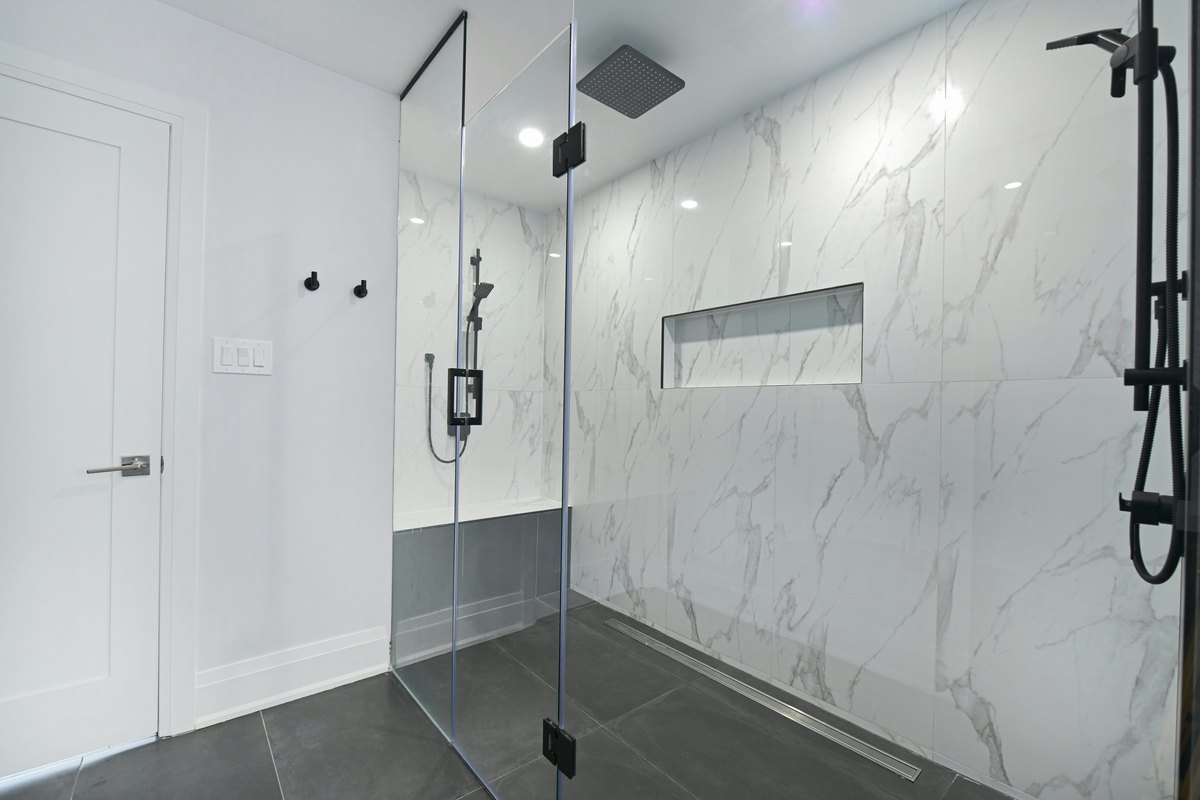
Pre-hurricane prep for your bathroom and shower
A quick checklist of bathroom and shower-specific prep before a hurricane warning.
Confirm bathroom window storm protection is functional (shutters operational, impact glass intact, or storm panels accessible). The window is the bathroom’s primary protection.
Test the bathroom door latch and seal. A door that doesn’t close fully won’t protect the bathroom from wind pressure changes inside the house.
Stock fresh silicone cartridges, basic tools, and clean rags for post-storm bathroom checks and minor fixes.
Inspect the shower enclosure for any pre-existing damage that could worsen during a storm (loose hinges, cracked tile, weak silicone). Fix what’s fixable in the days before. Flag the rest for post-storm assessment.
If you have an outdoor or pool-house shower, plan for it specifically: dismantle removable parts, protect the glass with plywood or storm panels, or accept that it may need repair or replacement after the storm.
Take a few photos of the shower enclosure intact, including hardware details and glass conditions. Useful for insurance claims if damage occurs.
During the storm
If the storm is moderate to severe and you’re sheltering at home, the bathroom is often one of the safest rooms because it’s small and usually interior. Sheltering in the bathroom is a real strategy used by many Jamaican households.
A few notes if the bathroom is your shelter spot:
The shower enclosure is generally safe to be near. Tempered glass is unlikely to shatter from interior pressure changes alone (hurricane wind doesn’t directly hit interior glass typically).
Don’t shower during the storm. Power outages can occur unpredictably, and an electric water heater plus a wet shower with no power is uncomfortable and creates slip risk.
Keep the bathroom door closed to maintain pressure equilibrium and to give you a physical barrier from the rest of the house.
If a window in the bathroom fails during the storm, move to a different shelter spot immediately. The shower enclosure can become a debris path.
Post-storm assessment
Once the storm has passed and it’s safe to walk around the house, the bathroom assessment checklist:
Visual check of all glass panels for cracks, chips, or shattering.
Check the silicone seals for separation, mildew, or visible damage.
Test the door swing for any drift or alignment change.
Check hardware tightness (gentle hand-feel; don’t force anything).
Inspect tile and grout for cracks or movement.
Look for water intrusion signs anywhere in the bathroom (ceiling, floor, walls).
Run the shower for a few minutes once power is restored and check for leaks past the enclosure.
If anything is damaged or seems off, document with photos before doing anything else (cleanup, repair attempts). Documentation matters for insurance claims and for showing the supplier what they’re dealing with.
What insurance typically covers
Standard Jamaican homeowner insurance usually covers hurricane damage to bathroom fixtures including shower enclosures. The specifics depend on your policy, but:
Glass damage from hurricane debris or structural shift: usually covered.
Hardware damage from corrosion accelerated by the storm: usually not covered (treated as maintenance).
Silicone seal damage from humidity surge: usually not covered.
Full enclosure replacement if the bathroom was significantly damaged: covered if the broader bathroom damage is covered.
Photograph everything before doing anything if you suspect a claim. Document the original install and the post-storm state.
Install timing relative to hurricane season
A common question: should you avoid installing a shower enclosure during hurricane season?
Mostly no. Suppliers in Jamaica install year-round, and a new enclosure isn’t more vulnerable to hurricanes than an existing one. The install itself doesn’t change the bathroom’s storm-readiness.
A few situations where timing matters:
If a hurricane warning is active when your install date is scheduled, the supplier should reschedule. Installing during an active warning is irresponsible.
If you’re planning a major bathroom renovation during peak hurricane season (August through October), build extra buffer into the timeline. A storm event can delay the project by 1 to 3 weeks easily.
If your home is in a particularly hurricane-vulnerable location (coastal, hillside exposed to trade winds), consider scheduling install for January through May (outside peak season) to reduce the chance of weather-related delays.
For most projects, install when it makes sense for your renovation timeline. Hurricane season doesn’t change the install spec.
Spec choices that improve hurricane resilience
A few spec choices that genuinely improve how a shower enclosure handles hurricane-season conditions over years.
Marine-grade hardware. Hurricane-season humidity and salt exposure (especially coastal) age standard hardware fast. Marine-grade is the natural choice.
AAMA-rated frame finishes. Same reasoning. Coastal sun plus storm-season weather chalks cheaper finishes faster.
Quality silicone (industrial-grade rather than consumer-grade). Silicone is the seal between the enclosure and the rest of the bathroom. Better silicone handles humidity swings better.
Properly sealed enclosure perimeter. Ensures water from any post-storm bathroom flood doesn’t get behind the panels and into the wall cavity.
For pool-house or outdoor shower spec: removable or dismantleable design for storm prep. Many premium outdoor showers are designed to come apart in 30 minutes for storm protection.
The verdict
Indoor shower enclosures in Jamaican homes are usually well-protected during hurricane season because the bathroom envelope (window, door, roof) provides the primary protection. The enclosure itself is a secondary consideration.
The spec choices that matter for hurricane-season conditions are mostly the same as the coastal and humidity spec choices: marine-grade hardware, AAMA-rated finishes, quality silicone, proper sealing. These pay back across the year, not just during hurricane events.
For outdoor and pool-house showers, hurricane-season planning is a real consideration: dismantling, protection, or rebuild planning. Indoor showers don’t require that level of attention.
Related reading
- How long do shower enclosures last in coastal Jamaican homes?
- Shower enclosures in coastal Jamaican homes
- Glass doors during hurricane season: what to know
For background on tropical cyclone preparation generally and how residential structures protect against hurricane damage, Wikipedia covers the standards.
Frequently asked questions
Can shower enclosures be damaged in a hurricane?
Indoor shower enclosures are mostly protected because the bathroom envelope (window, door, roof) provides the primary protection. The enclosure itself can be damaged if a bathroom window fails (debris enters), if structural walls shift significantly, or if there’s water intrusion from elsewhere. Outdoor or pool-house showers are directly exposed and need specific storm-prep planning.
Is tempered glass safe during a hurricane?
Yes. Tempered glass is 4 to 5 times stronger than standard glass and breaks safely into small blunt pieces if it does fail. If it gets hit by debris during a hurricane, the failure mode is small pieces rather than dangerous shards. For premium projects with safety priority or particularly hurricane-exposed locations, laminated tempered glass (which stays bonded to a plastic interlayer when broken) is an additional upgrade.
What should I check on my shower enclosure after a hurricane?
Visual check of all glass panels for cracks/chips, silicone seals for separation or damage, door swing for alignment change, hardware tightness (gentle hand-feel), tile and grout for cracks, signs of water intrusion. Run the shower for a few minutes once power is restored and check for leaks past the enclosure. Document any damage with photos before cleanup for insurance purposes.
Should I avoid installing a shower enclosure during hurricane season?
Mostly no. Suppliers install year-round in Jamaica and a new enclosure isn’t more vulnerable to hurricanes than an existing one. Exceptions: don’t install during an active hurricane warning (reschedule), build extra timeline buffer if installing during peak season (August through October), and consider off-season install for projects in particularly hurricane-vulnerable locations.
Does insurance cover hurricane damage to shower enclosures?
Usually yes for hurricane-related physical damage (glass cracking from debris, structural damage from wall shift, broader bathroom damage that includes the enclosure). Usually not for maintenance-type damage accelerated by storm season (hardware corrosion, silicone mildew). Check your specific policy. Document the original install and post-storm state with photos for any claim.
What spec choices improve hurricane-season resilience?
Marine-grade hardware (handles humidity and salt exposure), AAMA 2604+ rated frame finishes (resist UV and storm weather), quality industrial-grade silicone (handles humidity swings), properly sealed perimeter (prevents water intrusion to wall cavity). These spec choices help across the year, not just during hurricane events. For outdoor showers specifically, removable or dismantleable design helps with storm prep.
The next step
If you have specific hurricane-season questions about your shower enclosure (existing or planned), the contact page is the way to ask. We can advise on what’s worth doing before and after storm events.
For new projects, the quote request form takes the basics and we’ll spec the enclosure with hurricane-season considerations factored in if relevant.
The shower enclosures service page covers what we install.
Shower enclosures aren’t usually the headline hurricane-prep item, but they’re worth thinking about. Spec the enclosure for tropical conditions at install (marine hardware, AAMA finishes, quality silicone), keep the broader bathroom envelope storm-ready every season, and have a quick post-storm check routine. That covers what matters and lets you focus the rest of your hurricane prep on the bigger structural items.